
Affordability calculator
What would solar actually cost you a month?
Pick your average electricity bill. We size the system on it, then show the indicative instalment on each real finance route - and what it costs you after your Eskom saving. No email needed to see the numbers.
Choose a band above to see indicative monthly instalments across Nedbank, FNB and Absa - on real, prime-linked rates.
Not ready to qualify? Compare monthly-solar providers side by side - every subscription, rent-to-own and PPA price in one table, no form first.
Quick answer
What are the solar finance options in South Africa? (2026)
South Africans have five ways to pay for solar: a bank loan (FNB, Absa, Nedbank, Standard Bank or MFC - rates in the dated table below), a further advance on your bond, rent-to-own from about R1,450-R3,650 a month with ownership after 5-7 years, a subscription or rental you never own, and a pay-per-kWh PPA at R0.85-R0.95/kWh. On a 60-month loan our Family Essential 5kW (10kWh battery) is R1,690 a month and you own it from day one.
| Finance route | Typical monthly (5kW home system) |
|---|---|
| Bank loan - you own it from day one | from R1,690/month (60 months) |
| Bond further advance - own from day one | your bond rate, over the bond term - ask your bank |
| Rent-to-own - own after the final payment | R1,450 - R3,650/month, 5-7 years |
| Subscription or rental - never own | R800 - R2,500/month, ongoing |
| PPA - pay per unit, never own | R0.85 - R0.95 per kWh |
Typical monthly cost by finance route, South Africa 2026. Loan figure: EnergyBee Family Essential 5kW at R74,500, 60 months at a representative prime + 2.00%; provider from-prices checked 20 October 2026.
Published 29 May 2026. Updated 19 November 2026. Prime at 10.75%, verified 19 November 2026. Bank table checked 14 November 2026. No route here affects your credit record until you apply; rent-to-own and PPA providers run an affordability check rather than a full bureau enquiry.
What's new (19 November 2026): the Reserve Bank's Monetary Policy Committee kept the repo rate at 7.25% on 19 November 2026, with four members voting to hold and three for a 0.25 percentage point increase. Prime stays at 10.75%, so every repayment on this page is unchanged. The next decision is due on 28 January 2027. Source: SARB Monetary Policy Committee statement, 19 November 2026, published in full by Moneyweb and reported by SABC News, both 19 November 2026.
You don't need R74,500 in the bank to go solar. With Eskom tariffs up 12.74% in April 2026, finance spreads the cost. On a 60-month loan our Family Essential 5kW costs R1,690 a month against a modelled year-1 saving of R1,490: about R200 a month more than it saves in year 1, and as tariffs rise (our savings model assumes 13.67% a year) the saving overtakes the repayment in year 2 (+R0/month) and reaches +R240/month in year 3. This guide covers every route - bank loans bank-by-bank, rent-to-own with no credit check, and R0-upfront payment plans - plus which tax incentives still apply, so you can pick the one that pays for itself fastest.
Jump to section
- → What can I afford? (calculator)
- → Your finance routes at a glance
- → Can I buy solar now and pay monthly?
- → Cash vs bank loan vs rent-to-own vs PPA
- → Monthly payments by system size
- → Every provider compared (full table)
- → Bank-by-bank: Standard Bank, Nedbank, FNB, Absa, Discovery Bank
- → Which bank should you choose?
- → Rent to own solar / no credit check
- → Bond advance vs personal loan
- → Cash vs finance break-even
- → Section 12B & the closed SARS rebate
- → Which route is cheapest?
- → How to qualify & apply
- → FAQ
Check what you'd pay monthly
Get a free, no obligation quote and see the monthly payment for a system sized to your own home and bill.
Your Solar Finance Routes in South Africa (2026)
Prefer to plug in your own numbers first? Our solar financing calculator compares bank loan, rent-to-own and cash side by side and shows your net monthly cost after Eskom savings.
Can I Buy Solar Now and Pay Monthly? Yes - Here Is What Each Route Costs
Short answer: yes, and there are two very different kinds of monthly payment. You can finance a system you own from day one on a bank loan, or pay a fixed monthly fee on a system the provider keeps (a subscription, rental or rent-to-own - see the providers compared side by side). The headline monthly figures look similar - most sit between about R1,300 and R2,100 for a mid-sized home system - but what the money buys is not the same. Financed over 60 months, our Family Essential 5kW (10kWh battery) is from R1,690 a month over 60 months, or R74,500 installed, and the payments stop when the loan ends; on a subscription you pay for as long as you use the system and may never own it. Ready to compare live provider pricing? Our rent-to-own solar and monthly payment comparison matches you to the right R0-upfront provider in minutes.
| How you pay monthly | Typical monthly | Do you own it? | Best for |
|---|---|---|---|
| Bank loan (you buy it) | from R1,690/mo (prime + 2.00%, 60mo) | Yes - from day one | Buyers who qualify for credit and want to own the system and stop paying once it is settled |
| Rent-to-own | R1,500-R3,500/mo | After the final payment | Buyers a bank has declined, or with no credit history, who still want to own eventually |
| Fixed-fee subscription | from about R1,300/mo (provider-advertised) | No - the provider keeps it | Buyers who want zero upfront cost and maintenance included and do not need to own the hardware |
Cash vs Bank Loan vs Rent-to-Own vs PPA: Side by Side
The four ways to pay for a 5kW system - our Family Essential 5kW kit (10kWh battery), R74,500-R90,500 installed - compared on the same basis. Cash and loan use its R74,500 price, the loan at a representative prime + 2.00% with no deposit; rent-to-own and PPA are provider ranges. Figures are the same ones used elsewhere on this page and across our finance guides - nothing new invented here.

| Cash | Bank Loan | Rent-to-Own | PPA | |
|---|---|---|---|---|
| Upfront cost | R74,500 | R0 | R0 (no deposit) | R0 |
| Monthly cost | R0 | R1,690/mo (prime + 2.00%, 60mo) | R1,500-R3,500/mo | R510-R760/mo (varies with usage, R0.85-R0.95/kWh) |
| You own the system | Immediately | Immediately | After final payment | Never |
| Credit check | None | Full credit check | Light affordability check, often no bureau check | Affordability check only |
| Total cost, 5 years | R74,500 | ~R101,400 | R90,000-R210,000 (provider-dependent) | Tracks usage - no fixed total |
| Best for | Homeowners with capital who want the lowest lifetime cost | Homeowners who want ownership now without cash upfront | Homeowners who can't pass a bank credit check but want to own eventually | Homeowners who want zero admin and to pay only for power used |
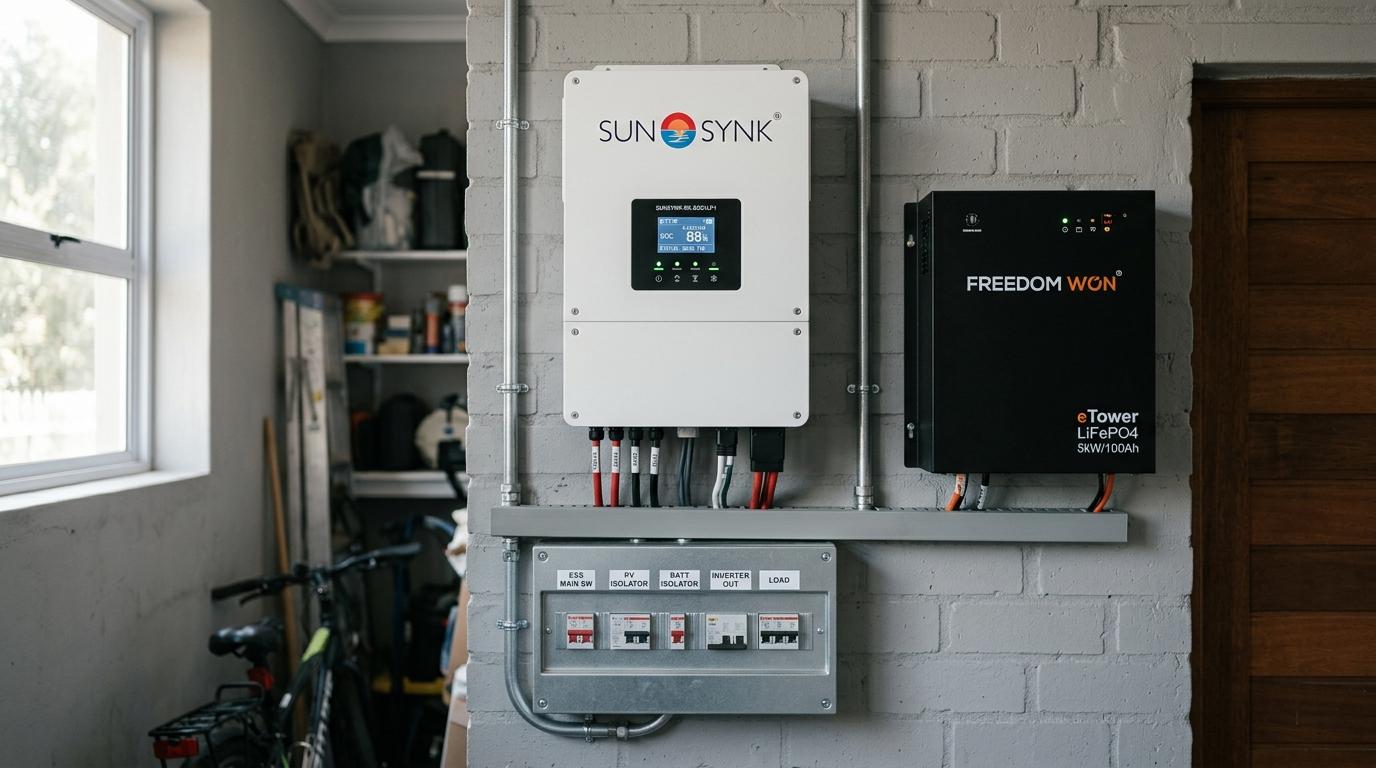
Quick read
- Choose cash if you have the R74,500+ available - cheaper over 5 years than a bank loan (~R26,900 less) and than most rent-to-own deals, and you own the system outright from day one.
- Choose a bank loan if you don't have the cash but qualify for credit - you own the system from day one.
- Choose rent-to-own if a bank has declined you or you have no credit history - you'll pay more in total, but you end up owning the system. See who would approve you with no credit check, then compare provider-by-provider terms.
- Choose a PPA if you want zero commitment and zero admin - you never own the system, but you only ever pay for power you actually used. See how a solar PPA works for the contract details and traps.
- Weighing subscription/rental against buying outright over 10 years? See the full subscription vs buy comparison.
- Comparing loan structures specifically (bond advance vs personal loan vs MFC)? See the solar loan guide.
Solar Panels Monthly Payments: What to Expect by System Size
South Africa's prime lending rate is 10.75% (repo 7.25%, effective 25 September 2026). Bank solar rates depend on product and credit profile; the only published cap is Standard Bank's up to prime + 6.5% (checked 14 November 2026, see the bank table below). The tables below price our kits at the site's one representative rate, prime + 2.00%, with no deposit - the same rate behind the monthly figure on every kit card. A bond advance will usually come in lower and an unsecured personal loan with risk loading higher; the bond advance vs personal loan comparison further down shows what that spread costs. For instalments computed live off today's prime, use the calculator above.
Quick view by size: monthly and cash price for each kit, with every loan term's full repayment breakdown just below.
| System size | Monthly (from, prime + 2.00%) | Cash price (from) |
|---|---|---|
| 5kW | R1,690/mo | R74,500 |
| 8kW | R2,140/mo | R94,500 |
| 10kW | R3,100/mo | R137,000 |
5kW System: Family Essential 5kW (R74,500-R90,500 installed)
Family Essential 5kW (5kW inverter, 10kWh battery, 12 panels). Suits 300-600kWh/month household.
| Loan Term | On R74,500 | On R90,500 | Total repaid (on R74,500) |
|---|---|---|---|
| 24 months | R3,530/mo | R4,290/mo | R84,720 total |
| 36 months | R2,500/mo | R3,040/mo | R90,000 total |
| 60 months ★ | R1,690/mo | R2,050/mo | R101,400 total |
| 84 months | R1,350/mo | R1,630/mo | R113,400 total |
8kW System: Family Plus 8kW (R94,500-R110,500 installed)
Family Plus 8kW (8kW inverter, 10kWh battery, 16 panels). Suits 600-1,000kWh/month household.
| Loan Term | On R94,500 | On R110,500 | Total repaid (on R94,500) |
|---|---|---|---|
| 24 months | R4,480/mo | R5,240/mo | R107,520 total |
| 36 months | R3,170/mo | R3,710/mo | R114,120 total |
| 60 months ★ | R2,140/mo | R2,500/mo | R128,400 total |
| 84 months | R1,710/mo | R2,000/mo | R143,640 total |
10kW Homes: Family Pro 10kW (R137,000-R161,000 installed)
Family Pro 10kW (10kW inverter, 14kWh battery, 22 panels). Suits 1,000-1,500kWh/month household.
| Loan Term | On R137,000 | On R161,000 | Total repaid (on R137,000) |
|---|---|---|---|
| 24 months | R6,500/mo | R7,640/mo | R156,000 total |
| 36 months | R4,600/mo | R5,410/mo | R165,600 total |
| 60 months ★ | R3,100/mo | R3,640/mo | R186,000 total |
| 84 months | R2,470/mo | R2,910/mo | R207,480 total |
Solar Finance Providers Compared: Banks, Rent-to-Own, Subscription & PPA (2026)
Here is every main solar finance provider in South Africa in one place, provider by provider, with the fact each one is compared on: the type of finance, whether they run a credit check, the deposit, the term, the indicative rate or monthly from-price, whether you own the system at the end, and who it suits. Banks and asset-finance lenders run a full credit check and you own the system from day one; rent-to-own, subscription and PPA providers do a lighter affordability check (or none), need no deposit, but cost more over the full term. Figures are each provider's own published terms, verified October 2026; where a provider does not publish a figure it is marked “on application”.
Bank and asset-finance providers (you own the system)
These lenders finance a system you own from day one. All run a full credit-bureau check, so a clean record matters. If you have an existing bond, the home-loan further advance is almost always the cheapest money.
| Provider | Type | Credit check | Deposit | Term | Indicative rate / from-price | Own it at the end? | Best for |
|---|---|---|---|---|---|---|---|
| FNB[1] | Personal Solar Loan (also a home-loan route) | Full credit-bureau check | Not published | Not published | Not published (FNB page last read 11 November 2026) | You own it from day one | FNB customers wanting a discounted unsecured rate |
| Absa[2] | Solar & Energy Finance (home-loan further advance; personal-loan route too) | Full credit-bureau check | On application (secured on home equity, so usually no cash deposit) | Not published | Not published - the teaser promises only "a discounted interest rate" | You own it from day one | Absa home-loan customers with available equity |
| Nedbank[3] | Home-loan further advance / NedRevolve (plus MFC asset finance) | Full credit-bureau check | On application | Home-loan route on application; MFC asset finance up to 96 months | On application (published only as a "competitive" rate) | Home-loan route: own from day one. MFC: ownership after the final payment | Nedbank bond holders, or buyers wanting asset finance off the bond |
| Standard Bank (LookSee)[4] | Solar / Energy personal loan, applied for via LookSee (open to any bank’s customers) | Full credit-bureau check (minimum income R8,000/month) | On application (the loan can fund the full system incl. installation) | 12 to 72 months | Personalised, up to prime + 6.5% (R69/mo service fee; initiation up to R1,207.50) | You own it from day one | Anyone wanting a standalone unsecured solar loan of R3,000-R300,000 |
| Investec[5] | Private Bank energy finance (home-loan re-advance) | Full credit-bureau check (private-bank clients) | On application (uses your home-loan facility, so no cash deposit) | Flexible 60-month option | From prime, no initiation fee | You own it from day one | Investec private-bank clients, finance up to R500,000 |
| WesBank[6] | Residential solar asset finance | Full credit-bureau check | Not published | Not published | Not published | You own it from day one | Registered property owners wanting asset finance over the system itself |
| MFC (a Nedbank division)[3] | Vehicle-style asset finance | Full credit-bureau check | On application | Up to 96 months | On application | Ownership transfers after the final payment | Buyers wanting fixed asset-finance instalments and fast approval |
| Home-loan further advance (any bank / access bond)[7] | Secured further advance on an existing bond | Full credit-bureau check plus a property valuation | R0 cash deposit (drawn against your bond) | Tied to your bond term (commonly up to 20-30 years) | Your home-loan rate (prime-linked) - usually the cheapest money available | You own it from day one | Homeowners with available equity in an existing bond |
Rent-to-own, subscription and PPA providers (R0 upfront)
These providers install and own the system; you pay a fixed monthly fee with no deposit. Rent-to-own ends in ownership; a subscription or PPA does not. Approval is based on affordability rather than your credit score, so these routes stay open when a bank declines you - see the no-credit-check guide for the full breakdown.
| Provider | Type | Credit check | Deposit | Term | Indicative rate / from-price | Own it at the end? | Best for |
|---|---|---|---|---|---|---|---|
| Sinetech (via Merchant West)[8] | Rent-to-own | Full credit-bureau check (approval in 2-3 days) | R0 - no deposit | 36-84 months (listed systems on a 60-month term) | From R1,540/mo (3.5kW), R1,595/mo (5kW), R3,649/mo (8kW) | Ownership transfers after the final payment | Buyers wanting to own via fixed instalments with no deposit |
| Alumo Energy[9] | Rent-to-own (subscription option too) | Full credit-bureau check | R0 upfront (initiation fee from R700, waived if the quote is accepted within 7 days) | 3, 5 or 7 years (rent-to-own) | Rent-to-own from R1,449/mo (6.5% annual escalation); subscription from R1,299/mo | Ownership transfers at the end (buy-out) | Buyers who want to eventually own, not rent forever |
| SunSavings[10] | Rent-to-own | On application | On application | 61 months, 0% escalation | From R1,899/mo incl. VAT (up to R6,179/mo for the largest system) | Ownership transfers at the end of the term | Buyers wanting fixed, non-escalating payments and eventual ownership |
| GoSolr[11] | Fixed-fee subscription | On application (light affordability check, not fully published) | R0 - no capital upfront | No fixed term (month-to-month) | From about R1,399/mo (press-reported; GoSolr does not publish a machine-readable rate) | Provider keeps ownership (buy-out option later) | Homeowners wanting no lock-in, with insurance and maintenance bundled |
| Wetility[12] | Fixed-fee subscription (purchase option too) | On application | On application (no upfront install cost; "pay one month later" offered) | On application | From R1,099/mo (PACE Backup) up to R4,529/mo (PACE Mega) | Provider keeps ownership on the subscription (own only via the separate purchase) | Homeowners wanting zero-upfront, fully managed monthly solar |
| Stage Zero[13] | Fixed-fee subscription / rental | On application | R0 - no upfront cost | No fixed term (month-to-month; 3-month cancellation notice) | On application | Provider keeps ownership (you never own it) | Buyers wanting pure month-to-month rental with no commitment |
| Zensolar[14] | Rent-to-own, lease or PPA (you choose) | On application | No large deposit (figure not published) | On application | On application (no rand prices published) | Rent-to-own / lease: transfers to you. PPA: provider keeps it | Buyers wanting a flexible structure chosen on a consultation |
| OneEnergy[15] | Installer-arranged finance (asset finance / rent-to-own / outright purchase) | Via finance partners (full check implied) | On application | On application | On application (no prices published) | Purchase: own from day one. Rent-to-own: transfers after the final payment | Buyers wanting an installer who arranges the finance for them |
| Solafi[16] | Platform offering PPA, rent-to-own or a bank loan | On application (loan and rent-to-own options imply a full check) | On application (PPA has no upfront cost) | Financing up to 15 years; otherwise on application | On application (PPA framed as 70-90% of the 10-year grid cost) | Bank loan: own from day one. Rent-to-own: transfers. PPA: provider keeps it | Buyers wanting to compare own-vs-finance-vs-PPA in one place |
| SolarAfrica[17] | PPA (pay-per-kWh) - commercial & industrial only, no residential plan | On application | R0 - no upfront payment for PPA systems | Typically 10-15 years | On application (tariff indexed to CPI; marketed as up to 50% cheaper than grid) | Provider keeps ownership (fully financed, maintained and insured) | Commercial and industrial businesses wanting zero-capex solar |
Sources - all figures verified October 2026 against each provider's published terms. Rates, prices and deposits change; confirm the current figure with the provider before you sign. Fields marked “on application” are not published publicly - we do not guess them.
- FNB - Personal Solar Loan Benefit
- Absa - Solar financing
- Nedbank / MFC - Solar finance
- Standard Bank (LookSee) - Solar loan
- Investec - Private Bank solar/energy finance
- WesBank - Residential solar finance (BusinessTech, Aug 2024)
- Home-loan further advance - see each bank’s home-loan page above
- Sinetech - Rent-to-own solar system
- Alumo Energy
- SunSavings - Pricing
- GoSolr (from-price per BizNews; official site not machine-readable)
- Wetility
- Stage Zero - Solar
- Zensolar
- OneEnergy
- Solafi
- SolarAfrica
Not sure which of these you'd qualify for? Tell us your monthly electricity bill and how you'd prefer to pay in the calculator above - we match you to the lenders and providers most likely to approve you. It is free, no obligation, and does not affect your credit record.
Bank-by-Bank: Standard Bank, Nedbank, FNB, Absa, Discovery Bank, MFC & WesBank
Every major South African bank sells a solar finance route, and almost none of them publish the number you need to compare them. The table below is what each bank's own page says today - rate basis, amount, term, fees, who gets paid and whose quote you need - with a source link and check date on every row. Below it: which bank to choose for which situation, and a three-tap check that narrows it to yours.
Which Bank Is Best for Solar Finance in South Africa?
Standard Bank is the only one of the five banks that publishes a specific solar-loan rate cap, loan range and fee schedule on its own current page: an Energy Loan up to prime + 6.5% on a loan amount of R3,000-R300,000 over 12-72 months, open to customers of any bank (checked 14 November 2026). Nedbank, through MFC, publishes the longest term - up to 96 months - but no rate. FNB publishes no figures on the page we could read, Absa's solar page is a dead link, and Discovery Bank's Rubicon package had every energy page offline on the check date.
| Bank | Main route | Amount | Term | Rate basis | Fees | Who gets paid | Supplier rule | Checked on (source) |
|---|---|---|---|---|---|---|---|---|
| Standard Bank our LookSee review | Energy Loan, applied for on LookSee - open to customers of any bank | R3,000 - R300,000 | 12 - 72 months | Personalised rate, up to prime + 6.5% | R69/month service fee; once-off initiation fee of up to R1,207.50 (incl. VAT); no penalty or early-termination fee if you settle early | Paid into your own bank account - same day for Standard Bank clients, the next day if you bank elsewhere - not direct to the installer | None required - a quote or invoice no older than 30 days from your own supplier, or a LookSee-vetted supplier | 14 November 2026Standard Bank - Energy Loan |
| Nedbank (MFC / Avo Solar) | MFC asset finance (a division of Nedbank; no Nedbank home loan needed), or a Nedbank home-loan value-add (NedRevolve, readvance or further loan, existing Nedbank home-loan clients only). Nedbank sells the turnkey package as "Nedbank Solar through Avo" - Avo Solar is the first name on its approved-supplier list | Not published | MFC: up to 96 months (no balloon on solar). Home-loan value-add: not published | "Competitive interest rate" - no figure published for either route; MFC offers a linked or a fixed rate on application | Not published on the solar pages. MFC’s own calculator defaults to a R69/month admin fee and a R1,207.50 once-off initiation fee. Optional solar-asset insurance from about R99/month is separate from the loan | Not published directly - you arrange installation with your supplier once financed; Nedbank quotes 2 - 4 weeks to install | Required - an installation quote from a Nedbank-approved, SAPVIA-accredited supplier (Avo Solar or one of about twelve others) before you can apply | 14 November 2026Nedbank - Solar finance (plus mfc.co.za for the MFC calculator fees) |
| FNB | Apply for a solar loan through your existing FNB credit facility, or a fresh application; the home-loan-linked route is sold through the FNB App under nav» Home / nav» Energy | Not published on the page we could read. Google’s indexed copy of FNB’s nav» Home page advertises a home-loan-linked solar loan of "up to 15% of your property value", which we could not open to confirm | Not published | Not published | Not published | Not published | None required - FNB recommends (does not require) a SAPVIA-certified, SSEG-registered installer | 11 November 2026FNB - Personal solar loan benefitfnb.co.za answered every request on 14 November 2026 with a bot-verification page, so this row keeps the 11 November read. |
| Absa | "Absa Solar and Energy Finance", teased on the Absa loans page - the product page it links to (/personal/loans/for-a-home/solar-financing/) returns a 404 | Not published | Not published | Not published - the teaser promises only "a discounted interest rate", no figure given | Not published | Not published | Not published | 14 November 2026Absa - Loans (teaser; product page is a dead link) |
| Discovery Bank (Rubicon) | Discovery Bank Energy Solutions, installed by Rubicon and financed through the client’s Discovery Bank credit facility - every Discovery energy page we tried returned a 404 and the lending-products page lists no solar product. The only live lending figures are its Personal Loan | Personal Loan: R15,000 - R500,000. Solar-specific limit: not published | Personal Loan: 6 - 72 months. Solar-specific term: not published | Personal Loan: personalised, linked to prime, with up to 5% off for Discovery Bank clients based on Vitality Money status. The "from prime minus 2%" figure the AI Overview quotes comes from a 2023 document, not a live page | Not published on the pages read | Personal Loan: paid into your Discovery Bank account, within 48 hours. Solar-specific: not published | Rubicon installs the Energy Solutions package (per Discovery’s 2023 launch); not stated on any live page we could read | 14 November 2026Discovery Bank - Personal Loans (energy pages offline on the check date) |
Which Bank Should You Choose for Solar Finance?
Choose Standard Bank if you want published terms and bank anywhere, Nedbank if you want the longest term or a turnkey package, and your own bond bank if you have equity to borrow against. FNB, Absa and Discovery Bank only make sense if you already bank there, because none of them publishes a figure you can compare before you apply. Bank by bank:
- Standard Bank. Choose Standard Bank if you want the one bank route with a published rate cap, amount range and fee schedule, and you do not bank with Standard Bank: the Energy Loan is R3,000 - R300,000 over 12 - 72 months at up to prime + 6.5%, applied for on LookSee with any installer’s quote, and the money lands in your own account. Checked 14 November 2026.
- Nedbank (MFC / Avo Solar). Choose Nedbank if you want the longest term - MFC finances solar over up to 96 months with no Nedbank home loan required - or a turnkey package, which Nedbank sells as Nedbank Solar through Avo Solar. The trade-off is that your quote must come from Nedbank’s approved-supplier list before you can apply, and neither route publishes a rate. Checked 14 November 2026.
- FNB. Choose FNB only if you already hold an FNB home loan: its solar route is sold through the home loan in the FNB App, and FNB publishes no rate, term, amount or fee on the page we could read - you will only see your own figures once you apply. Checked 11 November 2026.
- Absa. Do not choose Absa on what it publishes, because it publishes nothing: the only live mention is a "discounted interest rate" teaser whose product page is a dead link. If you bank with Absa, ask for the solar rate in writing and compare it with a further advance on your bond. Checked 14 November 2026.
- Discovery Bank (Rubicon). Choose Discovery Bank only if you already bank there: the Rubicon package is sold to Discovery Bank clients, its energy pages were offline when we checked, and the only published lending figures are a Personal Loan of R15,000 - R500,000 over 6 - 72 months at a prime-linked rate with up to 5% off for Vitality Money status. Checked 14 November 2026.
- Any bank that holds your bond. A further advance or readvance at your bond rate is usually the cheapest money available for solar, whichever of the five it is - the bond advance vs personal loan comparison below shows what the spread costs on R100,000.
Which bank route fits you?
Three taps settle it: the kind of finance you want, whether one of these banks already holds your bond, and your monthly bill. We return the bank route from the table above and what our matching kit costs a month. No contact details needed to see it, and nothing here touches your credit record.
The Bank Routes in Detail
Each card below restates the row for that bank in the table above - same route, same source, same check date. Rates, fees and amounts live in the table and nowhere else on this page.
FNB Solar Finance
Route: Apply for a solar loan through your existing FNB credit facility, or a fresh application; the home-loan-linked route is sold through the FNB App under nav» Home / nav» Energy.
Whose quote you need: None required - FNB recommends (does not require) a SAPVIA-certified, SSEG-registered installer.
Choose FNB only if you already hold an FNB home loan: its solar route is sold through the home loan in the FNB App, and FNB publishes no rate, term, amount or fee on the page we could read - you will only see your own figures once you apply.
Rate, amount, term and fees: see the FNB row. Source: FNB - Personal solar loan benefit, checked 11 November 2026.
Absa Solar Finance
Route: "Absa Solar and Energy Finance", teased on the Absa loans page - the product page it links to (/personal/loans/for-a-home/solar-financing/) returns a 404.
Whose quote you need: Not published.
Do not choose Absa on what it publishes, because it publishes nothing: the only live mention is a "discounted interest rate" teaser whose product page is a dead link. If you bank with Absa, ask for the solar rate in writing and compare it with a further advance on your bond.
Rate, amount, term and fees: see the Absa row. Source: Absa - Loans (teaser; product page is a dead link), checked 14 November 2026.
Nedbank Solar Finance
Route: MFC asset finance (a division of Nedbank; no Nedbank home loan needed), or a Nedbank home-loan value-add (NedRevolve, readvance or further loan, existing Nedbank home-loan clients only). Nedbank sells the turnkey package as "Nedbank Solar through Avo" - Avo Solar is the first name on its approved-supplier list.
Whose quote you need: Required - an installation quote from a Nedbank-approved, SAPVIA-accredited supplier (Avo Solar or one of about twelve others) before you can apply.
Choose Nedbank if you want the longest term - MFC finances solar over up to 96 months with no Nedbank home loan required - or a turnkey package, which Nedbank sells as Nedbank Solar through Avo Solar. The trade-off is that your quote must come from Nedbank’s approved-supplier list before you can apply, and neither route publishes a rate.
Rate, amount, term and fees: see the Nedbank (MFC / Avo Solar) row. Source: Nedbank - Solar finance (plus mfc.co.za for the MFC calculator fees), checked 14 November 2026.
Standard Bank Solar Finance
Route: Energy Loan, applied for on LookSee - open to customers of any bank.
Whose quote you need: None required - a quote or invoice no older than 30 days from your own supplier, or a LookSee-vetted supplier.
Choose Standard Bank if you want the one bank route with a published rate cap, amount range and fee schedule, and you do not bank with Standard Bank: the Energy Loan is R3,000 - R300,000 over 12 - 72 months at up to prime + 6.5%, applied for on LookSee with any installer’s quote, and the money lands in your own account.
Rate, amount, term and fees: see the Standard Bank row. Source: Standard Bank - Energy Loan, checked 14 November 2026.
MFC (Nedbank) Solar Finance
Route: MFC asset finance - the system is financed like a vehicle, with instalments over the term MFC publishes: MFC: up to 96 months (no balloon on solar). Home-loan value-add: not published. MFC is a division of Nedbank and no Nedbank home loan is needed.
Rate and fees: see the Nedbank (MFC) row - MFC publishes no rate figure on its solar pages. Source: Nedbank - Solar finance (plus mfc.co.za for the MFC calculator fees), checked 14 November 2026.
WesBank Solar Finance
Route: WesBank sells residential solar as asset (instalment sale) finance over the system itself, structured like vehicle finance, rather than against your bond. A full credit-bureau check applies.
Rate, term, deposit and amount: not published here - we have not read them off WesBank's own page, so no figure is shown rather than a second-hand one. Ask WesBank or a WesBank-accredited installer for the written terms.
Rule of thumb: if you have an existing bond, always apply to add solar as a further advance first - a bond rate is usually below an unsecured personal-loan rate, and the bond advance vs personal loan comparison below shows what that spread costs on R100,000. Only use an unsecured personal loan or asset finance (MFC, WesBank) if you don't own property, your bond is nearly paid off, or you need installation within two weeks. Other lenders worth comparing include Capitec and African Bank (higher rates but consider lower credit scores) and installer payment plans.
Rent to Own Solar: What It Is and What It Costs Over the Term
Rent-to-own solar lets you install a full system - panels, hybrid inverter and battery - with no deposit and pay a fixed monthly fee, and ownership transfers to you after the final payment, usually 5 to 7 years later. Approval is based on whether you can afford the monthly fee rather than your credit score, because the provider keeps the equipment as security until it is paid off. It is the easiest route to qualify for, and the most expensive over the full term.
Cost over the term: a worked 5kW example
At R1,595/month on a 60-month rent-to-own (Sinetech's published 5kW from-price, 0% escalation), you pay about R1,595 × 60 = R95,700 in total and own the system at the end. The same 5kW system bought as our Family Essential 5kW kit at R74,500 on a 60-month bank loan at a representative prime + 2.00% is about R1,690/month, R101,400 in total - and you own it from day one.
The rent-to-own route costs more overall, but needs no deposit and no bank approval. If a provider quotes an annual escalation (commonly about 6.5%), the total climbs further - a R1,595/month plan with 6.5% yearly escalation works out closer to R109,000 over five years. Always compare the five-year total, not the first month.
If a bank loan isn't an option - no bond, a thin credit file, or simply no capital - rent-to-own and R0-upfront Power Purchase Agreements (PPAs) let you go solar today. The provider installs and owns the system; you pay a fixed monthly fee. Some products run a lighter affordability check rather than a full credit-bureau enquiry, because the provider keeps the equipment as security until it's paid off. See the rent-to-own, subscription and PPA table above for each provider's deposit, term and monthly from-price.
Why it works
- ✓ No capital required - install this month
- ✓ Little or no credit check on several products
- ✓ Maintenance typically covered by the provider
- ✓ Ownership transfers to you after the final payment (rent-to-own)
The trade-offs
- ✗ Total cost is typically 25%-40% higher than owning on a bank loan
- ✗ You don't own the system until the term ends
- ✗ Selling the home means transferring or settling the contract
- ✗ No tax incentives apply while you don't own the system (Section 12B is business-only, and the individual panel rebate has closed)
Typical rent-to-own solar pricing runs about R1,450-R3,650/month depending on system size (Alumo and Sinetech published from-prices, checked 20 October 2026), with ownership transferring after 5-10 years. Providers active in South Africa include subscription and rent-to-own operators such as SolarAfrica, Wetility and Gosolr. For a full explanation of how rent-to-own structures work, what the contract covers and what to watch for, compare providers on our rent-to-own solar comparison. For the full breakdown of no-deposit and no-credit-check options see our no-credit-check solar finance guide.
Is Rent-to-Own Solar Worth It? Total Cost Comparison
The Reddit top answer on rent-to-own solar (14 upvotes): "the rental agency takes out a bank loan at prime+3%, marks it up, and you pay more total." This is the question the SERP avoids. Here is the honest comparison over 5 years:
| Route | Monthly | Total (5 years) | You own it? |
|---|---|---|---|
| Buy outright (cash) | R0 | R74,500 | Yes - immediately |
| Bank loan | R1,690 | ~R101,400 | Yes - from day one |
| Rent-to-own (0% escalation) | R1,595 | R95,700 | Yes - after 5 years |
| Rent-to-own (6.5% escalation) | R1,595 → R2,100/yr | ~R109,000 | Yes - after 5 years |
Rent-to-own costs 10%-45% more than a bank loan over 5 years, depending on escalation. But it needs no deposit, no bank approval, and requires only an affordability check. Choose it when: a bank has declined you, you have no credit history, or you want to avoid a full credit-bureau enquiry.
Capitec Solar Finance: Current Status
Capitec does not currently offer a dedicated solar loan product. The nearest option is their personal loan (prime + X%, on application), which can finance the system but is not a specialized solar product. If Capitec launches a dedicated solar loan, this section will update. For now, compare Capitec's personal-loan rates against the bank options above - higher rates but they consider lower credit scores and process quickly.
MFC vs WesBank: What's the Difference?
Both MFC (a Nedbank division) and WesBank structure solar finance like vehicle finance, with fixed instalments. The key differences:
MFC (Nedbank)
- Security: The system itself (asset finance)
- Deposit: On application (often R0)
- Term: Up to 96 months
- Rate: On application
- Ownership: Transfers after final payment
- Best for: Fastest approval, flexible terms
WesBank
- Security: The system itself (instalment sale)
- Deposit: Not read off WesBank's own page
- Term: Not read off WesBank's own page
- Rate: Fixed or linked, on application
- Ownership: Transfers after final payment
- Best for: A dedicated asset-finance product for the system
The choice: both route around a full home-loan process. MFC's deposit is set on application; WesBank's deposit, term and amount are not published here, so ask for the written terms. Compare both on rate and total cost.
What Changed Since June 2026
- Investec green financing: Investec added a dedicated energy-finance product for private-bank clients; see the Investec row in the provider table for its source and date.
- Nedbank NedRevolve update: NedRevolve (revolving credit on a bond) can now be used for solar. Rates and terms on application; fastest approval for Nedbank customers with available equity.
- WesBank asset finance: WesBank sells residential solar as asset finance; its limits and terms are not read off its own page here.
- Rent-to-own escalation norms: most providers now publish 0%-6.5% annual escalation; always ask and compare the 5-year total, not the headline month
- Absa's solar page went dark: as of 14 November 2026, Absa's dedicated solar-finance page 404s; the loans page still teases “Absa Solar and Energy Finance” with no working link to a product page or a rate.
Bond Advance vs Personal Loan: The R17,000 Difference
If you own your home you can access two very different rates for the same solar loan. On R100,000 of solar finance over 60 months:
Bond Advance (Home Owners)
Personal Loan (Unsecured)
Cash vs Finance: Break-Even Analysis
The honest answer: cash is cheaper - but only if you have it. Here is the break-even for our Family Essential 5kW kit (10kWh battery) at R74,500, for the household our shared savings model sizes it for (about 563kWh a month). Loan figures are estimates at a representative prime + 2.00%, no deposit.
| Metric | Cash | Finance (60mo @ prime + 2.00%) | Finance (84mo @ prime + 2.00%) |
|---|---|---|---|
| Monthly repayment | R0 | R1,690 | R1,350 |
| Monthly Eskom saving | ~R1,490 | ~R1,490 | ~R1,490 |
| Net monthly cash flow | +R1,490/mo | -R200/mo | +R140/mo |
| Total interest cost | R0 | R26,900 | R38,900 |
The verdict
Cash beats finance by ~R26,900-R38,900 in interest over 5-7 years. On a 60-month loan our Family Essential 5kW costs R1,690 a month against a modelled year-1 saving of R1,490: about R200 a month more than it saves in year 1, and as tariffs rise (our savings model assumes 13.67% a year) the saving overtakes the repayment in year 2 (+R0/month) and reaches +R240/month in year 3. On 84 months the repayment is R1,350, +R140 a month from month one, but it costs R12,000 more in interest. But if you don't have R74,500 on hand, a 60-month loan is paid off in 5 years, and from then on the whole saving is yours: about R2,830/month in year 6 on the same model. The question isn't “cash or finance?” - it's “financed solar or no solar?” For most households in 2026 the answer is financed solar. These saving figures use a typical blended rate - see Eskom and municipal electricity tariffs, explained to work out your own household's real cost per kWh before you compare quotes.
Section 12B & the Closed SARS Rebate: The Tax Angle
Only one tax incentive still reduces the real cost of solar in 2026: Section 12B, for businesses. The individual residential rebate has closed.
Individuals: the residential solar rebate (closed)
SARS ran a once-off residential solar rebate for individual taxpayers: 25% of the cost of new solar panels (panels only - not inverters, batteries, wiring or installation) at your primary residence, up to a maximum of R15,000. It only covered panels brought into use between 1 March 2023 and 29 February 2024, and 2023/24 tax returns were the last chance to claim it. It is no longer available - if a quote or sales pitch in 2026 offers it to you, the numbers are wrong.
Businesses: Section 12B
Section 12B is a separate incentive for businesses, allowing the cost of qualifying renewable-energy assets (including solar PV) to be deducted against taxable income. Companies and sole proprietors financing solar for business premises should model Section 12B rather than the old residential rebate. For the full mechanics, thresholds and how to claim, see our Section 12B solar tax deduction guide.
2026 note: the individual residential rebate closed on 29 February 2024 and cannot be claimed on current-year returns. Section 12B remains in place for businesses - confirm current terms on the SARS website (sars.gov.za) before filing.
Which Route Is Cheapest? The Decision Framework
You own your home AND have an existing bond
Best route: further advance on your bond. A further advance at your bond rate is usually the cheapest route; ask your bank for your bond rate. Apply at your current bank first.
You own your home but have no bond
Best route: unsecured personal loan or MFC asset finance. Compare FNB, Absa and Nedbank; MFC suits fixed predictable payments.
You rent, have a thin credit file, or no capital
Best route: rent-to-own or R0-upfront PPA. Highest total cost, lowest barrier to entry. A viable strategy is to run a PPA while saving, then buy out or refinance to ownership later.
Choose a loan (own it) if:
- • You'll keep the home 5+ years
- • You want the system as an asset on the property
- • You want to avoid subscription escalation clauses
- • You can qualify at a reasonable rate - savings grow with tariffs while your loan payment stays fixed
Choose rent-to-own / subscription if:
- • Your ownership horizon is uncertain (renting, may sell)
- • You don't want maintenance responsibility
- • You can't qualify for a loan at a reasonable rate
- • Cash flow is tight and you need the lowest possible monthly outlay
How to Qualify & Apply for Solar Finance
What banks check
- Affordability: 3 months' payslips (or 6 months' statements if self-employed); most banks want total debt repayments below ~40% of gross income.
- Credit profile: score ≈580+ for a personal loan, ≈650+ for preferential home-improvement rates; no recent defaults, judgments or active debt review. Check your score free via ClearScore or TransUnion first.
Documents you'll need
- □ South African ID or passport
- □ Proof of residence (≤3 months)
- □ Last 3 months' payslips
- □ Last 3 months' bank statements
- □ Detailed installer quote (system specs)
- □ Installer's SAPVIA/NAPIT registration
- □ Property title deed (bond advance only)
- □ Latest electricity bill (some banks)
Step by step
- Get a solar quote first. Banks finance a specific quote - system size, panel brand/wattage, inverter model, battery capacity and total installed price. Get 2-3 quotes from accredited installers.
- Check your existing bank first. Existing-customer rates for “home improvement”, “further advance” or “green/solar loan” usually beat a fresh application.
- Choose the right product. Homeowner with a bond → bond advance. Renter or no security → personal loan or rent-to-own. Compare every written offer against Standard Bank's published cap of prime + 6.5% and a further advance at your bond rate.
- Apply and compare. Apply to 2-3 lenders within a 14-day window - that counts as a single credit-bureau enquiry. Personal loans decide in 24-48 hours; bond advances take 7-14 days (property valuation).
- Instruct your installer. On approval the bank typically pays the installer directly. Get your CoC and keep the itemised invoice to claim the SARS rebate.
Hidden costs to check before you sign
- Initiation fee: up to R1,207.50 (NCA max) added to the loan
- Monthly service fee: up to R69/mo - ~R4,140 over 60 months
- Credit life insurance: often pre-ticked - shop it separately
- Early-settlement penalty: up to 3 months' interest - ask first
- Fixed vs variable rate: variable rates move with SARB decisions
- Balloon payment: avoid in-house plans with a balloon unless you understand it
Ready to see your monthly payment?
Get a free, no obligation quote and we'll match you to the finance route and the monthly figure that fits your budget.
Get matched
Which finance route is right for you?
Tell us your monthly electricity bill and how you'd prefer to pay - we match you to the lenders and providers most likely to approve you, in minutes.
Free, no obligation, and seeing your shortlist does not touch your credit record. Providers only run their own affordability check once you apply.
Monthly payment calculations use the standard amortisation formula (principal + interest). Rates referenced are indicative, based on the South African prime lending rate of 10.75% (repo 7.25%, effective 25 September 2026) and publicly available bank product rate ranges; actual rates vary by applicant credit profile and bank assessment. System prices are EnergyBee kit prices, installed with the battery each kit includes, read from the same records as our quote tool; your price sits within the kit's range depending on your site. This guide is for information only and does not constitute financial advice - consult your bank or a registered financial advisor before committing to any loan product, and confirm tax-incentive eligibility with SARS.