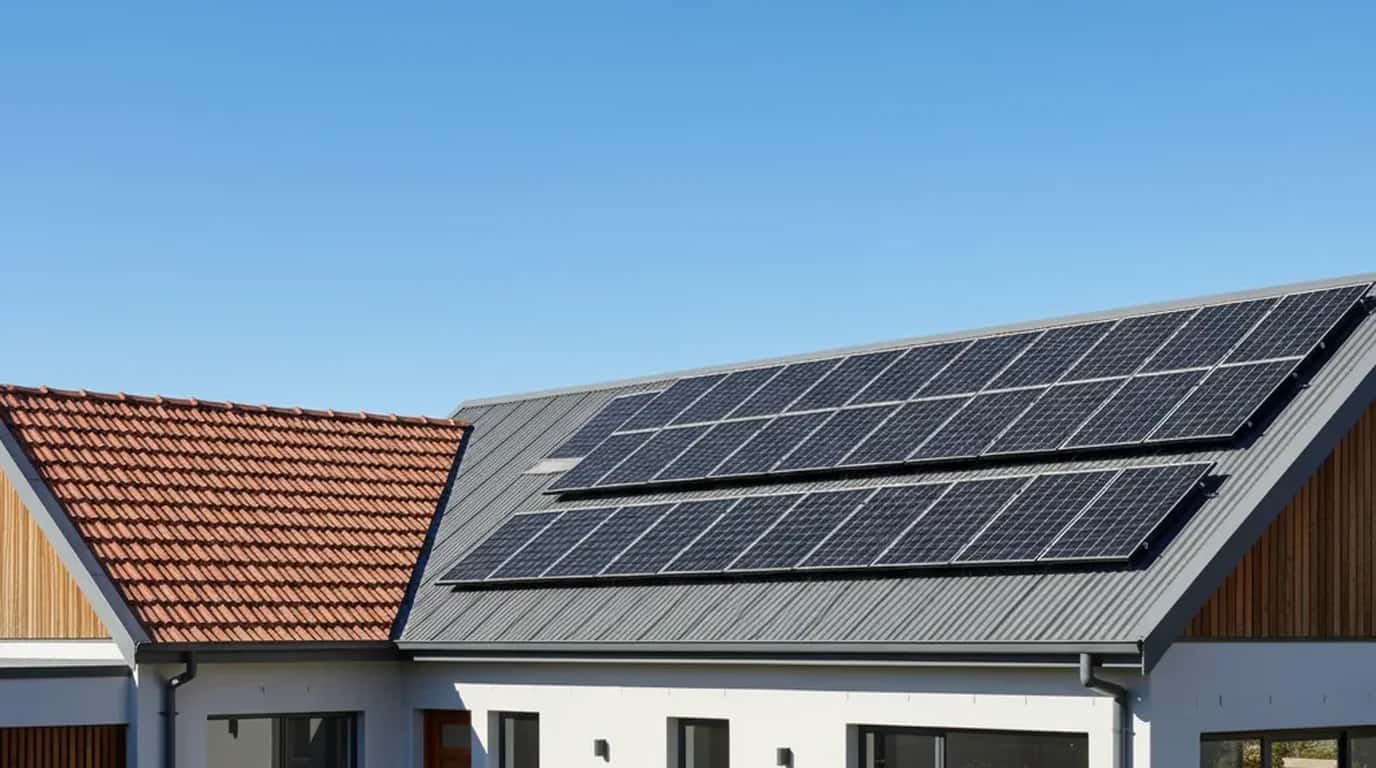
Solar panel prices in South Africa are R1,350-R2,700 per panel in October 2026: a standard 550W Tier 1 panel is R1,650-R2,500 and a 600W-class panel R1,800-R2,700. Fully installed with a battery, a complete system costs R74,500-R90,500 for 5kW (10kWh), R94,500-R110,500 for 8kW (10kWh) and R150,500-R177,000 for 12kW (14kWh).
Updated 20 November 2026. Per-panel and per-watt figures are South African retailer and distributor shelf prices re-checked 8 October 2026; installed system prices are read from EnergyBee's own kit records, the same data the instant quote tool sells from. Panels are 35-45% of an installed system's price.
On the last job I did, the panels were Canadian Solar 600W, at about R2,300 a panel. That's the price of the panel itself. I can't give you an installed price per panel, because we do a complete job cost.
Most panels are pretty good in terms of failure, and there isn't really much difference between them. They can be fragile in delivery and handling, but once they're on the roof and don't move, they don't typically damage easily. They're quite a simple product, so there's less to go wrong. On my own roof I'd put a bifacial panel, and I'd choose on size and grade before brand.
So this page gives you the prices, and then which panel I'd pick, and when I wouldn't add more of them. - Neil Berrow
Short answer: what you pay in 2026
- 550W Tier 1 panel (Canadian Solar, JA Solar, Longi, Trina, Jinko): R1,650-R2,500 each, 25 year warranty.
- 585-605W Tier 1 panel (fewer panels for the same roof): R1,800-R2,700 each.
- Budget Tier 2 450-550W panel: R1,350-R2,000 each, 10-15 year warranty.
- Complete installed 5kW + 10kWh battery: R74,500-R90,500.
- Complete installed 8kW + 10kWh battery: R94,500-R110,500.
- Complete installed 12kW + 14kWh battery: R150,500-R177,000.
Quick answer
How much do solar panels cost in South Africa? (2026)
Solar panels cost R1,350-R2,700 each (R2.50-R5.00 per watt) in South Africa in 2026. A complete EnergyBee 5kW system with 10kWh of battery storage costs R74,500-R90,500 fully installed, and every system price below includes the battery. For comparison, the wider market typically quotes R75,000-R100,000 for 5kW without a battery.
| Solar panel / system | Price (2026) |
|---|---|
| Single panel (450-600W) | R1,350 - R2,700 |
| Price per watt | R2.50 - R5.00/W |
| 5kW + 10kWh battery, installed | R74,500 - R90,500 |
| 8kW + 10kWh battery, installed | R94,500 - R110,500 |
| 12kW + 14kWh battery, installed | R150,500 - R177,000 |
| Market range: 5kW, no battery (not an EnergyBee price) | R75,000 - R100,000 |
Panel prices and installed system prices, South Africa 2026
Answer two questions for your installed price
Tell us what you spend on power now and whether you want backup. We match it to a real EnergyBee system and its installed price - no email needed to see it.
R74,500 upfront is not the only way to pay for it
Most South African homes never pay the sticker price. They pay monthly - often less than their current Eskom bill.
R0 upfront - from R1,199/month
Solar subscription / rental for a small (~3kW) system. No deposit, no lump sum - the provider owns, insures and maintains it.
Source: gosolr.co.za, Jul 2026.
How rental/subscription worksOwn it - from about R1,690/month
Our 5kW system with 10kWh of battery storage (R74,500 installed) financed over 60 months - you own the asset from day one and pay R0 once it's settled. Subject to a credit check.
Estimate: R74,500 over 60 months at a representative prime + 2.00%, no deposit. Not an offer of credit. See our finance guide.
Compare finance vs subscriptionWhat is the price of a solar panel in South Africa?
One solar panel costs R1,350-R2,700 in South Africa in 2026. A standard 550W Tier 1 panel is R1,650-R2,500, which works out to R2.50-R5.00 per watt. That price buys the panel as a component - a complete installed system costs more.
How much do solar panels cost in South Africa? (2026)
A single solar panel costs R1,350-R2,700 in South Africa in 2026 - that is R2.50-R5.00 per watt. The most common panel, a 550W Bloomberg Tier 1 module from Canadian Solar, JA Solar, Longi, Trina or Jinko, is R1,650-R2,500 each. Budget Tier 2 panels (such as Allgrand) are 15-25% cheaper at R1,375-R1,925 for the same 550W size, but carry shorter 10-15 year warranties instead of 25 years.
Panels are only part of the bill. A complete EnergyBee 5kW system - panels, hybrid inverter, 10kWh battery and certified installation - is R74,500-R90,500. Across the wider market, installers typically quote R75,000-R100,000 for 5kW without a battery, so compare like for like before you compare prices. Whether you search for a solar panel price, a sun panel price or the cost of solar power, these are the 2026 South African figures; the sections below break every one of them down by wattage, brand and system size.
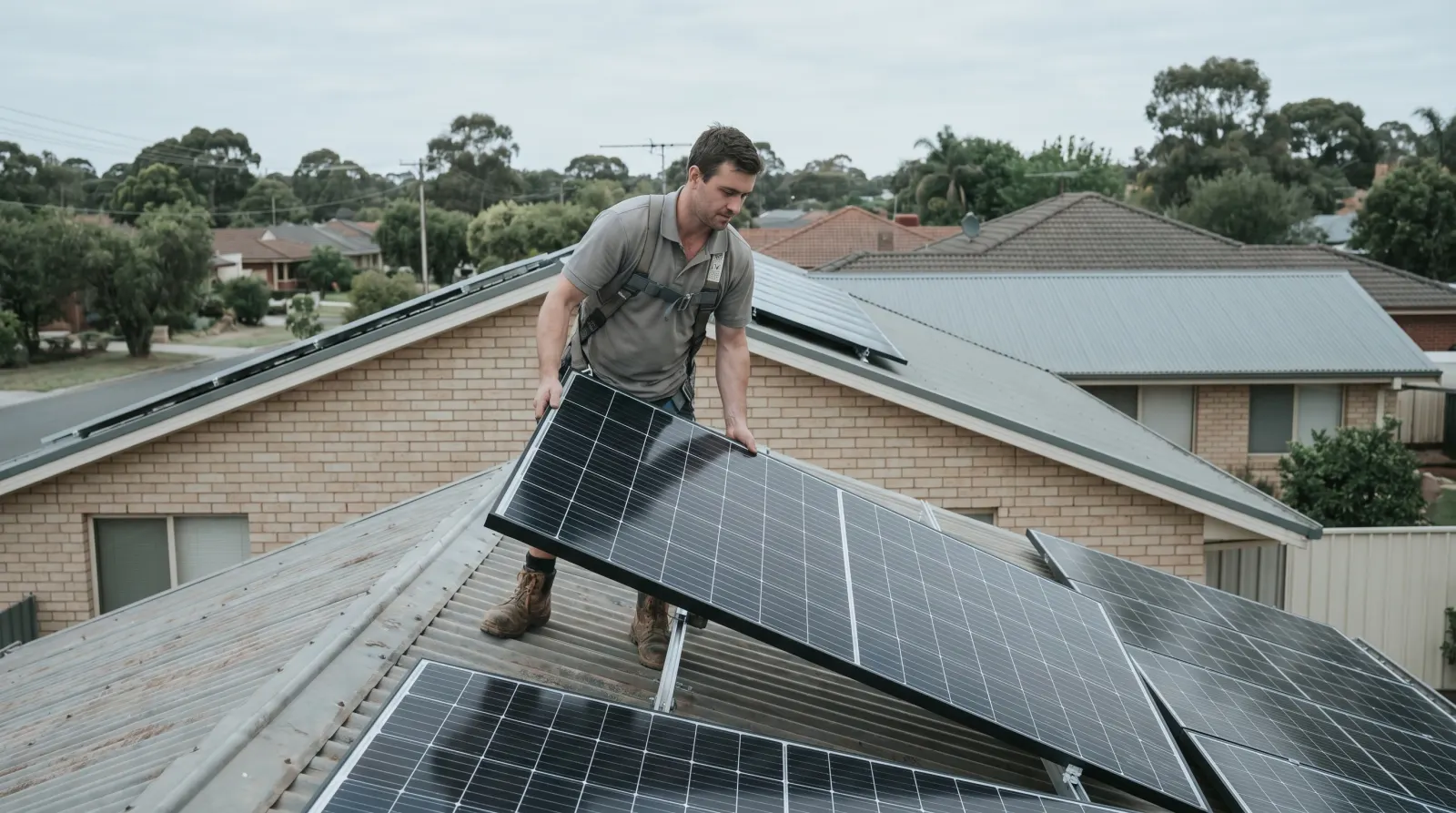
A fully installed solar panel system includes mounting, wiring, the inverter and a certified Certificate of Compliance - not just the panels on the roof.
Price per panel (Tier 1)
Installed system (battery included)
Budget Tier 2 panels run 15-25% cheaper per panel with shorter (10-15 year) warranties. System bars are rounded to the nearest R1,000; exact prices are in the tables below.
Want the full installed price, not just the per-panel cost?
Get 3 free quotes with the panels, inverter and battery on one written price for your home. Free, no obligation.
What is the price per watt for solar panels?
Solar panels cost R2.50-R5.00 per watt in South Africa in 2026: Tier 1 brands (Canadian Solar, JA Solar, Longi, Trina, Jinko) sit at R3.00-R4.50/W, budget Tier 2 panels at R2.50-R3.50/W, and premium REC or SunPower panels at R5.00-R7.00/W. Per-watt is the most accurate way to compare panels - multiply it by the wattage for the individual panel price, so at R3.00-R4.50/W a 450W panel is roughly R1,350-R2,025 and a 550W panel R1,650-R2,475. "Sun panel", "PV panel" and "solar panel" all mean the same module.
| Brand | Tier | Price/Watt | 550W Panel Price | Efficiency | Warranty |
|---|---|---|---|---|---|
| Canadian Solar | Tier 1 | R3.50 - R4.50/W | R1,925 - R2,475 | 21.0-22.5% | 25 years |
| JA Solar | Tier 1 | R3.00 - R4.00/W | R1,650 - R2,200 | 21.0-22.0% | 25 years |
| Longi | Tier 1 | R3.50 - R4.50/W | R1,925 - R2,475 | 21.3-22.8% | 25 years |
| Trina Solar | Tier 1 | R3.50 - R4.50/W | R1,925 - R2,475 | 21.0-22.5% | 25 years |
| Jinko Solar | Tier 1 | R3.50 - R4.50/W | R1,925 - R2,475 | 21.5-23.0% | 25 years |
| Allgrand / Budget | Tier 2 | R2.50 - R3.50/W | R1,375 - R1,925 | 19.5-21.0% | 10-15 years |
Panel prices this month (checked 8 October 2026)
Tier 1 module prices in South Africa are holding steady in October 2026, with the common 550W panel at R1,650-R2,500 (about R3.00-R4.50 per watt). We spot-checked the per-watt bands above against live South African retail listings on 8 October 2026: Canadian Solar's 555W mono panel is selling for R2,173.88 (R3.92/W) and its 650W panel for R2,499 (R3.84/W), both sitting inside our Tier 1 range. Globally, module prices bottomed out through 2025 and have edged up slightly off their all-time lows, so the long slide in panel prices has levelled off rather than reversed. We re-check these figures and refresh this table every month.
Solar panel price by wattage, and who each suits (2026)
Tier 1 panels in South Africa sell for roughly R3.00-R4.50 per watt in 2026. Multiply by the module wattage for the individual panel price. Budget Tier 2 panels sit at R2.50-R3.50/W - cheaper per panel but with shorter warranties.
| Panel Wattage | Tier 1 Price Each | Budget Tier 2 Each | Who it suits |
|---|---|---|---|
| 415W | R1,250 - R1,900 | R1,050 - R1,450 | Compact roofs (often older stock: check the manufacture date) |
| 450W | R1,350 - R2,050 | R1,125 - R1,575 | Mid-size residential |
| 550W (most common) | R1,650 - R2,500 | R1,375 - R1,925 | Standard SA home install |
| 585W - 600W | R1,800 - R2,700 | R1,500 - R2,100 | Large systems, fewer panels |
Our Recommendation
For most SA homes, JA Solar or Canadian Solar 550W panels offer the best value in the Tier 1 segment. JA Solar is slightly cheaper while Canadian Solar has the widest availability. Avoid unbranded or unknown Tier 3 panels -- the savings are not worth the risk of shorter lifespan and voided warranties. Ready to compare and buy? compare solar panels in South Africa with pricing and ratings.
How much do 600W+ bifacial and N-type TOPCon panels cost?
High-power 580-605W and N-type TOPCon panels cost R2,300-R3,400 each in South Africa in 2026 (about R3.80-R5.80 per watt) - a 15-35% premium over a standard 550W Mono PERC module. They earn that premium on two jobs: a tight roof, where fewer higher-output panels fit the same area, and best long-term yield, because N-type TOPCon cells hold 1-2% more efficiency, degrade more slowly (about 1% in year one versus 2% for PERC) and perform better in heat and low light - well suited to South African conditions.
Bifacial panels add 5-15% extra output from light reflected onto their rear face, but only on the right mounting - ground mounts, carports or flat white roofs. On a standard tiled, pitched roof mounted flush, the rear gets little reflected light, so the extra yield there is small. For most homes a 550W Mono PERC panel is still the best value per rand; the high-power and N-type modules win on space-constrained or maximum-yield installs.
Popular solar panels in South Africa: price per panel (2026)
The per-panel from-prices below are the Tier 1 models most South African homes are fitted with. Tap any panel for its full specs, datasheet and live price.
| Panel | Wattage | Type | Price From |
|---|---|---|---|
| Canadian Solar 550W | 550W | Mono PERC | From R1,800 |
| Jinko Tiger Neo 550W | 550W | N-type | From R1,850 |
| JA Solar 550W | 550W | Mono PERC | From R1,900 |
| Trina Vertex 550W | 550W | Mono PERC | From R1,950 |
| LONGi Hi-MO 5 550W | 550W | Mono PERC | From R2,100 |
| Jinko Tiger Neo 585W | 585W | N-type TOPCon | From R2,300 |
| JA Solar 580W | 580W | N-type TOPCon | From R2,400 |
| LONGi Hi-MO X6 580W | 580W | N-type TOPCon | From R2,500 |
| Canadian Solar 605W | 605W | Mono PERC | From R2,500 |
From-prices are per panel, supply-only. Compare every model side by side - specs, ratings and live pricing - on our solar panels for sale page, or get a free fully installed quote that puts the panels, inverter, battery and labour on one price.
When I'd recommend a bifacial panel, and when I wouldn't
I would definitely put a bifacial panel on my own roof. It's less about the brand than about the size and the grade of the panel. A bifacial panel is going to be the most performant, so that's what I'd go for, and that's how I'd choose over brand. The technology keeps getting better, but bifacial panels are very heavy.
Two things to check before you follow that. First, a bifacial panel earns its extra output from light reflected onto its back, so the gain is biggest when the panel is raised off the surface: on a tilt frame, a flat roof or a ground mount over a light-coloured surface. Flush-mounted on a pitched roof, the gain is small. Second, bifacial panels are usually glass on both sides, which makes them heavier than a standard panel, so ask your installer to check that the roof structure can carry the extra load.
When a cheaper panel is a false saving
If it's old, or not new. A brand-new panel should be pretty efficient. Old, used or old-stock panels are where the cheap price stops being a saving. My rule of thumb is to look at the efficiency percentage: about 20% plus is a good value point.
- Good value: mono PERC with half-cut cells. This is the standard platform most homes are fitted with. Mono PERC panels are generally P-type cells.
- A step up: N-type (for example TOPCon). It's the newer, higher-efficiency cell type, and also a good attribute to have. The price difference is in the N-type and bifacial price table above.
When I wouldn't add more panels
It's always going to come down to the inverter.
- You're not using all the electricity during the day. Then there's not much point adding more panels, because you've essentially maxed out your daytime usage. If the need is after daylight hours, you're most likely dealing with a battery problem, not a panel problem. See the best solar batteries in South Africa.
- Your inverter's PV input is maxed out. Then you can't add more panels, because that's a limitation right there. See the best solar inverters in South Africa.
Not sure which side of that line you're on? Your monthly bill and when you use the most power are what an installer sizes from. A free fully installed quote puts the panels, inverter, battery and labour on one price.
What do solar panels cost at Makro, Takealot and other SA retailers?
Over the counter, a single solar panel is typically R1,200-R2,900 at the big South African retailers in 2026 - Makro, Takealot and Leroy Merlin carry mainstream Tier 1 modules, while Cashbuild and Game lean toward smaller, budget wattages. These are supply-only shelf prices per panel: they exclude mounting, wiring, the inverter, installation labour and the legally required Certificate of Compliance, so a DIY retail panel is only part of the true cost. For the full retailer-by-retailer breakdown and where to buy, see our solar panels for sale guide (full buying guide →).
Retail shelf price vs installed price
A retail panel is only 35-45% of what a working system costs. Buying panels over the counter from Makro or Takealot makes sense for a DIY handyman or an add-on to an existing array, but a grid-tied or hybrid install still needs a compatible inverter, mounting, cabling and a certified electrician issuing a CoC. For a like-for-like fully installed price - panels, inverter and labour on one quote - get a free written quote above, or compare bundled solar power kits with all-in installed pricing.
What is the cheapest way to buy solar panels?
The cheapest way to buy solar panels in South Africa is supply-only from a solar distributor or wholesaler, where Tier 1 550W modules sell at the bottom of the R3.00-R4.50 per watt band (about R1,650 each) rather than the R1,200-R2,900 retail shelf range, whose lower figures are smaller-wattage panels. If you need a working system rather than spare modules, a bundled installed kit is the cheaper route, because the panels are only 35-45% of the cost and the inverter, battery, mounting, labour and CoC are priced as one job instead of four.
How much is a complete solar system by size?
A complete, fully installed EnergyBee system runs from R74,500-R90,500 for 5kW with 10kWh of battery storage up to R359,000 for 24kW with 56kWh. Every price below includes the panels, hybrid inverter, battery, mounting, wiring, labour and COC - none of them is a no-battery price. Prices are read from the EnergyBee kit records (checked 20 October 2026), so this table and the instant solar quote can never disagree.
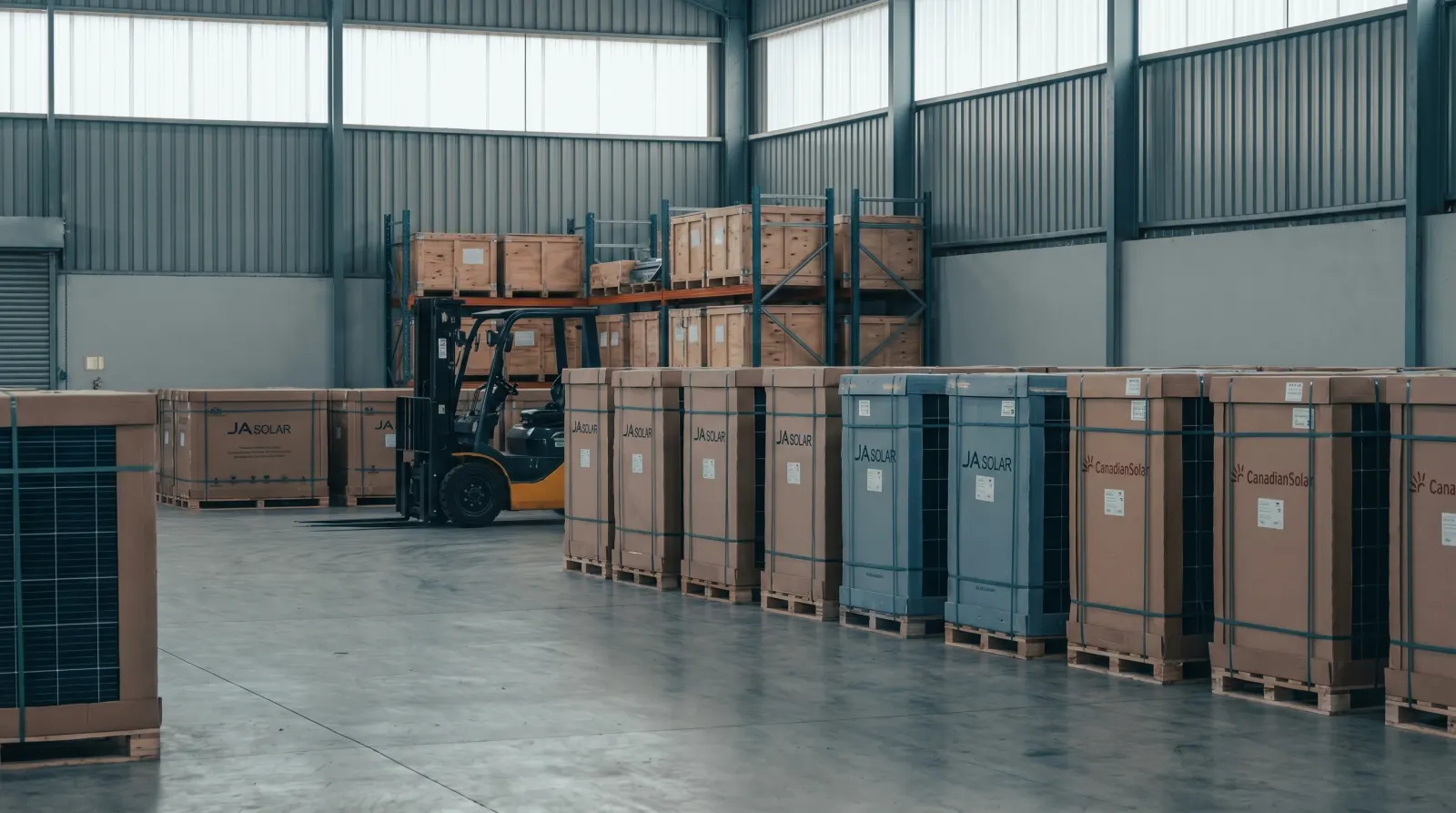
These are the same prices as our instant solar quote. The inverter and battery are the biggest lines in every row - compare current solar inverter prices and see how the solar batteries we list compare by usable kWh if you want to check a bundled quote line by line. Prefer a bundled package to sourcing parts separately? Browse pre-built solar power kits with all-in installed pricing. Not sure which size or configuration fits your home? Work through which solar package is right for your home to match your bill, roof and goals to a specific build.
Choosing a brand, not just a price band? Our best solar inverters in South Africa guide ranks the top 10 - Sunsynk, Deye, Sigenergy and more - on reliability, app quality, warranty and local support.
Pricing the storage on its own? Compare live solar battery prices per usable kWh across every brand we stock, or read the battery price guide for how capacity and brand drive the cost from a 3.5kWh starter unit to a 20kWh whole-home bank (full breakdown →).
| System Size | Battery Included | Panels | Installed Price (battery included) | Best For (monthly bill) | Get a quote |
|---|---|---|---|---|---|
| 5kWFamily Essential 5kW | 10kWh | 12 · 7.4kW | R74,500 - R90,500 | R2,000-R3,000 | |
| 8kWFamily Plus 8kW | 10kWh | 16 · 9.9kW | R94,500 - R110,500 | R3,000-R5,000 | |
| 12kWFamily Max 12kW | 14kWh | 24 · 14.9kW | R150,500 - R177,000 | R5,000-R8,000 | |
| 16kWHomestead 16kW (Single Phase) | 42kWh | 28 · 17.4kW | R244,500 - R282,000 | R8,000+large homes | |
| 24kWHomestead 24kW (Three Phase) | 56kWh | 36 · 22.3kW | R319,000 - R359,000 | R8,000+estates & smallholdings |
Ready to get a fully installed solar quote?
Get three free quotes from local installers. They'll match you with the right system size, inverter and battery for your home and budget.
Planning to go fully off-grid instead? Off-grid packages carry a battery bank two to three times this size and are priced separately - see typical off-grid package prices by size (full breakdown →).
Get your home's exact installed price
The ranges above are the market. Your number depends on your roof, your bill and the battery you need. Answer a few quick questions for a free, no obligation written quote for a complete system - without leaving this page.
Full price breakdown for your system size
Each of the three most popular home sizes has its own detailed cost guide - panels, inverter, battery options, installation and exactly what pushes the price up or down:
- 5kW Solar System Price South Africa 2026 - average home
- 8kW Solar System Price South Africa 2026 - large home
- 10kW Solar System Price South Africa 2026 - very large home
- Browse all solar power kits - full breakdown of every bundled kit and its installed price
Pricing one size in particular? Go straight to the full 8kW solar system or a 10kW solar system breakdown, inverter choice and installed-vs-supply-only comparison.
Most Popular System Size in SA
A 5kW system with battery storage is where most South African homes start. Our Family Essential 5kW pairs a 5kW hybrid inverter with 12 panels and 10kWh of battery storage: enough to run a typical 3-bedroom home by day and keep essentials on through load shedding. Installed price: R74,500 - R90,500, battery and COC included.
How much is the cheapest solar in South Africa?
The cheapest working solar in South Africa is a 3kW grid-tied system with no battery at roughly R45,000-R65,000 installed across the market, but it gives you nothing through load shedding or at night. The cheapest complete EnergyBee system with a battery is the Family Essential 5kW - 5kW with 10kWh of storage - at R74,500-R90,500 installed, or about R1,690 a month over 60 months on finance.
R74,500 upfront is not the only way to pay for it
Most South African homes never pay the sticker price. They pay monthly - often less than their current Eskom bill.
R0 upfront - from R1,199/month
Solar subscription / rental for a small (~3kW) system. No deposit, no lump sum - the provider owns, insures and maintains it.
Source: gosolr.co.za, Jul 2026.
How rental/subscription worksOwn it - from about R1,690/month
Our 5kW system with 10kWh of battery storage (R74,500 installed) financed over 60 months - you own the asset from day one and pay R0 once it's settled. Subject to a credit check.
Estimate: R74,500 over 60 months at a representative prime + 2.00%, no deposit. Not an offer of credit. See our finance guide.
Compare finance vs subscriptionAlready have panels and want to add storage later instead of buying a bundled system now? Our solar battery retrofit cost guide breaks down what that costs in 2026. Outgrown your current system entirely? See our solar system upgrade guide for adding panels, batteries or a bigger inverter to what you already have.
How much does solar cost in South African cities?
A complete solar system costs about R74,500-R90,500 installed for 5kW with a battery across South Africa's cities - the same kit price we quote nationally. What changes by city is the municipal tariff you save against and whether your municipality pays for exported solar. The table below covers ten second-tier cities and the five metros; the notes under it give the local detail for each.
| City | Municipality / supplier | Residential tariff /kWh | Pays for exported solar? | SSEG registration | 5kW installed | Details |
|---|---|---|---|---|---|---|
| Bloemfontein | Mangaung Metro (Centlec) | R3.04 - R4.56/kWh | No export rate published | Required (2026/27 SSEG tariff) | R74,500-R90,500 | Read more |
| Polokwane | Polokwane LM (town); Eskom (rural) | R1.99 - R4.56/kWh | Not paid | Required (NRS 097-2 form) | R74,500-R90,500 | Read more |
| Pietermaritzburg | Msunduzi LM | Not confirmed | Not confirmed | Required (national rule) | R74,500-R90,500 | Read more |
| East London | Buffalo City Metro | R3.87/kWh incl (prepaid) | Paid - R1.40/kWh net billing | Required (R3,723 fine) | R74,500-R90,500 | Read more |
| George | George LM (town); Eskom (rural) | ~R3.75/kWh | Paid - TOU credit | Required (free; 40A min) | R74,500-R90,500 | Read more |
| Rustenburg | Rustenburg LM (town); Eskom (rural) | Not confirmed | Not confirmed | Required (national rule) | R74,500-R90,500 | Read more |
| Nelspruit / Mbombela | City of Mbombela | R2.19 - R4.53/kWh | Not paid | Required | R74,500-R90,500 | Read more |
| Mpumalanga | Multiple (Mbombela, Nkomazi, Makhado) | R2.19 - R4.53/kWh (Mbombela); others not confirmed | Not paid (Mbombela); others not confirmed | Required | R74,500-R90,500 | Read more |
| Malalane / Komatipoort | Nkomazi Local Municipality | Not confirmed | Not confirmed | Required (national rule) | R74,500-R90,500 | Read more |
| Kimberley | Sol Plaatje LM | ~R2.96/kWh (Kimlite) | Paid - TOU credit | Required (PV policy) | R74,500-R90,500 | Read more |
| Cape TownMetro | City of Cape Town | Full local pricing, tariffs and feed-in on our Cape Town solar guide. | R74,500-R90,500 | Cape Town guide | ||
| JohannesburgMetro | City Power | Full local pricing, tariffs and feed-in on our Johannesburg solar guide. | R74,500-R90,500 | Johannesburg guide | ||
| PretoriaMetro | City of Tshwane | Full local pricing, tariffs and feed-in on our Pretoria solar guide. | R74,500-R90,500 | Pretoria guide | ||
| DurbanMetro | eThekwini Electricity | Full local pricing, tariffs and feed-in on our Durban solar guide. | R74,500-R90,500 | Durban guide | ||
| Gqeberha (PE)Metro | Nelson Mandela Bay | Full local pricing, tariffs and feed-in on our Gqeberha (PE) solar guide. | R74,500-R90,500 | Gqeberha (PE) guide | ||
5kW installed range is the national EnergyBee price from the table above; it does not change by city. Municipal tariffs are the 2026/27 residential rates (effective 1 July 2026 unless noted), from official municipal schedules, last checked October 2026. Pietermaritzburg, Rustenburg and Nkomazi LM show "not confirmed" because none has published an approved 2026/27 schedule we can quote - we will update them from the official source rather than an estimate.
How much does solar cost in Bloemfontein?
Solar in Bloemfontein costs R74,500-R90,500 installed for a 5kW system with a battery. Centlec, Mangaung Metro's supplier, charges roughly R3.04 to R4.56 per kWh across its two blocks and seasons, so most homes recover the cost in about four to six years. The 2026/27 SSEG tariff needs registration, but Centlec publishes no export credit rate yet.
How much does solar cost in Polokwane?
Solar in Polokwane costs R74,500-R90,500 installed for 5kW with a battery. The municipality charges town homes from R1.99 per kWh, rising to R4.56 above 600 units; rural areas buy from Eskom. Polokwane requires SSEG registration on an NRS 097-2 form but publishes no residential feed-in, so you register the system without being paid for exported power.
Get a Limpopo solar quoteHow much does solar cost in Pietermaritzburg?
Solar in Pietermaritzburg costs R74,500-R90,500 installed for 5kW with a battery. Msunduzi Municipality has not published a final approved 2026/27 tariff, so we quote no per-kWh rate rather than an unofficial one. SSEG registration is still required under national rules. Like anywhere, a grid-tied system stays connected, so you keep paying for the night-time power you draw.
How much does solar cost in East London?
Solar in East London costs R74,500-R90,500 installed for 5kW with a battery. Buffalo City Metro charges about R3.87 per kWh on prepaid and, unusually, pays for surplus: net billing credits exported solar at R1.40 per kWh. Registration is compulsory, with a R3,723 fine for an unregistered system, and an 8kW system comfortably runs a typical home.
How much does solar cost in George?
Solar in George costs R74,500-R90,500 installed for 5kW with a battery, plus about R10,000 for the approved bidirectional meter George requires. George Municipality charges roughly R3.75 per kWh and credits exported solar on its time-of-use tariff. Registration is free and online at apply.sseg.org.za with a 40A minimum supply, making George one of the easiest municipalities to go solar in legally.
How much does solar cost in Rustenburg?
Solar in Rustenburg costs R74,500-R90,500 installed for 5kW with a battery. Rustenburg Local Municipality has not published an accessible 2026/27 tariff, so we quote no per-kWh rate rather than an unofficial one; mining and rural areas buy from Eskom. SSEG registration is required under national rules, and you still pay for grid power drawn at night.
How much does solar cost in Nelspruit / Mbombela?
Solar in Nelspruit costs R74,500-R90,500 installed for 5kW with a battery. The City of Mbombela charges R2.19 per kWh on the first 50 units, rising to R4.53 above 600, plus a 5% surcharge on off-site prepaid meters. Register your system as required; Mbombela does not pay for exported power, so size the battery to use your own solar.
How much does solar cost in Mpumalanga?
Solar across Mpumalanga costs R74,500-R90,500 installed for 5kW with a battery. Mbombela's confirmed tariff runs R2.19 to R4.53 per kWh with no export payout, so prioritise battery use. Nkomazi LM (Malalane, Komatipoort) and Makhado LM (Louis Trichardt) have no published 2026/27 tariff we can quote, so we confirm your municipal rate when you enquire rather than estimate it.
Get an Mpumalanga solar quoteHow much does solar cost in Malalane / Komatipoort?
Solar in Malalane and Komatipoort costs R74,500-R90,500 installed for 5kW with a battery. Nkomazi Local Municipality has not published an approved 2026/27 tariff we can verify, so we quote no per-kWh rate rather than an unofficial estimate. SSEG registration is still required under national rules, and a grid-tied system keeps you connected for the night-time power you draw.
Get an Mpumalanga solar quoteHow much does solar cost in Kimberley?
Solar in Kimberley costs R74,500-R90,500 installed for 5kW with a battery. Sol Plaatje's domestic "Kimlite" tariff runs about R2.96 per kWh up to 350 units. Larger PV homes move to a compulsory time-of-use tariff that credits exported solar, with peak rates up to R5.73 per kWh in high-demand months. SSEG registration is required under the municipal PV policy.
What does solar cost where you live?
Tell us your city and what you spend on power now. We match it to a real EnergyBee system and its installed price - no email needed to see it.
What size solar system do I need?
Size your system to your monthly electricity use: divide your monthly kWh by 30 for daily kWh, then by about 4.5 (South Africa averages 5.5 peak sun hours a day) for the kW of panels you need - so 600kWh a month (20kWh a day) points to roughly a 5kW system. The table below matches each monthly-bill band to the EnergyBee kit that covers it. For the full step-by-step method, including battery sizing, see our solar system sizing guide (full breakdown →).
| Monthly Bill | Recommended System | Battery Included | Panels | Installed Price (battery included) |
|---|---|---|---|---|
| R2,000-R3,000 | 5kW | 10kWh | 12 · 7.4kW | R74,500-R90,500 |
| R3,000-R5,000 | 8kW | 10kWh | 16 · 9.9kW | R94,500-R110,500 |
| R5,000-R8,000 | 12kW 12kW+ full breakdown → | 14kWh | 24 · 14.9kW | R150,500-R177,000 |
| R8,000+ (large homes) | 16kW | 42kWh | 28 · 17.4kW | R244,500-R282,000 |
| R8,000+ (estates & smallholdings) | 24kW | 56kWh | 36 · 22.3kW | R319,000-R359,000 |
Bill under R1,500 a month? Our smallest system is the 5kW with 10kWh of storage. Across the market a 3kW system without a battery typically costs R45,000-R65,000 installed, but it gives you no load-shedding backup.
Not sure if you need 5kW or 10kW? Get your exact system size in 60 seconds - free.
Your monthly electricity bill
Average across the last 3 months - load shedding skews single months.
How much does solar panel installation cost?
Solar panel installation is 15-25% of the total system cost: about R17,500-R27,500 in labour for a 5kW system and R27,500-R42,000 for a 10kW system, with roof type, cable-run length and DB-board condition adding R3,000-R15,000. A compliant installed price should cover mounting and racking for your roof type, DC/AC wiring and isolators, inverter and battery commissioning, the legally required Certificate of Compliance, and help with municipal or Eskom SSEG registration. For complete per-size breakdowns and the factors that push the cost up or down, see our solar installation cost South Africa guide (full breakdown →).
- Mounting and racking: roof anchors, rails and clamps rated for your roof type (tile, IBR, concrete).
- DC and AC wiring: solar cabling, isolators, surge protection and connection to your DB board.
- Inverter and battery commissioning: mounting, configuration and testing of the hybrid inverter and battery.
- Certificate of Compliance (CoC): the legally required electrical sign-off from a registered installer.
- Grid registration: help with municipal or Eskom SSEG registration where a grid-tied system requires it.
EnergyBee system prices above are fully installed by our partner installers and already include the CoC. Always confirm the work is done by a registered electrician who issues a CoC, and get 3-5 itemised quotes on a like-for-like basis (same inverter, battery capacity and panel count).
What is NOT included in a solar panel price?
A solar panel price is just the module. Panels are only 35-45% of a working system - the per-panel figure excludes the inverter, battery, mounting, wiring, labour and the legally required COC and SSEG registration. Roof type, DB-board condition and cable-run length add a further R3,000-R15,000. For a 5kW system, budget for these on top of the panels:
Where the rest of the money goes (5kW)
- Mounting rails, clamps & grounding: R1,800-R3,600
- DC/AC cabling & connectors: R2,000-R5,000
- DB board, isolators & meters: R5,000-R12,000
- COC, permits & compliance: R1,500-R3,500 (legally required)
- Monitoring (optional): R1,000-R4,000
Price per watt vs price per panel
Always compare on cost per watt, not the sticker price of a panel. A cheaper R-per-panel deal on a lower-wattage module can cost more per usable watt - and a slightly higher per-watt premium for a Tier 1 brand with a 25-year warranty is usually worth it on a system you'll run for two decades. Budget Tier 2 panels make sense for outbuildings, tight budgets, or short-horizon installs.
Don't skip the compliance line - it's the costliest corner to cut. Before you sign, read what the fines for unregistered solar in South Africa actually are in 2026.
Smart-shopping checklist
- Get at least 3-5 itemised quotes - prices vary 30-50% between installers for the same system.
- Insist on a line-item breakdown that separates panel cost from inverter, battery, and labour.
- Compare like-for-like: same panel brand, same system size, same battery capacity.
- Check installer credentials - SAPVIA membership, a valid electrical licence, and recent local references.
Pricing red flags to avoid
- Quotes 50%+ below market (around R1.50/W or lower is not achievable for genuine kit).
- Pressure tactics - “today-only” pricing or demands for 100% payment upfront.
- No site inspection, vague warranty documentation, or unbranded panels with no local support.
- Unlicensed installers with no physical address, SAPVIA membership, or verifiable past installations.
How can you pay for solar?
There are four main ways to pay for solar in South Africa: cash, a bank solar loan, a subscription or rental, and a power purchase agreement (PPA). Cash gives the best value and fastest payback; a loan or rental spreads the cost over monthly payments often close to what you already pay Eskom. If the upfront number is the sticking point, rent-to-own from R0 upfront approves on affordability rather than your credit score - see who would approve you with no credit check.
Cash Purchase
- Best overall value -- no interest
- Closed SARS rebate does not apply to 2026 installs
- Fastest ROI (4-5 years)
- Requires R74,500-R359,000 upfront for a complete system with battery
Solar Loan (Bank Financing)
- Spread cost over 5-7 years
- Monthly payments often less than current electricity bill
- You own the system from day one
- Interest adds 25-40% to total cost
Available from: FNB, Standard Bank, Nedbank, Absa
Solar Subscription/Rental
- Zero upfront cost
- Maintenance and monitoring included
- You do not own the system
- Long contracts (10-20 years)
Providers: GoSolr, SunCash
PPA (Power Purchase Agreement)
- Pay only for energy consumed
- Usually cheaper than Eskom from day one
- Long-term contract required
- Usually for commercial/large residential only
Related: Read our complete solar financing comparison guide for a detailed analysis of each option with real cost calculations.
Are there solar tax rebates in South Africa? (2026)
Not for individuals in 2026. The Section 25C residential rebate closed - it covered only panels brought into use between 1 March 2023 and 29 February 2024, and 2023/24 tax returns were the last chance to claim it. Businesses can still claim 125% first-year depreciation under Section 12BA on the whole renewable-energy system.
For Individuals (Section 25C) - Closed
- Closed - covered panels brought into use 1 March 2023 - 29 February 2024 only
- Worth 25% of solar PV panel costs
- Maximum of R15,000 per person
- Applied to solar PV panels only (not inverters or batteries)
- Panels had to be new and unused; 2023/24 returns were the last chance to claim
Example (2023/24 only): 10 panels at R2,200 each = R22,000. Rebate: R5,500 (capped at R15,000). Panels installed after 29 February 2024 do not qualify.
For Businesses (Section 12BA)
- 125% first-year depreciation on renewable energy assets
- Applies to entire system (panels, inverter, batteries, installation)
- No cap on deduction amount
- Significant tax savings for profitable businesses
Example: R200,000 system = R250,000 deduction. At 27% tax rate = R67,500 tax saving. Recheck SARS terms before filing - last confirmed 2 October 2026.
Running a small business rather than relying on the (now closed) individual rebate? Our solar for small business guide covers commercial system sizing, ROI, and installer selection. For detailed claim instructions, see our complete solar tax incentives guide.
When do solar panels pay for themselves?
A complete solar system typically pays for itself in about 4.2 years on our savings model at current tariffs, then produces near-free power for the remaining 20+ years of its warranty. The table below shows each EnergyBee kit at its installed from-price, with the estimated monthly saving and payback.
| System | Installed From | Est. Monthly Saving | Payback | Est. Repayment on Finance |
|---|---|---|---|---|
| 5kW + 10kWh battery | R74,500 | R1,490-R1,810 | About 4.2 years | R1,690/month |
| 8kW + 10kWh battery | R94,500 | R1,890-R2,210 | About 4.2 years | R2,140/month |
| 12kW + 14kWh battery | R150,500 | R3,010-R3,540 | About 4.2 years | R3,410/month |
| 16kW + 42kWh battery | R244,500 | R4,890-R5,640 | About 4.2 years | R5,530/month |
| 24kW + 56kWh battery | R319,000 | R6,380-R7,180 | About 4.2 years | R7,220/month |
Savings and payback come from our savings model at current tariffs, using each system's installed from-price. Repayments are estimates over 60 months at a representative prime + 2.00%, not an offer of credit. Real savings vary with your actual consumption, how much you use during the day, and whether you feed excess back to the grid.
How much does solar power cost per kWh in South Africa?
A home solar system in South Africa makes electricity at roughly R1.00-R1.80 per kWh over its 20-plus year life once the installed price is spread across everything it generates, against an effective R3.30-R4.20 per kWh from Eskom in 2026 with fixed charges counted. The gap is the whole case for solar, and it widens every April when the tariff rises - see our is solar worth it guide for the full per-unit working.
What is a solar panel and how does it work?
A solar panel is a device made of photovoltaic (PV) cells that converts sunlight directly into electricity. When sunlight hits the silicon cells inside the panel, it knocks electrons loose and creates a flow of direct current (DC) electricity - this is the photovoltaic effect. A grid-tied or hybrid inverter then converts that DC power into the alternating current (AC) that runs your home's lights, geyser and appliances.
Most residential panels installed in South Africa in 2026 are Tier 1 monocrystalline modules rated between 450W and 600W, with 550W the most common size (see the price-by-wattage table above). A quality panel carries a 25-30 year performance warranty and still produces 80-87% of its original output at the end of that period. South Africa's 5.5+ average daily peak sun hours make it one of the better-suited climates in the world for solar, which is why local payback periods run 4-7 years - shorter than in most of Europe or North America.
Still comparing solar panel prices?
Get 3 free quotes from local South African installers, sized to your roof and your bill. Free, no obligation.
Get a System Design Free
Give us a few details and we can give you a quote or advice on what system would be perfect for you.
Frequently asked questions
How much do solar panels cost for homes in South Africa?
Solar panels for a South African home cost R1,350-R2,700 each (R2.50-R5.00 per watt) in 2026, and most homes need 8-20 of them. But panels are only 35-45% of the bill. A complete EnergyBee 5kW system with 10kWh of battery storage, fully installed, is R74,500-R90,500, rising to R150,500-R177,000 for 12kW with 14kWh. Every system price includes the panels, hybrid inverter, battery, mounting, labour and COC.
How much does a solar system cost in South Africa?
A complete solar system costs R74,500-R90,500 fully installed in South Africa in 2026 for an EnergyBee 5kW system with a 10kWh battery, R94,500-R110,500 for 8kW with 10kWh, and R150,500-R177,000 for 12kW with 14kWh. Each price includes the panels, hybrid inverter, battery, mounting, wiring, labour and Certificate of Compliance, and is read from the kit records our instant quote tool sells from (checked 20 October 2026). Across the wider market installers quote R75,000-R100,000 for 5kW without a battery, so check whether a quote includes storage before you compare it. A smaller 3kW starter setup is cheaper but we do not sell one, and a fully off-grid system costs more because its battery bank has to carry the house through overcast days.
Is 5kW enough to run a house?
Yes, for a typical 3-bedroom South African home, provided you manage the biggest loads. A 5kW hybrid inverter delivers up to 5kW at any one moment, which covers lights, fridge, TV, Wi-Fi, computers, a washing machine and a microwave together, and a 10kWh battery carries the essentials through the evening. What it cannot do is run the geyser (3-4kW), the oven and an air conditioner at the same time: put the geyser on a timer or switch it to a heat pump, stagger the heavy appliances, or step up to an 8kW system if you want to run them freely. Homes with a pool pump, two air conditioners or an electric car are usually better served by 8-12kW.
How many solar panels do I need for a 4 bedroom house in South Africa?
A typical 4-bedroom house in South Africa uses 800-1,500kWh a month and needs an 8kW system, which is 16 panels (about a 10kW array of 620W modules) plus a 10kWh battery in our kit range. Smaller homes need fewer: a 3-bedroom house usually lands on the 5kW, which is 12 panels (a ~7.4kW array), while an energy-conscious home may manage on 5-7 panels (3-4kW). The exact count depends on your monthly usage and whether you run heavy loads like a geyser or pool pump on solar.
How much is a 5000 watt solar panel in South Africa?
There is no single 5,000W solar panel - 5,000W (5kW) is a system size, not a panel. A 5kW array uses about 12 panels at R1,650-R2,500 each (a ~7.4kW array of 620W-class modules on a 5kW hybrid inverter). A complete, fully installed EnergyBee 5kW system with 10kWh of battery storage is R74,500-R90,500, including the panels, hybrid inverter, battery, mounting, labour and COC.
How much does a 550W solar panel cost in South Africa?
A 550W solar panel costs R1,650-R2,500 in South Africa in 2026 for a Bloomberg Tier 1 brand (Canadian Solar, JA Solar, Jinko, Longi or Trina) - about R3.00-R4.50 per watt. Budget Tier 2 550W panels are cheaper at R1,375-R1,925 but carry shorter 10-15 year warranties instead of 25 years. The 550W module is the most common size in South African home installs. One panel is not a system, though: a complete, fully installed EnergyBee 5kW system with 10kWh of battery storage is R74,500-R90,500, panels and all.
How much is 1 solar panel?
One solar panel in South Africa costs R1,350-R2,700 in 2026, depending on its wattage and brand tier. There is no single price because a panel is sold by the watt: Tier 1 brands (Canadian Solar, JA Solar, Longi, Trina, Jinko) run R3.00-R4.50 per watt, so a 450W panel is about R1,350-R2,025 and the common 550W panel R1,650-R2,500, while budget Tier 2 panels sit at R2.50-R3.50 per watt. One panel on its own will not power a home, though - you still need the inverter, battery, mounting and installation, which is why the panels are only 35-45% of what a working system costs.
Can 4 solar panels power a house?
Not a whole house, no. Four 550W panels give you about 2.2kW of array, which on a good South African day generates roughly 11-13kWh. Paired with a battery that is enough to run lights, a TV, Wi-Fi, a fridge and phone charging, or to keep essentials on through load shedding, but not heavy loads like a geyser, pool pump, oven or air conditioner all at once. A typical 3-bedroom home needs 12 panels (a 5kW system), and homes using 800-1,500kWh a month usually need 12-16 panels. Four panels suit a small flat, a backup-only setup or a starter system you plan to expand later.
How much is one small solar panel?
A small solar panel costs R150-R1,800 in South Africa in 2026, depending on its wattage. A 10-20W trickle panel for a gate motor or to top up a battery is R150-R450, a 100W panel for camping or a small DC load is about R700-R1,200, and a 150-200W panel is roughly R1,200-R1,800. These small modules are made for portable power, gates, caravans and off-grid gadgets - not for running a home. A household solar system uses full-size 450-600W panels at R1,350-R2,700 each.
Do I have to pay Eskom if I have solar?
Yes, usually - unless you go fully off-grid. Most South African homes run a grid-tied or hybrid solar system, so you stay connected to Eskom or your municipality and still pay a monthly connection or availability charge plus for any grid power you draw at night or in bad weather. Solar cuts the units you buy, not the connection itself. Only a true off-grid system with enough battery and panels removes the Eskom bill entirely, and that costs more because it has to cover every kilowatt-hour you use.
Do I need permission from Eskom to install solar panels?
Yes, if the system is grid-tied or hybrid: you need to register it as Small-Scale Embedded Generation (SSEG) with Eskom or your municipality before switching it on, and most municipalities also require building-plan approval for the rooftop work. This is separate from the electrical Certificate of Compliance (CoC) every installation needs. You only skip Eskom permission entirely with a genuinely off-grid system that has no connection to the grid at all - there is nothing to register. A registered installer usually handles the SSEG paperwork as part of a fully installed system; see our full permits and compliance guide for the registration process, cost and timeline by metro.
Does rain affect solar panels?
Rain lowers solar output on the day but does not damage panels or stop them working. Panels still generate on overcast, rainy days, just at roughly 10-25% of their clear-sky output, because less sunlight reaches the cells. Rain also helps: it washes off dust and dirt that would otherwise cut production. This is exactly why a battery matters in South Africa - it stores sunny-day power to cover rainy days and load shedding, which is why every EnergyBee system price includes one.
Can solar panels work on cloudy days?
Yes - panels do not need direct, cloudless sun to generate power. On an overcast day they still convert the diffused light coming through the clouds, usually at 10-25% of a clear-sky day’s output rather than zero, and recover immediately once the cloud breaks. South Africa’s climate works in your favour here: most regions get far fewer fully overcast days a year than Europe or the UK, averaging 5.5+ peak sun hours a day overall. The main gap cloudy weather leaves is the drop in same-day generation, which is what the battery in every EnergyBee system is sized to cover.
What is the best solar panel to buy in South Africa?
For home installations in 2026, the best value pick is a Bloomberg Tier 1 module from a major brand - Canadian Solar, JA Solar, Jinko, Longi or Trina - in the 550-620W class: a 550W Tier 1 panel is R1,650-R2,500 with a 25-year performance warranty. These are the panels most local South African installers fit, while budget Tier 2 panels that cost slightly less give up 10-15 year warranties. The more important call is buying panels as a system, not as panels: the panel is only 35-45% of a working installation, so choose the offer whose full kit - panels, hybrid inverter, battery, labour and COC - is priced and warrantied together. A complete EnergyBee 5kW system with 10kWh of battery storage is R74,500-R90,500 fully installed, Tier 1 panels included.
Is solar cheaper than Eskom?
Over its lifetime, yes. With Eskom tariffs above R3.50/kWh and rising 12-15% a year, a complete solar system typically pays for itself in about 4.2 years on our savings model and then produces near-free power for the remaining 20+ years of its warranty. On finance, the monthly repayment on a complete EnergyBee system is often close to or below what you currently pay Eskom, so you can be close to cash-flow neutral from early on. Cash buyers get the fastest payback; tight budgets can start with rent-to-own from R0 upfront.
Get your personalised price range in 60 seconds
Answer a few quick questions about your home and your Eskom bill to see what a solar system would cost you - no installer contact required.