With the July tariff hike biting, Deye has become the value pick powering thousands of new South African solar installs - often the same hardware as a Sunsynk for noticeably less. But there's a catch nobody mentions in the quote: buy the box from the wrong channel and you can be left with a five-figure system and no warranty when something goes wrong. Here's how Deye really stacks up in 2026, and how to buy it without getting burned.
Published 6 July 2026.
If you've asked for a solar quote in the last few weeks, there's a good chance one word kept coming up: Deye.
It's the brand quietly powering a huge share of the new installs going up across South Africa this winter - and for one simple reason. With the 1 July tariff increase now on your bill and grid power more expensive than it has ever been, households are hunting for the cheapest honest route to cut what they pay. Deye is often exactly that: strong hybrid-inverter hardware for noticeably less than the big-name alternative.
But there's a catch that almost never makes it into the sales pitch - and it can turn a bargain into a very expensive regret. Here's the honest picture on Deye in 2026, and how to buy it without getting burned.
Why everyone's suddenly buying Deye
Deye's appeal comes down to a slightly awkward open secret in the solar industry: Deye and Sunsynk hardware is closely related. For years Deye has been the manufacturer behind the units that Sunsynk rebrands and distributes. In plenty of cases, the electronics inside a Deye and the equivalent Sunsynk are near-identical.
So when a homeowner sees they can get what looks like the same inverter for 10-25% less, the maths is obvious. On a 5kW to 8kW hybrid inverter, that's a few thousand rand back in your pocket before you've even chosen a battery.
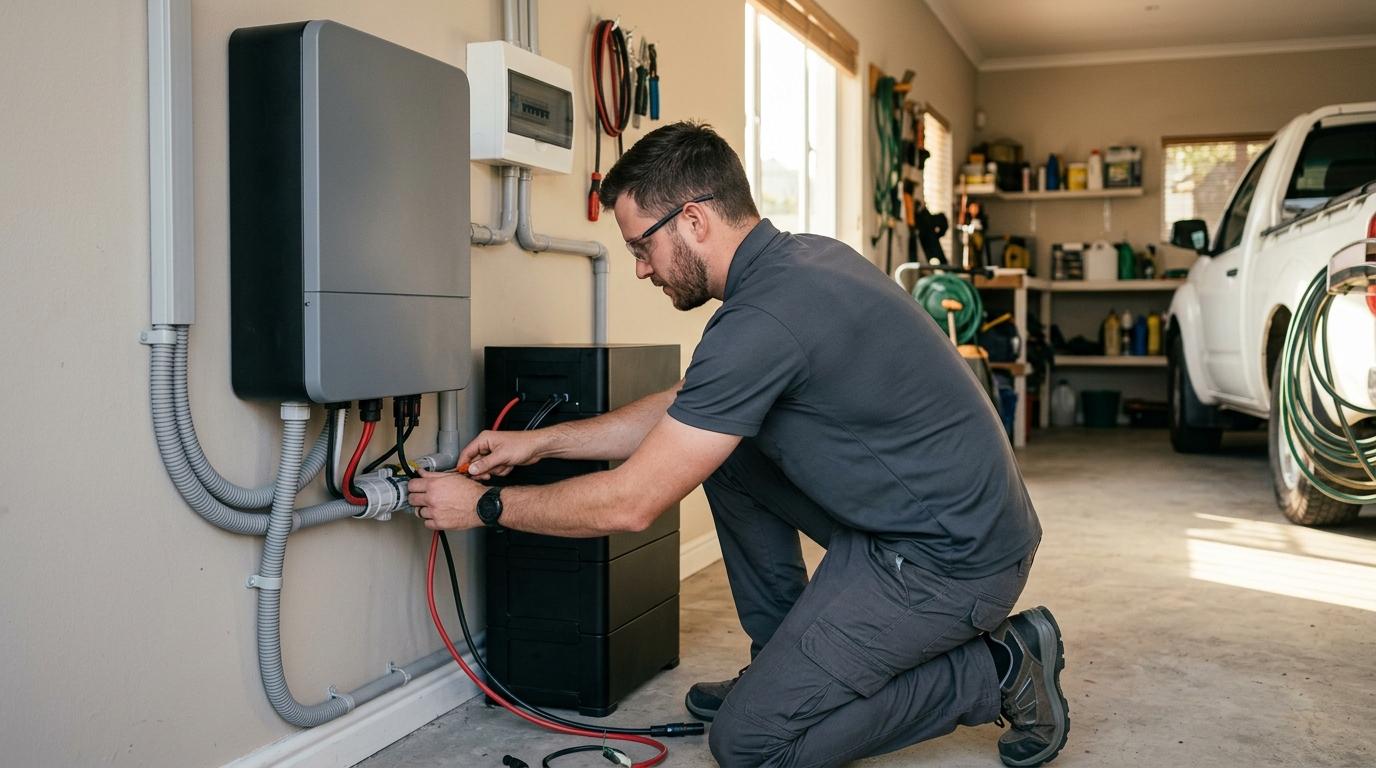
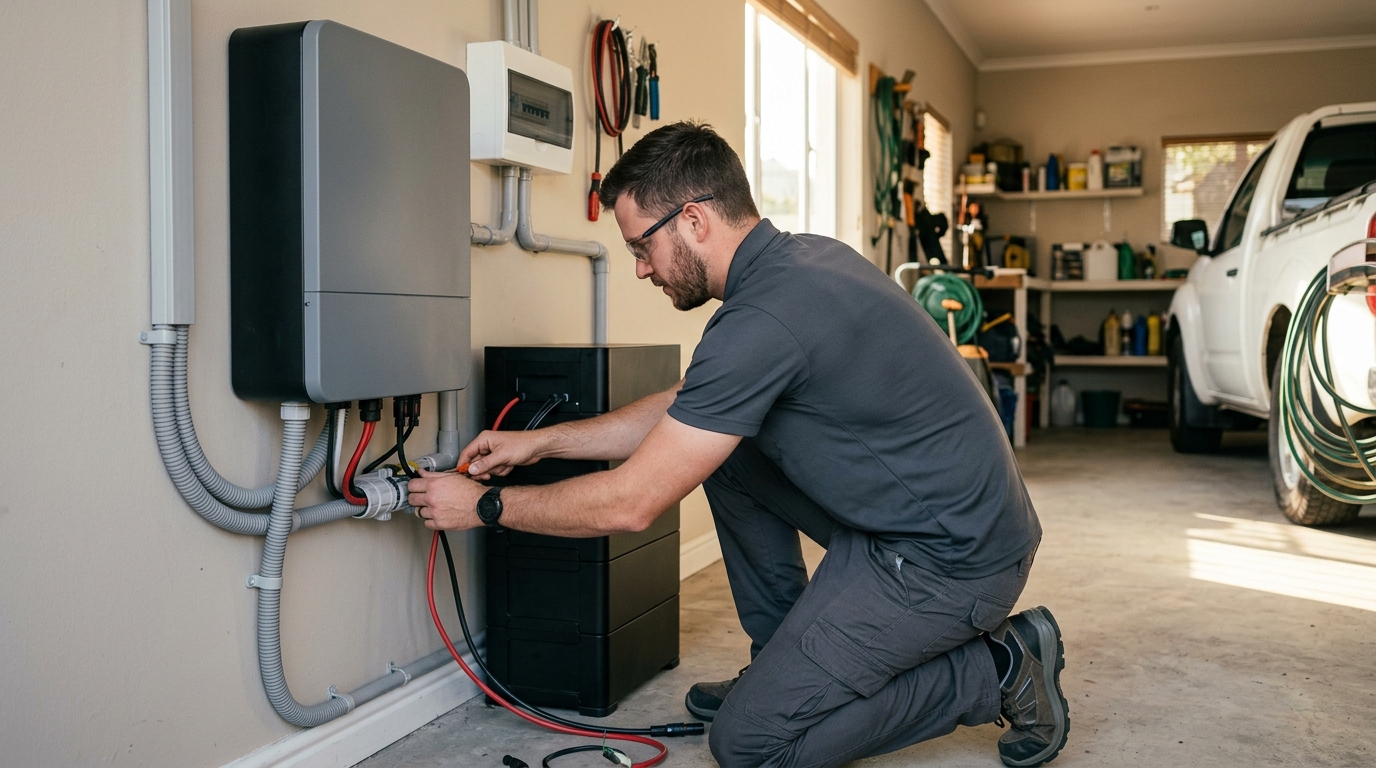
An installer commissioning a neatly wall-mounted hybrid solar inverter and stacked lithium battery in a South African home utility room, warm morning light, tidy cabling.
Add the timing and you can see why Deye is having a moment:
The bill just jumped again. After April's 13.67% Eskom increase and the roughly 9% municipal rise on 1 July, every unit you don't buy from the grid is worth more than ever.
Load shedding is gone, so it's a pure money decision. People aren't panic-buying backup any more - they're doing cold cost-per-kilowatt-hour arithmetic, and Deye wins on the sticker.
Panel and battery prices have fallen. A well-sized system now typically pays for itself in around 5 to 7 years, and the cheaper you buy the box, the faster that clock runs.
On hardware alone, Deye genuinely deserves the hype. It's a capable, proven, widely supported inverter that will do the same core job as its pricier twin: slash your electricity bill and keep the lights on →.
See if solar makes sense for your home
Get free, no-obligation quotes. We then introduce you to the installer who will fit it.
The catch nobody mentions: the warranty, not the hardware
Here's where thousands of buyers trip up. The risk with Deye isn't the quality of the box - it's how that box got into the country.
Because Deye is often the cheaper, more direct route, a slice of the market is grey imports: genuine Deye units brought in outside the properly supported South African supply chain to hit a rock-bottom price. The inverter can be entirely legitimate. The warranty is the problem.
If the supported local channel didn't bring your unit in, you can be left in a nasty spot:
There may be no one locally obliged to repair or replace it if it fails.
Warranty claims can be refused because the unit was never part of the supported chain.
You're then holding the most critical, most expensive component of a R60,000-plus system - the one you expect to run for a decade - with the support burden entirely on you.
Saving R3,000-R5,000 today only to be exposed for the next eight years is a bad trade. And it's an avoidable one.
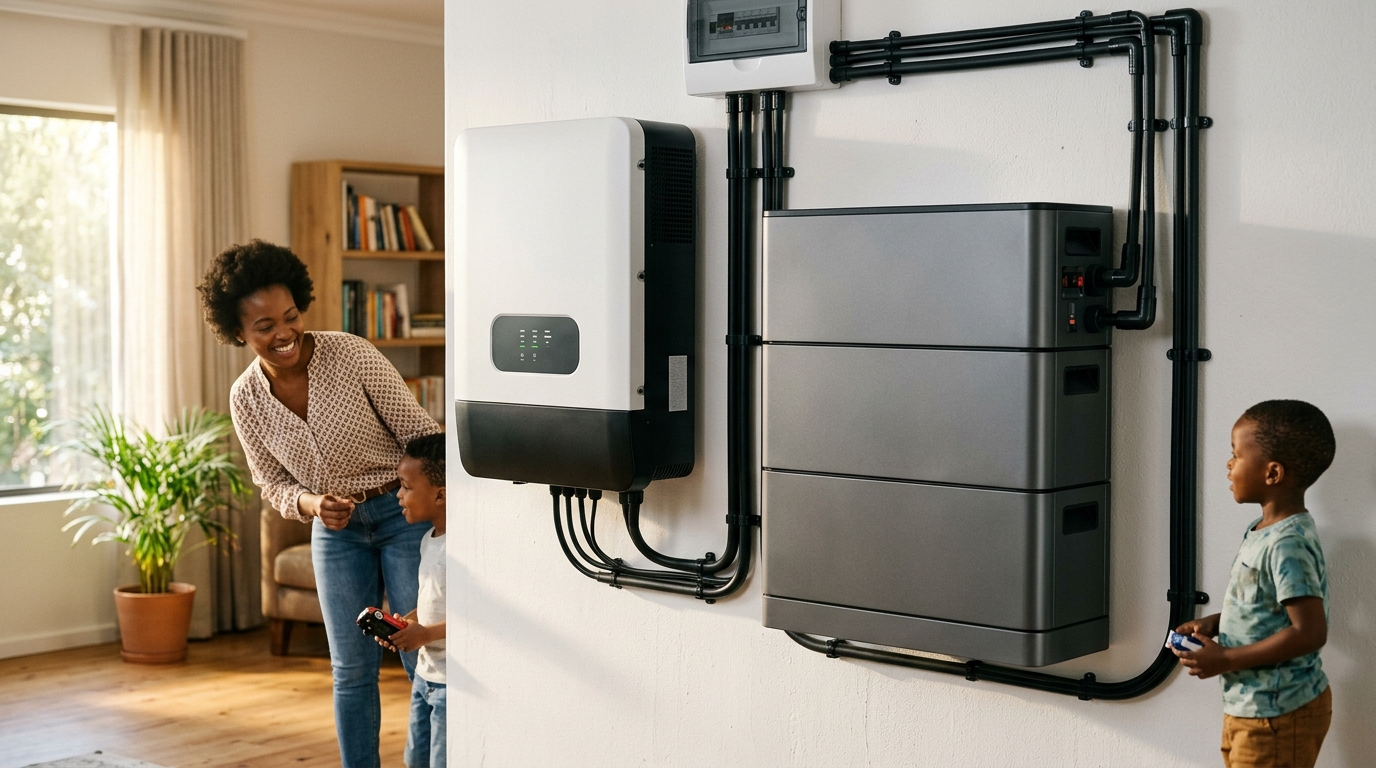
A close, editorial three-quarter view of a wall-mounted hybrid solar inverter beside a stacked lithium battery in a bright, modern South African home, glossy and well-installed, clear morning light.
How to buy Deye the smart way
Deye can absolutely be the right call in 2026 - you just have to buy it like a system, not a box. Five things to nail down before you pay:
1. Ask, in writing, who honours the warranty and for how long. A real answer names a supported South African supplier and a claims process. A vague "it's covered" is a red flag. 2. Use a certified installer, not just the cheapest price. A compliant install protects both your safety and your claim - and a good installer buys through supported channels as a matter of course. 3. Register the system. Registration is free for systems up to 50kW under Eskom's fee waiver, which Eskom extended until further notice on 1 October 2026 - the old deadline is gone. For direct Eskom customers the fees (up to around R10,000 for urban customers) are waived, and registration is still legally required. Getting registered while it is free → saves money and keeps your install fully legal. 4. Compare full systems, not just inverters. Once you add a decent battery and panels, the Deye-vs-Sunsynk price gap narrows - decide whether the saving still outweighs the value of established local support. Our Deye vs Sunsynk 2026 breakdown → walks through it. 5. Size it to your actual bill. The single biggest driver of your savings isn't the badge on the wall - it's matching the system to how much power your home really uses.
So - is Deye worth it in 2026?
For most value-focused South African households, yes - with one condition. Deye gives you excellent, widely proven hybrid-inverter hardware for less than the alternative, and in a year where the bill is the whole reason to go solar, that price advantage is real money.
Just don't let the lowest number on the quote make the decision for you. Buy Deye through a supplier who gives you genuine, written local warranty support, use a certified installer, and register the system - and you get near-premium hardware at a value price with your back covered.
Get that wrong, and the cheapest inverter in the country can become the most expensive lesson. If you'd rather skip premium hardware altogether and see how the modern all-in-one option compares, our look at whether Sigenergy is worth the premium → is a useful counterpoint.
The brand matters far less than getting the sizing, the install and the warranty right. Nail those three, and Deye can be one of the smartest rand-for-rand ways to take the sting out of your 2026 electricity bill.
Frequently Asked Questions
Is Deye a good inverter brand in South Africa in 2026?
Yes - Deye is one of the most widely installed hybrid inverter brands in South Africa and, on pure hardware, it is excellent value. Deye and Sunsynk have long shared closely related manufacturing, so in many cases you are getting near-identical electronics for a lower price. The catch is not the hardware, it's the channel: Deye's local support and warranty depend entirely on buying through a properly supported South African supplier rather than a grey-imported box. Get that right and Deye is a strong, cost-effective choice. Get it wrong and you own a great inverter with no one to honour the warranty.
What is the difference between Deye and Sunsynk?
Deye and Sunsynk hardware is closely related - for years Deye has manufactured the units that Sunsynk rebrands and distributes, so the core electronics are often the same. The real difference is the go-to-market. Sunsynk is a brand built around a formal South African distribution and support network with local warranty backing, which is part of why it costs a little more. Deye is frequently sold as the cheaper, more direct route. Buy Deye through a supplier with genuine local warranty support and you effectively get Sunsynk-grade hardware for less; buy a grey-imported Deye and you save upfront but carry the support risk yourself.
How much cheaper is Deye than Sunsynk?
It varies by model and supplier, but a Deye hybrid inverter typically lands somewhere around 10% to 25% below the equivalent Sunsynk, depending on the size and where you buy it. On a 5kW to 8kW inverter that can be a few thousand rand saved on the box alone. Once you add panels, a battery and installation to build a full system, the saving is real but smaller as a percentage of the total - so weigh it against the value of solid local warranty support before deciding on price alone.
What is a grey-import Deye and why is it risky?
A grey import is a Deye unit brought into South Africa outside the official supported supply chain - often to hit a rock-bottom price. The hardware can be perfectly genuine, but the warranty is the problem: if the supported local channel didn't bring it in, there may be no one obliged to repair or replace it if it fails, and claims can be refused. Given a hybrid inverter is the heart of a R60,000-plus system you expect to run for a decade, a two-year saving that leaves you exposed for the next eight is a poor trade. Always confirm, in writing, who honours the warranty and for how long before you pay.
Should I buy Deye or Sunsynk to cut my electricity bill after the 1 July 2026 hike?
Either will do the core job - generate and store your own power so you buy far less from the grid at its new, higher price. Choose Deye if you want the lowest sensible price and you are buying through a supplier who gives you genuine local warranty support in writing. Choose Sunsynk if the extra peace of mind of its established local support network is worth a modest premium to you. The far bigger decision than the badge is sizing the system correctly to your bill and getting a compliant, registered installation - that's what actually determines your savings.
Free - see your savings in seconds
See what you'd save - based on your actual bill
Tell us what you pay Eskom now. We'll show you what solar would cost you a month instead, and what's left over.
No cost, no obligation, no salesperson unless you ask for one.