News/Solar
Eskom Lost R29bn to Theft. You Pay.
Solar

Eskom Lost R29bn to Theft. You Pay.

Free, no obligation.

Published Updated 2 min readBy Neil Berrow
how much does eskom lose to electricity thefteskom electricity theft costeskom r29 billion theftwhy is my electricity bill so high south africa
Share WhatsApp Facebook

Eskom's outgoing CFO says the utility lost 13.1 terawatt-hours of electricity to theft and illegal connections last financial year, revenue it would have earned at R29 billion. Add unpaid municipal bills and the total leakage reaches R45 billion a year. None of it is written off. It is recovered from every paying customer's tariff, whether your own account has ever been late or not.

Eskom lost 13.1 terawatt-hours of electricity to theft last year, revenue its outgoing CFO says it would have earned at R29 billion. Add unpaid municipal bills and the total leaking revenue reaches roughly R45 billion a year. None of it is written off - it is recovered from every paying customer's tariff.

The short version:

1. 13.1TWh of electricity was stolen or never billed in the year to March 2026, Eskom's outgoing CFO Calib Cassim confirmed in the utility's annual results. 2. The CFO put the lost revenue at R29 billion - money that should have come in and didn't. 3. Add unpaid municipal bills and the total reaches about R45 billion a year leaking out of Eskom's books before a single legitimate customer is billed. 4. The shortfall doesn't vanish. Eskom recovers it through the tariff NERSA approves for everyone, paying customers included. 5. Home solar is the one SA electricity price theft can't touch. A family kit from R74,500-R90,500 installed makes your own units, with no tariff on them.

How much does Eskom lose to electricity theft?

About R29 billion a year in the electricity itself, and closer to R45 billion once unpaid municipal bills are added in.

Eskom's distribution division tracks these as "non-technical losses" - power that was generated and physically consumed but never appears on an invoice. For the year to March 2026, that came to 13.1TWh, a 12% improvement on the 14.9TWh lost the year before. Eskom's outgoing CFO put that 13.1TWh at R29 billion in lost revenue (TechCentral, 31 August 2026 →). For scale: Eskom reported a R30.3 billion profit for that same financial year. Theft alone cost it almost as much as it made. A separate parliamentary reply put non-technical losses at R8.15 billion for an 11-month stretch to February 2026, a smaller window using a different method - the figures aren't directly comparable, but they tell the same story from two angles.
Why does electricity theft put up your bill?

Because Eskom's income statement doesn't have a line for "shrug it off." The revenue has to come from somewhere, and NERSA's tariff process is that somewhere.

Who's shortHow the loss happensWho actually pays
Eskom (R29bn/year in stolen or unbilled units)Illegal connections, meter tampering, ghost vending, cable and transformer theftEvery Eskom and municipal customer, through the next approved tariff increase
Eskom (a further ~R16bn/year)Municipalities invoiced but not yet paying in cashCustomers nationwide, via the same revenue-recovery mechanism
National TreasuryMulti-billion-rand bailouts to keep Eskom solventTaxpayers, via public debt
Your own roofA fixed cost once the system is paid offYou, and only you

Theft and revenue figures from Eskom's FY2026 annual results, reported by TechCentral and News24 (31 August 2026); the R8.15bn/11-month non-technical-loss figure is from a parliamentary reply reported by MyBroadband. Verified 14 October 2026.

Your bill never shows a line item for "theft recovery." It just arrives as next year's bigger tariff, same as every other cost Eskom can't collect from the people who actually caused it.

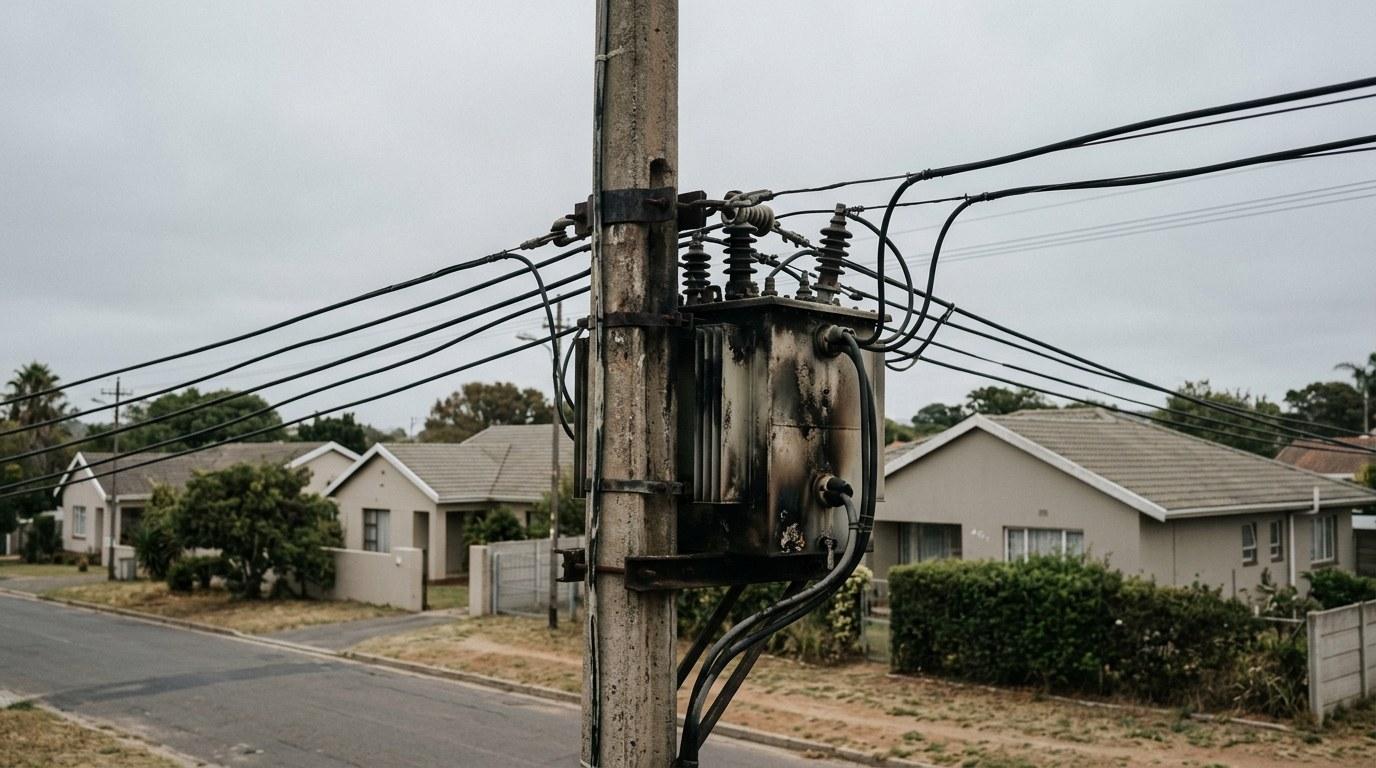
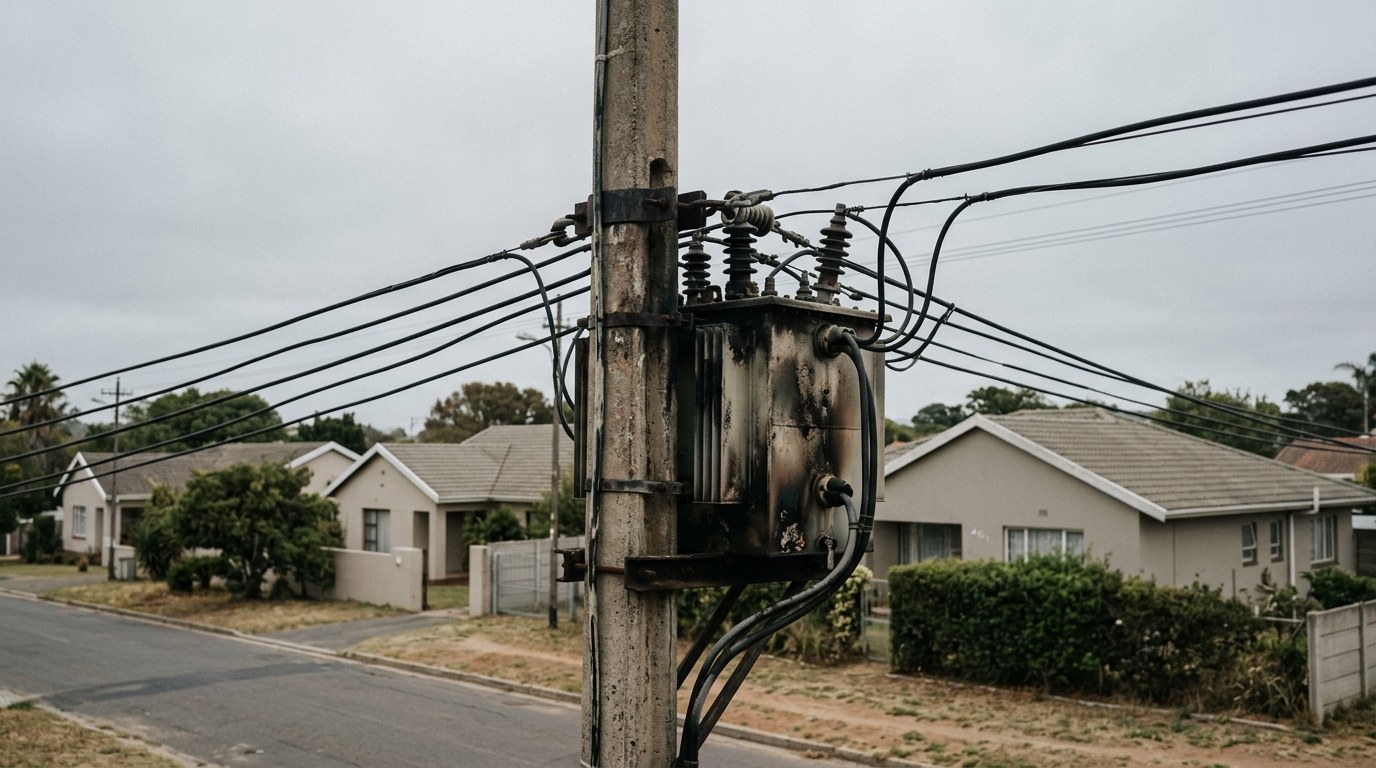
A scorched, overloaded electrical transformer on a South African suburban utility pole under an overcast sky

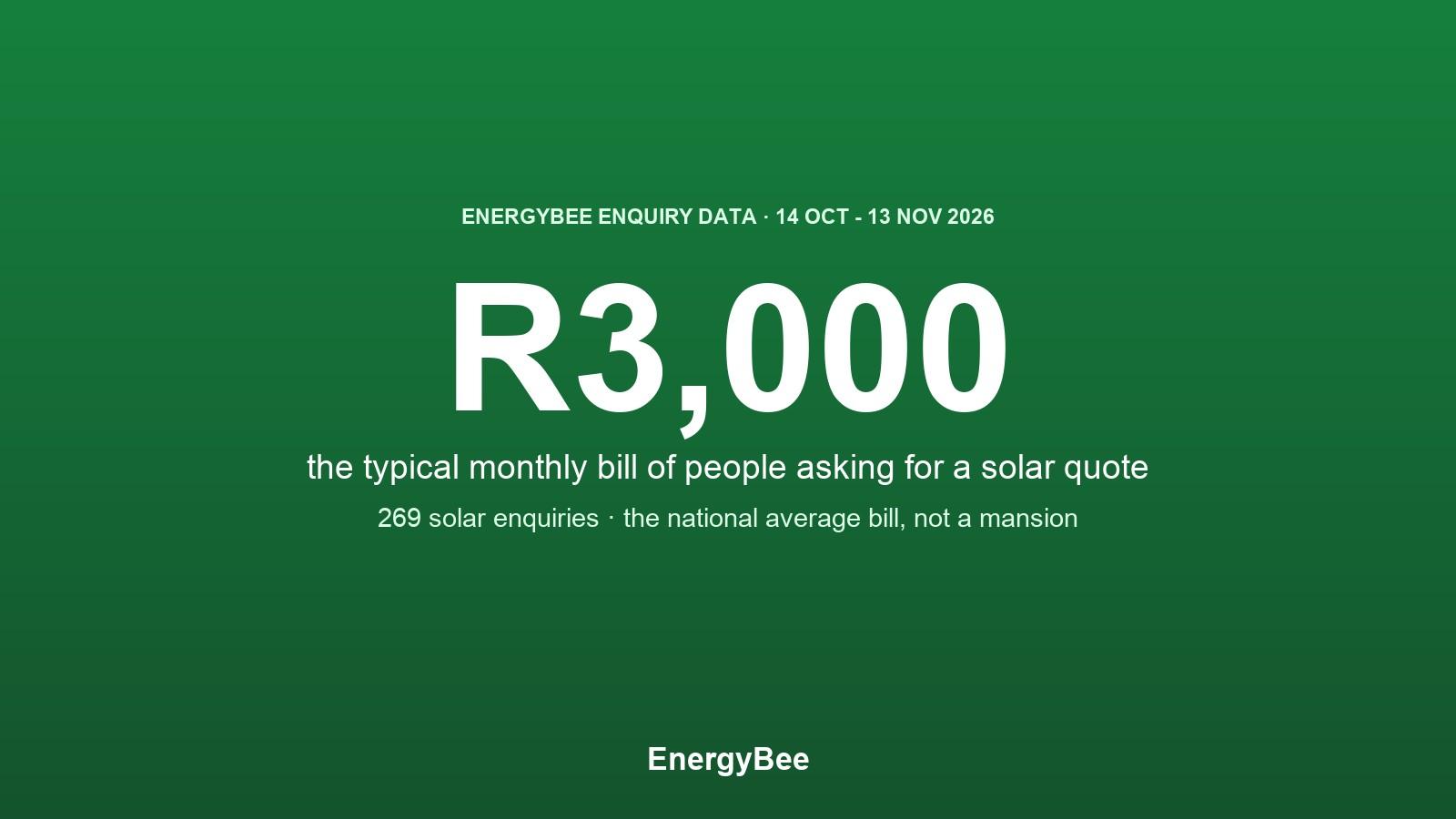
Are you on a prepaid meter or a municipal/postpaid account? And what's your rough monthly electricity bill - R500-1,000, R1,000-2,000, R2,000-3,500, R3,500-5,000, R5,000-8,000, or R8,000+? Tell us and we'll show you what a system sized for your own usage would actually save, in rand, regardless of what anyone else's account looks like.

See if solar makes sense for your home

Get free, no-obligation quotes. We then introduce you to the installer who will fit it.

How common is electricity theft in South Africa, and what does it actually look like?

Common enough to appear in Eskom's results every single year, under four recognised methods: illegal connections tapped directly into power lines, meter tampering or bypassing so usage under-registers, "ghost vending" of counterfeit prepaid tokens, and outright cable or transformer vandalism.

That last category has a knock-on effect that reaches paying households directly. Illegal connections pull far more load than local transformers were designed for, so they overheat, scorch and fail. Eskom has had to apply localised load reduction in high-theft areas to protect the grid - which is why a street can still lose power to a blown transformer on a day when there is zero national load shedding anywhere else in the country.

When doesn't this apply to you?

  • Theft isn't evenly spread. Some suburbs and municipalities carry far less of this burden than others; the national average doesn't mean every account is propping up a high-theft area specifically.
  • Solar doesn't remove your fixed charge. The monthly connection fee is billed whether you draw a single unit or not.
  • You still need the grid at night. Without enough battery, evenings and cloudy days still bill at the full tariff, theft recovery included.
  • Enforcement is improving, slowly. The 12% year-on-year drop in stolen units shows smart-meter rollouts and crackdowns are having some effect - it just hasn't reversed the tariff increases already locked in.

For a household paying R1,000 a month or more, the arithmetic holds regardless of the enforcement timeline: electricity theft somewhere else in the country is not a problem your own bill can opt out of, except by needing fewer of Eskom's units in the first place. Our is solar worth it in South Africa → guide has the full payback numbers, and why municipal debt pushes up your bill → covers the other side of the same story.

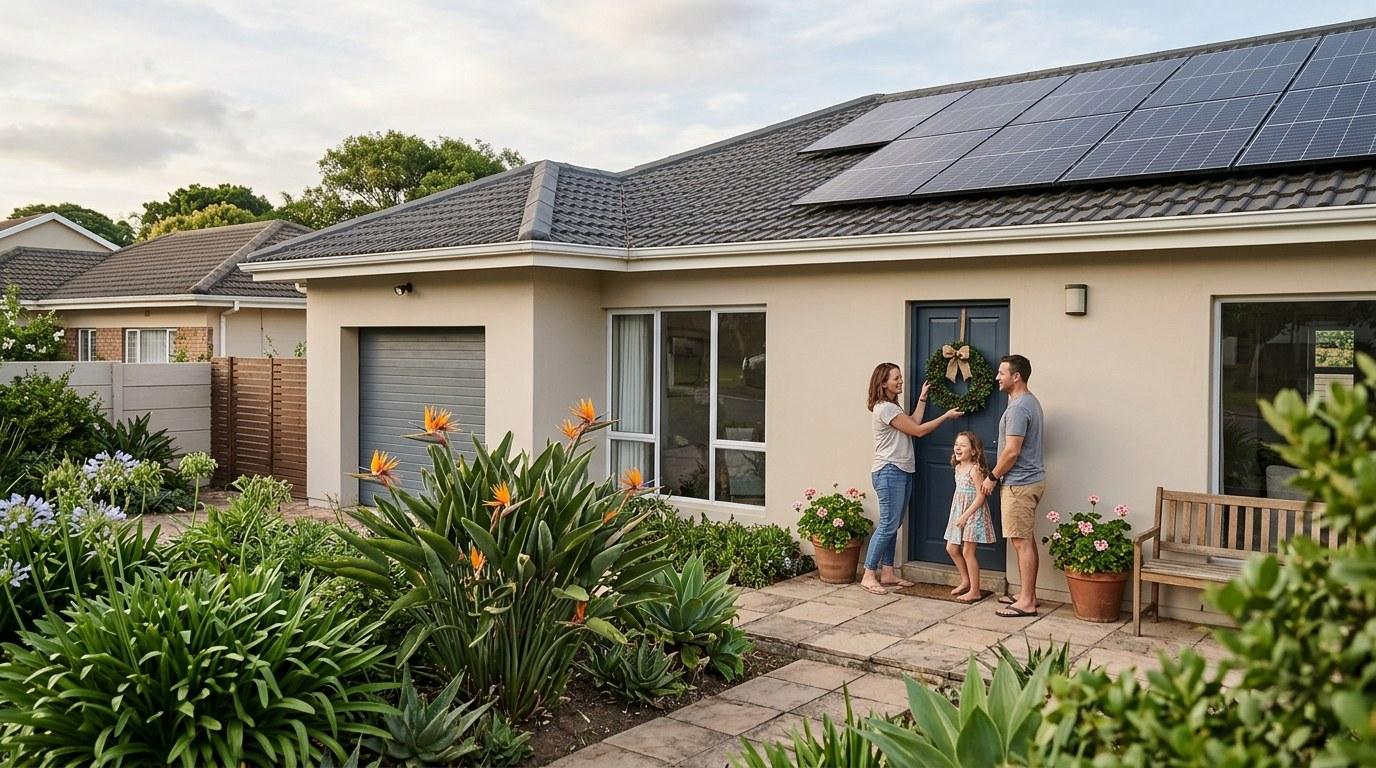
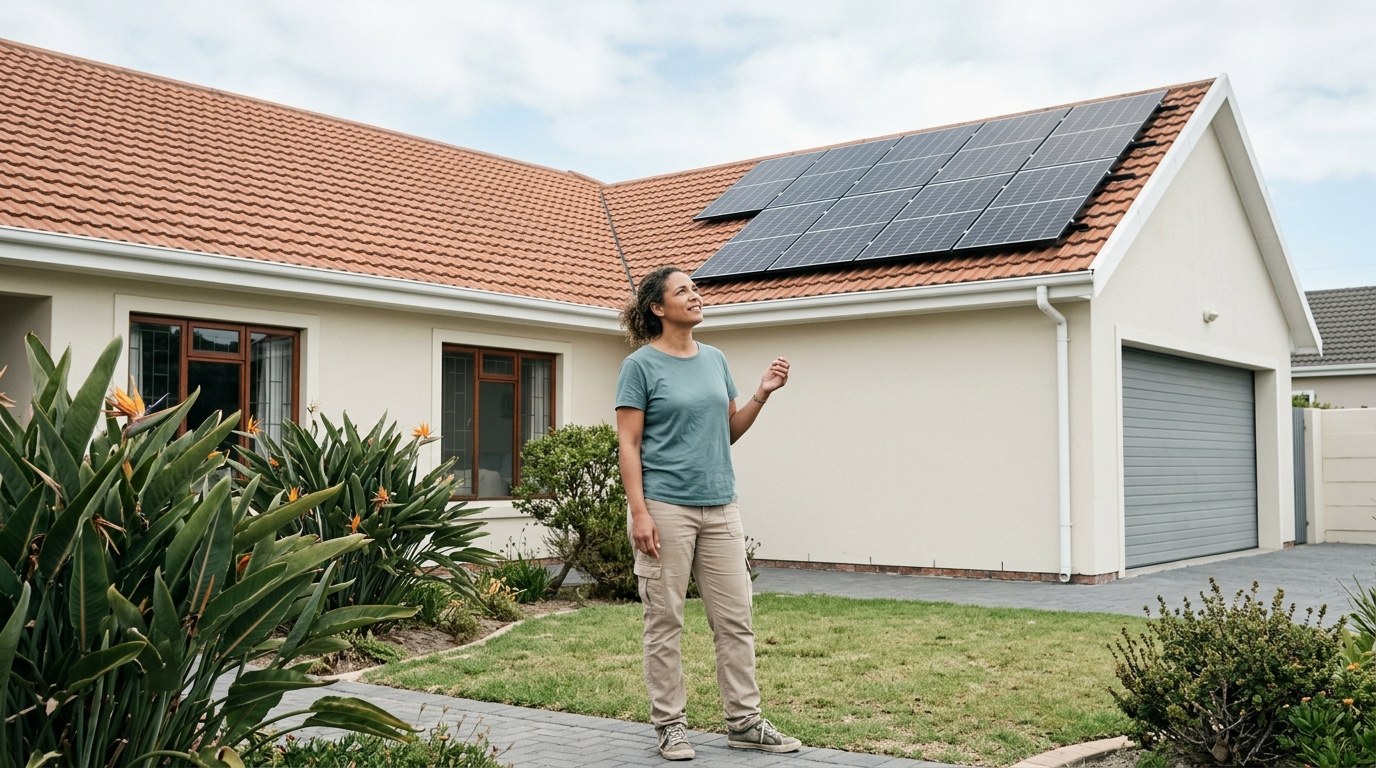
A South African homeowner standing in her garden looking up at her rooftop solar panels

Frequently Asked Questions

How much is Eskom in debt?

Eskom's own debt sits in the hundreds of billions of rand and is a separate figure from the R29 billion theft loss covered here - the debt is what Eskom owes lenders and government, while the theft figure is revenue Eskom never collected from customers in the first place. Both end up shaping the tariff NERSA allows Eskom to charge. Verified 14 October 2026.

What is the penalty for tampering with electricity meters in South Africa?

Meter tampering and illegal connections are criminal offences under the Electricity Regulation Act and related municipal by-laws, carrying fines and potential imprisonment on conviction, and Eskom can disconnect a tampered supply on discovery. In practice, prosecutions lag far behind the scale of the problem - Eskom's own reporting shows losses easing only slightly year on year despite enforcement drives.

How common is electricity theft in South Africa?

Common enough to show up in Eskom's own financial results every year. The utility put theft and illegal connections at 13.1TWh for the year to March 2026, a 12% improvement on the 14.9TWh lost the year before, but still equivalent to a meaningful share of total electricity sold. Eskom's distribution division names four main methods: illegal connections, meter tampering and bypassing, ghost vending of fake prepaid tokens, and infrastructure theft such as cable and transformer vandalism.

Can a smart meter detect electricity theft?

Yes, that's a large part of why Eskom keeps pushing smart and bi-directional meter rollouts. A smart meter reports actual consumption and connection status back to Eskom automatically, which makes tampering and bypassing far easier to flag than on an old meter that's only read or estimated occasionally. It doesn't stop a direct illegal tap further up the line before the meter, which is why cable and infrastructure theft needs physical enforcement, not just better metering.

Does solar protect me from Eskom's theft losses?

For the units it replaces, yes. Eskom recovers theft and non-payment losses by raising the tariff for everyone, so every Eskom or municipal unit you buy carries a small share of that recovery cost baked in. The units a home solar system makes carry no tariff, so theft elsewhere in the country cannot raise their price. It won't remove your fixed monthly connection charge, and you still draw from the grid at night or on dull days without enough battery - but every unit your panels cover is a unit that theft three suburbs away can no longer make more expensive.

Key Takeaways

  • Eskom lost 13.1 terawatt-hours of electricity to theft and illegal connections in the year to March 2026 - power generated and consumed but never billed, revenue its outgoing CFO put at R29 billion.
  • Add unpaid bills from defaulting municipalities and Eskom's total leaking revenue reaches roughly R45 billion a year, according to its outgoing CFO.
  • That loss doesn't disappear. Eskom applies to NERSA for bigger tariffs to cover the revenue gap, and the increase lands on every paying customer, not just the areas where the theft happens.
  • Illegal connections also overload local transformers, which is why some suburbs still see outages from blown infrastructure even on a day with zero national load shedding.
  • A fixed-price home solar system is the one unit of electricity in South Africa that a thief three suburbs away can't make more expensive. A family kit starts from R74,500-R90,500 installed, battery included.
Free - see your savings in seconds

See what you'd save - based on your actual bill

Tell us what you pay Eskom now. We'll show you what solar would cost you a month instead, and what's left over.

What's your average monthly electricity bill?
Where are you in your solar journey?

No cost, no obligation, no salesperson unless you ask for one.

Share WhatsApp Facebook

Written by Neil Berrow. EnergyBee earns from connecting homeowners with installers and finance partners. Editorial policy and corrections.