News/Solar
Municipalities Owe Eskom R110bn. You Pay.
Solar

Municipalities Owe Eskom R110bn. You Pay.

Free, no obligation.

Published Updated 2 min readBy Neil Berrow
eskom municipal debtwhy is my electricity bill so higheskom municipal debt effect on electricity pricemunicipalities owe eskom
Share WhatsApp Facebook

Municipalities owe Eskom more than R110 billion, up 17% in a year, and Eskom itself warns the figure could triple past R300 billion by 2030. None of that debt goes away. Eskom applies for a bigger bulk tariff, your council adds its own markup to cover its losses, and you pay both, even if your own account is never late. Here is how the debt lands on your bill, and the one price in South Africa it cannot touch.

Municipalities owe Eskom more than R110 billion, and Eskom warns that figure could triple past R300 billion by 2030. When a council doesn't pay, Eskom raises its bulk tariff and the council adds its own markup. Both land on customers who pay on time, including you.

The short version:

1. Municipal debt to Eskom hit R110.5 billion by December 2025, up 17% from R94.6 billion a year earlier. 2. Eskom warns it could triple past R300 billion by 2030 if nothing changes. 3. Unpaid debt doesn't disappear. Eskom applies to NERSA for a bigger bulk tariff, and that cost spreads across every customer, not just the municipality that didn't pay. 4. Your own council adds a second markup to cover its theft and non-payment losses, on top of Eskom's increase. 5. Home solar is the one SA electricity price debt can't move. A family kit from R74,500-R90,500 installed makes your own units, with no tariff on them.

Which municipality owes Eskom the most?

The national ranking moves month to month, but the pattern is the same everywhere: a council falls behind, Eskom escalates, and paying residents feel it before the debt is ever resolved.

Eskom has issued formal non-payment notices against 14 municipalities under the Promotion of Administrative Justice Act. In June 2026 it warned Johannesburg directly over more than R5.2 billion in unpaid debt, with reduced power supply on the table if the account wasn't settled. Nationally, municipal arrears to Eskom reached R110.5 billion by December 2025, 17% up on the R94.6 billion owed a year before.
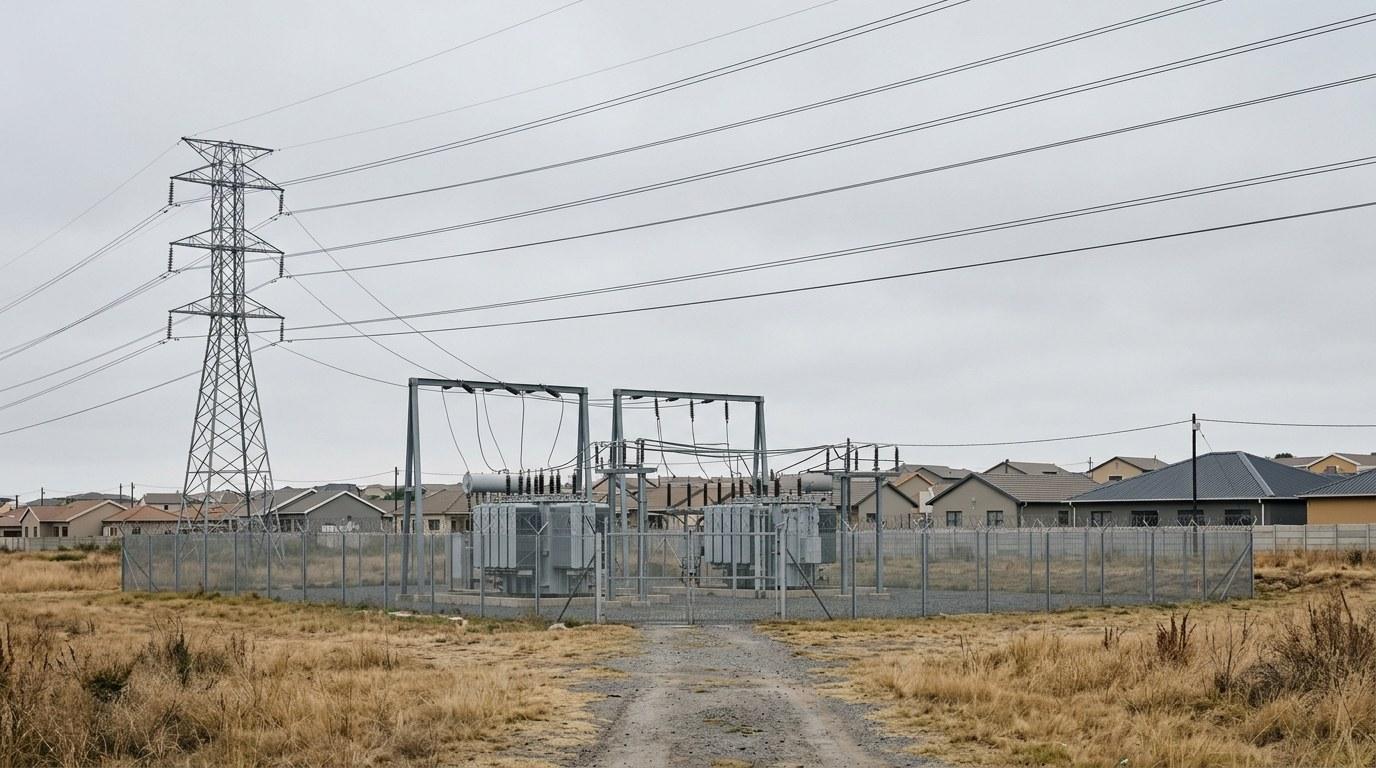
Why does unpaid municipal debt put up your bill?

Because Eskom has to recover the shortfall from somewhere, and NERSA lets it recover that somewhere from everyone.

Who's shortWhat they do about itWho actually pays
Eskom (owed R110.5bn+ by municipalities)Applies to NERSA for a bigger bulk tariff increaseEvery Eskom and municipal customer nationwide
Your municipality (covering theft and non-payment losses)Adds its own markup on top of Eskom's bulk ratePaying residents in that municipality only
National TreasuryIssues Eskom multi-billion-rand bailoutsTaxpayers, via public debt
Your own roofA fixed cost once the system is paid offYou, and only you

Municipal debt figures from Eskom's PAJA notices and Engineering News' review of Eskom data (27 March 2026, covering the period to December 2025); the R300 billion 2030 warning is Eskom's own, reported by MyBroadband (1 October 2025). Verified 13 October 2026.

A paying household never sees a line item for "municipal debt recovery" or "Eskom bailout". It just arrives as next year's bigger increase, on top of the one before it.

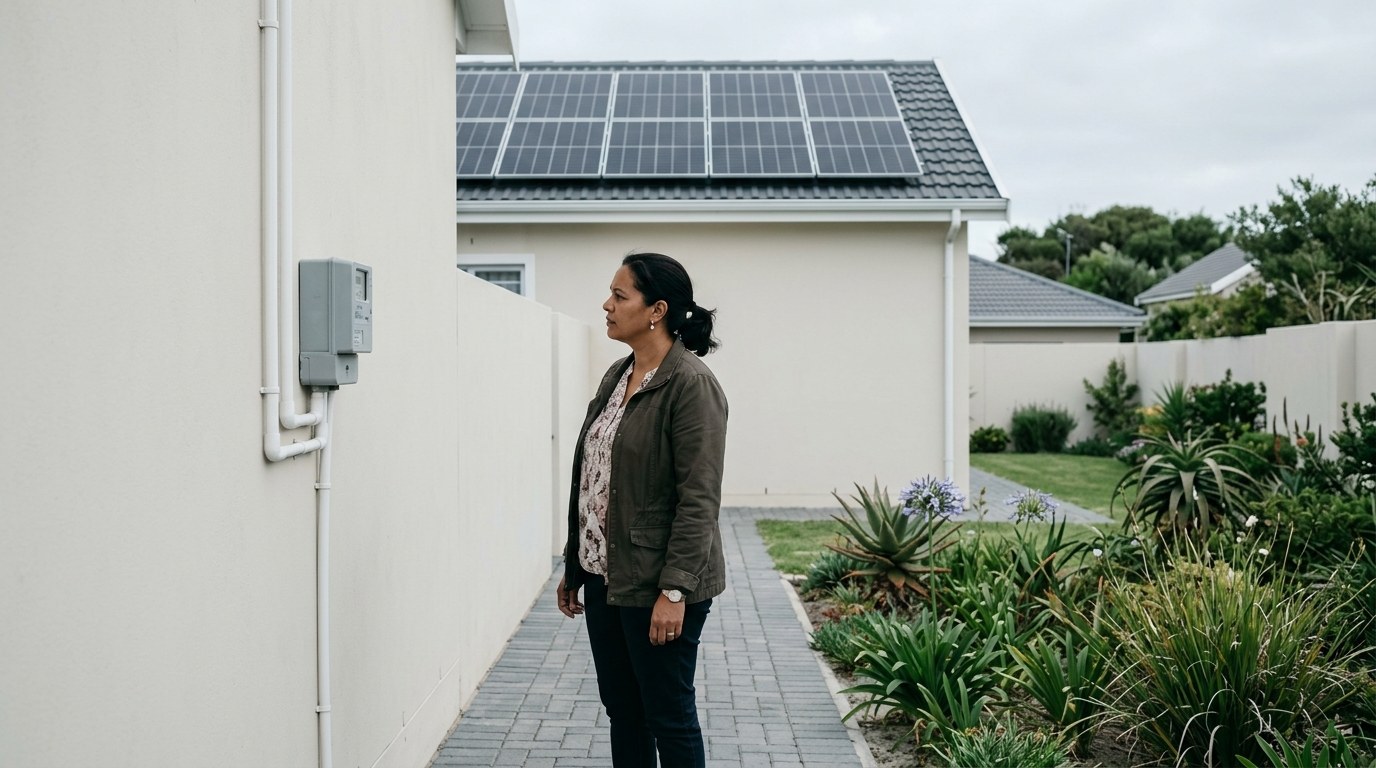
A middle-class South African homeowner checking their electricity meter on an exterior wall next to a neat rooftop solar installation

See if solar makes sense for your home

Get free, no-obligation quotes. We then introduce you to the installer who will fit it.

When doesn't this apply to you?

  • Some municipalities run a tight ship. Not every council is in debt trouble, and a well-run metro's markup can be lower than Eskom's own direct tariff.
  • Solar doesn't remove the fixed charge. The monthly connection fee stays whether you draw power or not.
  • You still need the grid at night. Without enough battery, cloudy days and evenings still bill at the full municipal rate.
  • Debt relief can shift the picture. National Treasury's municipal debt relief programme writes off arrears for councils that commit to paying their current account, which can slow (not reverse) future hikes.

For a household on R1,000 a month or more, the maths holds regardless: a council's debt problem is not yours to solve through your bill. Our is solar worth it in South Africa → guide has the full payback numbers, and Eskom's own R400bn debt → covers the other half of this story.

Frequently Asked Questions

Which municipality owes Eskom the most?

The ranking shifts month to month as councils pay down or add to their accounts, but the scale is consistent: Eskom has issued formal non-payment notices against 14 municipalities, and in June 2026 it warned Johannesburg specifically over more than R5.2 billion in unpaid debt, threatening reduced power supply if it was not addressed. Nationally, municipal arrears reached R110.5 billion by December 2025, up from R94.6 billion a year before. Verified 13 October 2026.

Are Eskom and City Power the same?

No. Eskom generates and sells electricity in bulk. City Power is Johannesburg's own municipal distributor: it buys that bulk power from Eskom and resells it to Johannesburg households with its own tariff and markup on top. Most other metros (Tshwane, Ekurhuleni, eThekwini, Cape Town) run the same model through their own municipal utility, while some smaller towns and rural areas buy directly from Eskom.

Which electricity is cheaper, Eskom or a municipality?

It depends entirely on the municipality. Some run a tight collection system and keep their markup low; others carry heavy losses from theft and non-payment and pass a much bigger markup onto paying customers. Our full metro-by-metro breakdown is in the [side-by-side metro tariff comparison](/news/electricity-tariffs-compared-sa-metros-2026).

What are the current electricity costs in South Africa?

A household in the major metros pays R3.34 to R5.12 a unit (kWh) in 2026/27, depending on supplier and tariff step. Eskom direct customers saw an 8.76% increase from 1 April 2026, and municipal customers a separate increase from 1 July 2026, both NERSA-approved. Verified 13 October 2026.

Does solar protect me from municipal electricity price hikes?

Yes, for the units it replaces. The units a home solar system makes carry no tariff, whatever your municipality owes Eskom or however big its next markup is. It doesn't remove the fixed monthly connection charge, and you still draw from the grid at night or on dull days unless you add enough battery, but every unit your panels cover is a unit your municipality's debt problem can no longer touch.

Key Takeaways

  • Municipalities owed Eskom R110.5 billion by December 2025, up 17% from R94.6 billion a year earlier. Eskom itself warns that figure could triple past R300 billion by 2030 without intervention.
  • When a council doesn't pay, Eskom applies to NERSA for a bigger bulk tariff increase. That increase lands on every Eskom and municipal customer in the country, paid accounts included.
  • Councils add their own markup on top of Eskom's bulk rate to cover losses from theft and illegal connections, which is why a paying household can face two price hikes for one unpaid bill, Eskom's and the municipality's.
  • A fixed-price home solar system is the only electricity cost in South Africa that doesn't move when a municipality misses a payment. A family kit starts from R74,500-R90,500 installed, battery included.
Free - see your savings in seconds

See what you'd save - based on your actual bill

Tell us what you pay Eskom now. We'll show you what solar would cost you a month instead, and what's left over.

What's your average monthly electricity bill?
Where are you in your solar journey?

No cost, no obligation, no salesperson unless you ask for one.

Share WhatsApp Facebook

Written by Neil Berrow. EnergyBee earns from connecting homeowners with installers and finance partners. Editorial policy and corrections.