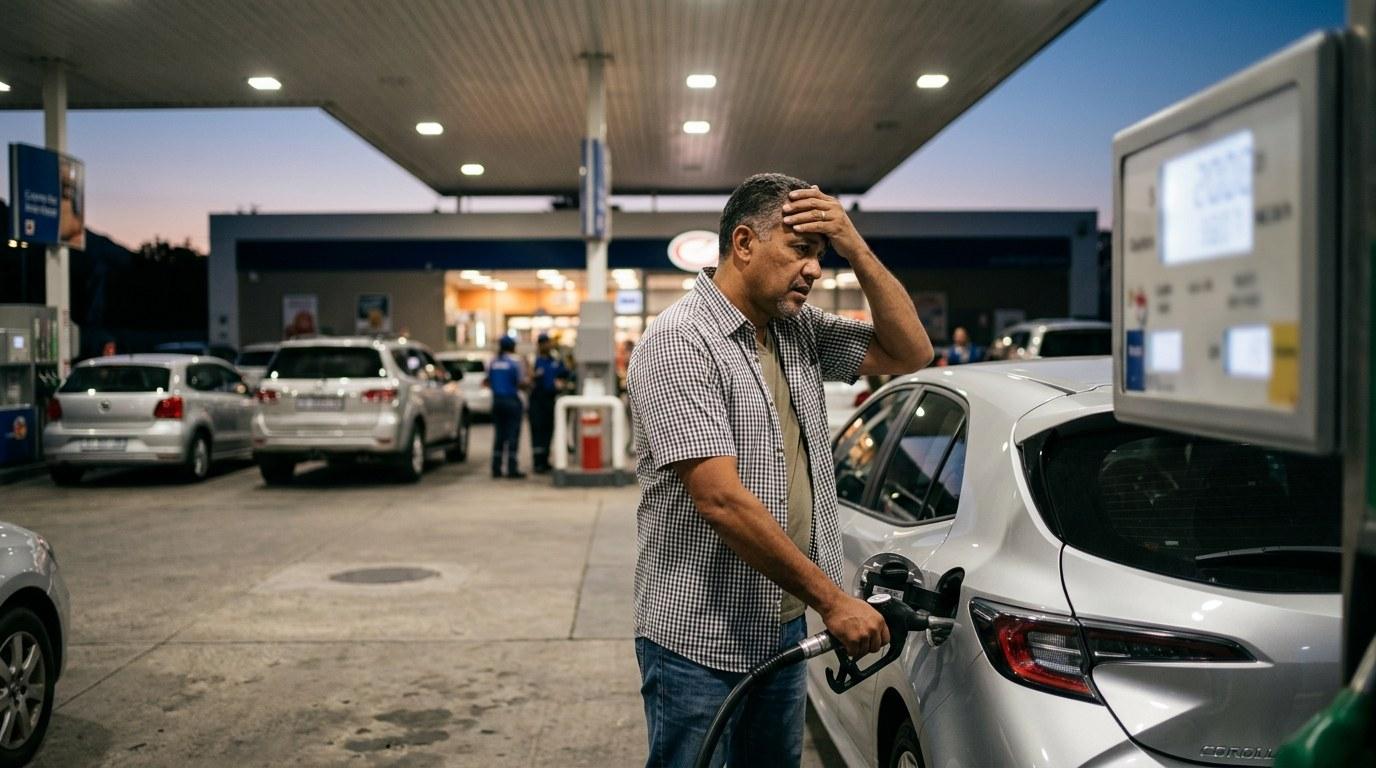
The Central Energy Fund's final August data is in, and it's ugly: petrol climbs by up to R1.07 a litre and diesel by nearly R3 from Wednesday 2 September 2026. Here's the full per-litre breakdown for inland and coastal drivers, what a tank now costs, and why it could have been even worse.
Fill up before Wednesday if you can. The final fuel price data for August is in, and the September 2026 petrol price increase is all but locked in: petrol climbs by up to R1.07 a litre, and diesel by close to R3 a litre, when the Department of Mineral and Petroleum Resources (DMPR) adjusts prices on Wednesday 2 September 2026.
The figures below come from the Central Energy Fund's (CEF) review data for the period ending late August, as reported over the weekend. The DMPR announces the official adjustment by 2 September, so treat these as projections - historically accurate to within a few cents.
How much is petrol in September 2026?
Here is the full per-litre picture, current August prices against September's projected prices. August figures are derived by subtracting the projected increase from the September projection.
Fuel
August 2026 (current)
Increase
September 2026 (projected)
Petrol 93 ULP - inland
R25.42
+R0.96
R26.38/l
Petrol 95 ULP - inland
R25.58
+R1.07
R26.65/l
Petrol 95 ULP - coastal
R24.71
+R1.07
R25.78/l
CEF-based projections ahead of the DMPR's official announcement on 2 September 2026.
Gauteng and the inland provinces cross a psychological line this month: R26.65 for a litre of 95. Coastal drivers keep the usual transport-cost advantage, but a R25.78 pump price will still sting anyone who remembers July's brief relief.
Diesel price September 2026: the bigger jump
If petrol drivers have it bad, diesel drivers have it worse - and diesel is the price that quietly moves everything else, because it powers the trucks, taxis, farm equipment and generators the whole economy runs on.
Fuel
August 2026 (current)
Increase
September 2026 (projected)
Diesel 500ppm - inland (wholesale)
R26.17
+R2.71
R28.88/l
Diesel 50ppm - inland (wholesale)
R26.90
+R2.92
R29.82/l
Diesel 500ppm - coastal (wholesale)
R25.30
+R2.71
R28.01/l
Diesel 50ppm - coastal (wholesale)
R25.64
+R2.92
R28.56/l
Wholesale prices, CEF-based projections. Retail diesel prices are deregulated and vary by forecourt.
Illuminating paraffin - the fuel millions of households still cook and light their homes with - rises by R2.12 a litre, an increase that lands hardest on the families least able to absorb it.
Why the petrol price increase is happening
Three forces are stacked against South African drivers this month:
1. Oil never really calmed down. Brent crude sat around $88 a barrel through the August review period. US sanctions on Iran and constrained tanker traffic through the Strait of Hormuz kept supply tight, while Ukrainian strikes on Russian refineries and ports curbed Moscow's crude exports. 2. We import our fuel now. With most of South Africa's local refining capacity shut over the past decade, we buy refined petrol and diesel at international prices - so global spikes feed straight into the local pump price with no buffer. 3. The safety nets are gone. The R3-a-litre general fuel levy relief Treasury extended through the first half of 2026 ended in June, so the full levy is back inside every litre you buy.
There is one partial saving grace: a stronger rand over the review period trimmed roughly 18 cents a litre off the petrol increase and 26 cents off diesel. And it could genuinely have been worse - at the start of the review window on 31 July, the CEF was tracking an under-recovery of R5.48 a litre on 50ppm diesel. September's R2.92 is bad, but it is the softened version of a much nastier number.
See if solar makes sense for your home
Get free, no-obligation quotes. We then introduce you to the installer who will fit it.
What the petrol price increase means for your monthly budget
Percentages and cents are abstract. Here is what September's adjustment does to real tanks and real months, using the projected per-litre increases:
Your situation
Extra per fill / per month
45-litre tank, petrol 95 (typical hatchback)
+R48 per fill
80-litre tank, 50ppm diesel (double-cab bakkie)
+R234 per fill
Commuter, 1,000 km/month (7.5 l/100 km petrol)
+R80 per month
Bakkie or delivery vehicle, 2,000 km/month (10 l/100 km diesel)
+R584 per month
Our calculations from the projected increases: +R1.07/l on petrol 95 and +R2.92/l on 50ppm diesel.
And remember the second-order effect: diesel at nearly R30 a litre inland flows into food prices, taxi fares and delivery fees over the coming weeks. Even households that don't own a car will feel this one.
The households dodging this increase entirely
Every month this happens, the gap widens between drivers who queue at the forecourt and drivers who plug in at home.
Charging a typical EV at home on a standard residential tariff works out to roughly R210 to R300 for 400 km of range. The same 400 km in a petrol hatchback now costs around R746 at September's projected inland price. That is not a rounding error - it is the difference between a fuel bill and a rounding error. Our EV charger range → covers the home wallboxes that make overnight charging the default, and the maths above is exactly why installs spike after every fuel hike.
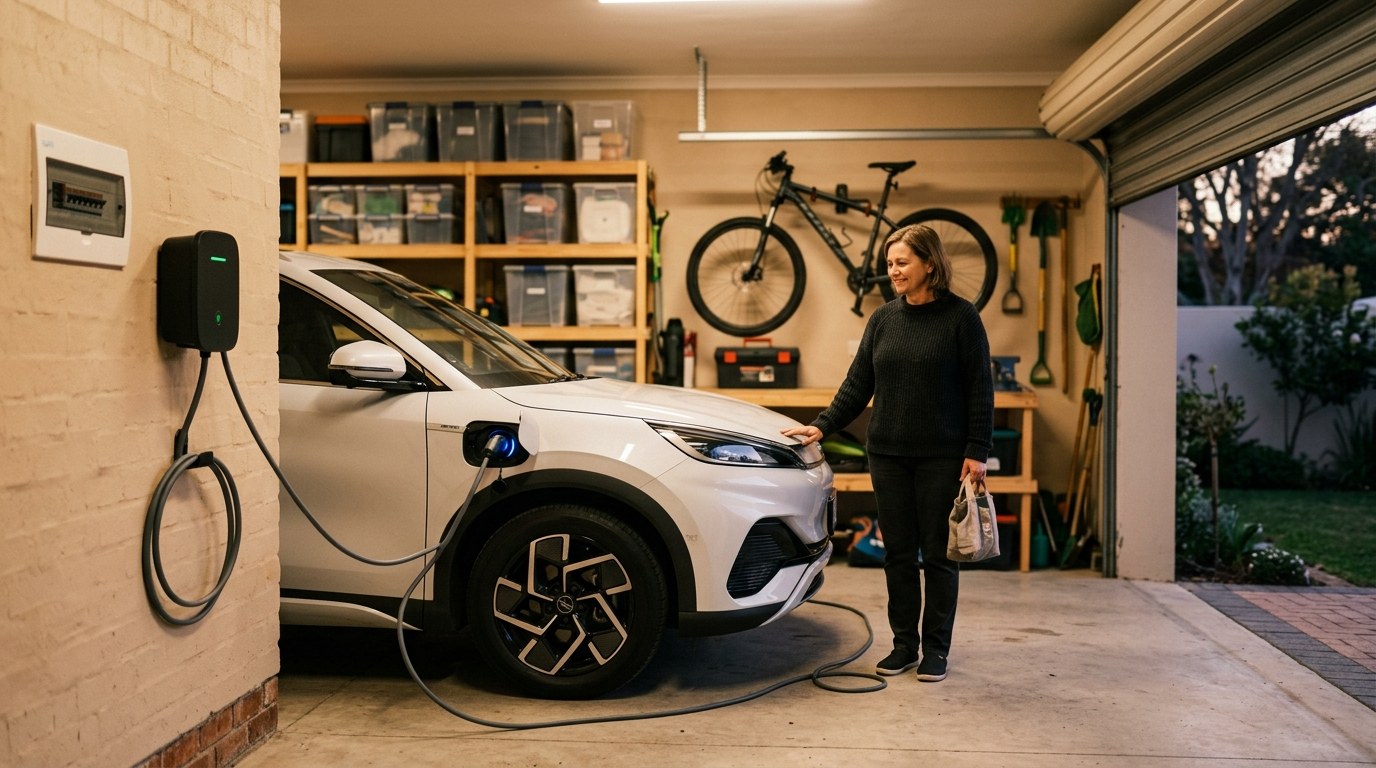
A white BYD Atto 3 electric car plugged into a home wall charger inside a tidy South African suburban garage in the evening
Pair a home charger with rooftop solar and the per-kilometre cost drops close to zero - the same logic that lets solar households shrug off municipal tariff hikes applies to petrol hikes too. If you want to run the numbers for your own home, start with is solar worth it in South Africa in 2026 → and our solar ROI and payback guide →, which walks through real payback periods at current tariffs.
Before Wednesday: three things worth doing
1. Fill up before 2 September. A 45-litre tank filled on Monday or Tuesday saves you R48 against the same tank on Wednesday. It is the easiest R48 you'll make this week. 2. If you run diesel, fill the bakkie and the jerry cans. At +R2.92 a litre, an 80-litre fill is R234 more expensive from Wednesday. 3. Fix the next increase, not just this one. Every month you spend absorbing hikes is a month the alternatives - an EV charged at home, solar on the roof - would have been paying themselves off. The payback maths just got shorter again.
The bottom line: September's increase is smaller than the R5-plus disaster diesel was tracking at the start of August, but "smaller than a disaster" is still R26.65 for a litre of petrol. Fill up before Wednesday - then decide whether you want to keep playing this game every single month.
Tired of budgeting around the next increase?
Sources
CAR Magazine, "New predicted SA fuel price for September 2026" (29 August 2026) - CEF-based projected adjustments and September per-litre prices: carmag.co.za →.
MyBroadband, "Petrol and diesel price twist in South Africa" (27 August 2026) - CEF under-recovery data for the 31 July to 25 August review period, rand-strength offsets and early-period comparisons: mybroadband.co.za →.
National Treasury / DMPR fuel levy relief extension (April to June 2026) - background on the R3/l general fuel levy relief that ended in June 2026.
All September figures are CEF-based projections published ahead of the DMPR's official announcement on 2 September 2026; final gazetted prices may differ by a few cents. Monthly cost examples are EnergyBee calculations from the projected increases.
Frequently Asked Questions
How much is the petrol price increase in September 2026?
Based on the Central Energy Fund's final review data, petrol 93 ULP rises by 96 cents a litre and petrol 95 ULP by R1.07 a litre from Wednesday 2 September 2026. Diesel drivers are hit harder: wholesale diesel climbs R2.71 a litre for 500ppm and R2.92 a litre for 50ppm, while illuminating paraffin goes up R2.12 a litre. The Department of Mineral and Petroleum Resources confirms the official figures by 2 September, and the final numbers can shift by a few cents either way.
What is the petrol price in South Africa in September 2026?
The projected September 2026 pump price for petrol 95 ULP is R26.65 a litre inland and R25.78 a litre at the coast, while petrol 93 ULP lands at R26.38 inland. Wholesale diesel is projected at R28.88 (500ppm) and R29.82 (50ppm) inland, and R28.01 (500ppm) and R28.56 (50ppm) at the coast. These are CEF-based projections ahead of the DMPR's official announcement, not the final gazetted prices.
Why is the petrol price going up in September 2026?
South African pump prices ran below the real market cost of fuel through August - what the CEF calls an under-recovery - and September's adjustment catches up. Brent crude sat around $88 a barrel over the review period as US sanctions on Iran, constrained shipping through the Strait of Hormuz and Ukrainian strikes on Russian refineries kept supply tight, and because South Africa now imports most of its refined fuel, those global prices feed straight through. A stronger rand softened the blow by roughly 18 cents a litre on petrol and 26 cents on diesel, but not enough to prevent an increase.
How much more will it cost to fill up in September 2026?
A 45-litre tank of petrol 95 costs about R48 more per fill from 2 September. An 80-litre double-cab bakkie filled with 50ppm diesel costs roughly R234 more per fill. Spread over a month, a commuter covering 1,000 km in an average petrol hatchback pays around R80 more, while a diesel bakkie or small delivery vehicle covering 2,000 km pays roughly R480 to R580 more depending on consumption.
Is it still cheaper to run an EV than a petrol car in South Africa?
Yes, and September's increase widens the gap. Charging a typical 60 kWh EV battery at home on a standard residential tariff costs roughly R210 to R300 for around 400 km of range, depending on your municipal tariff. The same 400 km in a petrol hatchback using 7 litres per 100 km now costs about R746 at the projected September inland price of R26.65 a litre. Home charging from solar panels pushes the EV's per-kilometre cost close to zero, which is why every fuel hike shortens the payback on a home charger and solar setup.
Key Takeaways
Petrol 95 rises R1.07 to R26.65 a litre inland from Wednesday 2 September 2026 - fill up before the adjustment
Diesel is hit harder: up to R2.92 a litre, taking 50ppm to R29.82 inland - expect food and taxi prices to follow
A 45-litre tank of petrol costs R48 more per fill; a 1,000 km-a-month commuter pays about R80 more
Home-charged EVs now cover 400 km for roughly a third of the petrol cost - every hike shortens the solar and EV payback
Free - see your savings in seconds
See what you'd save - based on your actual bill
Tell us what you pay Eskom now. We'll show you what solar would cost you a month instead, and what's left over.
No cost, no obligation, no salesperson unless you ask for one.