Eskom's direct-customer tariffs rose 8.76% on 1 April 2026. Coal retirement is planned for 2027-2030. Here is what South African homeowners need to know, and what solar can fix.
Eskom 2026: SA Grid Outlook, Tariff Hikes & What It Means For Your Bill
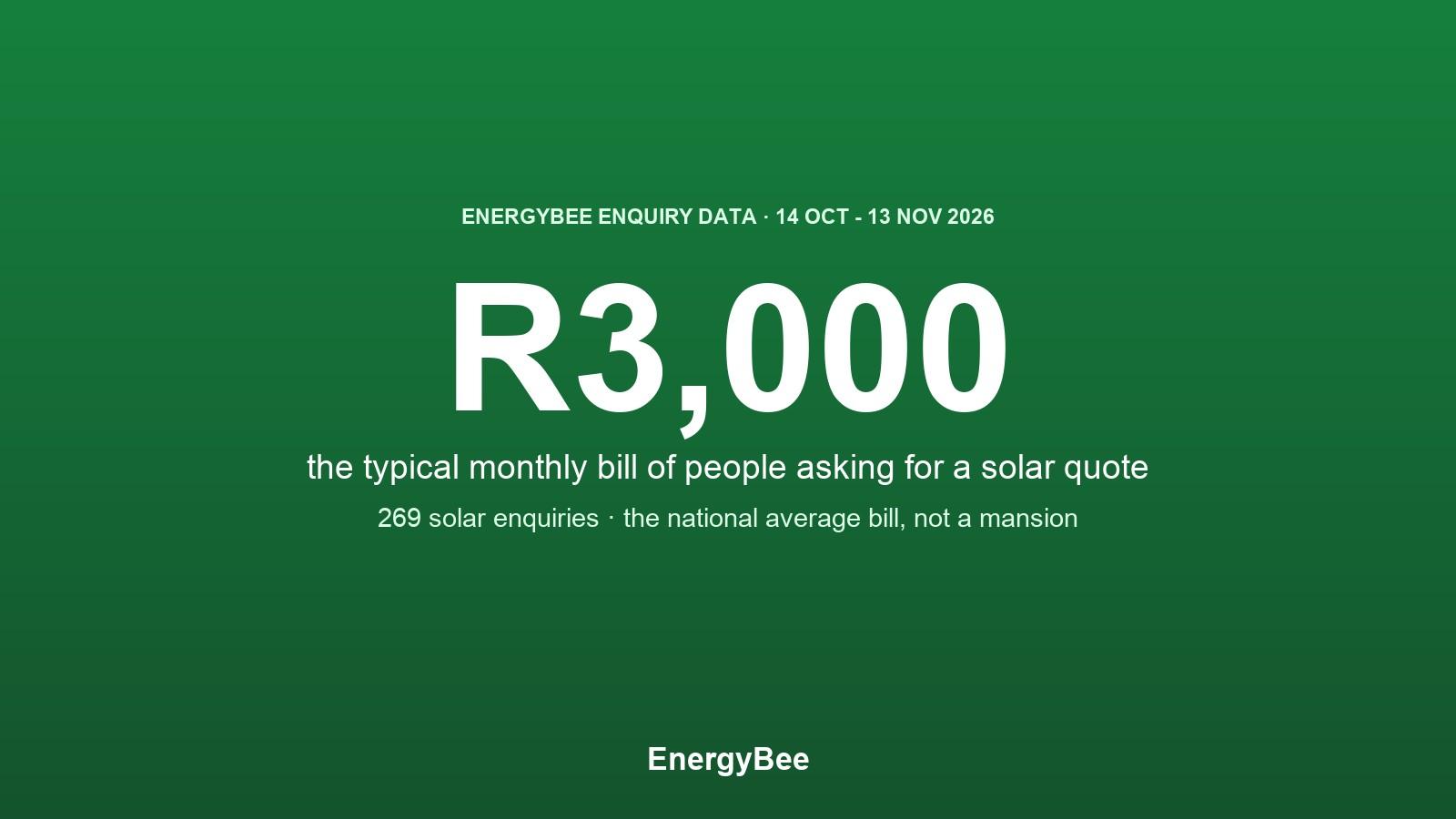
South Africa's electricity story in 2026 is no longer about load shedding - it's about tariffs. Eskom's 8.76% increase in April 2026 took a R2,500 direct-supply bill to about R2,720 a month, and coal retirements between 2027-2030 will likely trigger another round of NERSA-approved hikes. For homeowners sitting on the fence about solar, the question has shifted from "will the lights stay on?" to "can I afford to keep paying Eskom's rising rate?"
Here's what's actually happening to the SA grid in 2026, and why it matters for your wallet more than load shedding ever did.
The Tariff Reality: What You're Actually Paying Now
Eskom Direct tariffs rose by an average 8.76% on 1 April 2026. Eskom's multi-year price determination (MYPD6) signals further increases ahead as the utility services debt and funds infrastructure.
The key point: Every time Eskom raises rates, your solar investment gets more valuable. A system installed today locks in your generation cost for 25 years.
Coal Retirement: The Grid's Structural Shift
Eskom has formally committed to decommissioning ageing coal stations between 2027 and 2030. Stations in line for retirement include Camden, Komati (already partially decommissioned), and portions of the Hendrina and Grootvlei fleets.
This retirement is necessary - the fleet is burning expensive diesel backup and suffering chronic unplanned outages. But it creates a supply gap that renewable energy, battery storage, and independent power producers must fill.
The timeline matters for homeowners:
2026-2027: Transition period. Grid reliability is better than 2022-2024, but coal retirement risk increases unplanned outage probability.
2027-2028: Coal retirements accelerate. New renewable capacity coming online (5,000+ MW in the pipeline), but delivery delays are common.
2029-2030: The grid either stabilises under a diversified mix, or faces a reliability squeeze if renewable projects slip.
SAWEM: What the New Market Means for Solar Owners
The South African Wholesale Electricity Market (SAWEM) launches in April 2027. Households cannot sell into it at launch: the first phase is for licensed generators and traders. It does not change what your roof earns today (our SAWEM guide →).
What matters for home solar now:
Municipal export schemes set their own credits. Cape Town's is live and for 2026/27 pays about R1.53/kWh including VAT, incentive included (City schedule →); Tshwane's 2026/27 schedule credits 94.13c/kWh excluding VAT and adds a R324.00 monthly fixed charge on domestic embedded-generation connections (City schedule →, checked 27 November 2026).
Grid defection risk for Eskom increases as tariffs rise: more homeowners prioritise self-consumption and battery storage over export.
What This Means For Your Household
If you have solar already: Your investment is compounding. Every tariff increase widens the gap between your generation cost and grid cost. Optimise for self-consumption - a unit you use yourself saves the full price of buying it, which is usually far more than an export credit.
If you're considering solar: Work the numbers on your own bill and tariff, and ask each installer to show the payback. Waiting for tariffs to rise further before acting is not a strategy - it just means you pay more grid electricity in the interim.
If you're on the fence about batteries: The coal retirement timeline is your answer. Grid reliability through 2026 is better than it was in 2023, but the 2027-2030 window carries real risk of supply disruption as old plant retires before new capacity is fully online. A battery gives you resilience regardless of what happens on the grid.
The Bottom Line
Load shedding may be in remission - but Eskom's structural challenges are not resolved. Tariffs will keep rising. Coal is being retired. The grid is mid-transition. For South African homeowners, the question isn't whether solar makes sense in 2026. It's whether the system size and battery configuration is right for your household.
Free - see your savings in seconds
See what you'd save - based on your actual bill
Tell us what you pay Eskom now. We'll show you what solar would cost you a month instead, and what's left over.
No cost, no obligation, no salesperson unless you ask for one.