News/Solar
Load Shedding's Over. Solar Still Wins.
Solar

Load Shedding's Over. Solar Still Wins.

Free, no obligation.

Published 2 min readBy Neil Berrow
is solar worth it south africasolar no load sheddingsolar worth it 2026eskom tariff increase
Share WhatsApp Facebook

Eskom has gone more than 500 days without load shedding and expects another quiet summer. So is there still any point going solar? Yes - but the reason has changed. It is no longer about the dark. It is about the bill.

Yes - solar is still worth it in South Africa even with no load shedding. The blackouts have stopped, but the price has not: a R2,000 monthly bill becomes roughly R2,600 by 2028 on increases already approved. A family solar kit from R74,500-R90,500 installed, battery included, fixes most of that cost once, instead of paying it to the grid forever.

In short, solar still pays because:

1. The grid is safe again, but the price is not - increases of 8.76% (April 2026) and 9.01% (July 2026) are already banked, with another 8.83% approved for 2027. 2. Every unit you make on your roof is a unit you never buy at the rising rate. 3. Summer is peak sun - your aircon, pool pump and fridge can run off the roof for next to nothing. 4. A solar home tends to sell faster and for more. 5. It only stops making sense in a few specific cases, which we are honest about below.

Is solar worth it now that load shedding has stopped?

Yes. Load shedding is no longer the reason to go solar - the electricity price is. Eskom has now run more than 500 days without national load shedding and expects another quiet summer, yet the tariff has climbed every single year and is approved to rise again in 2027.

That is the shift. Solar used to be about keeping the lights on. Today it is the only lever a household actually has against a price set by one supplier, with no competition and no way to shop around. You cannot negotiate with Eskom. You can stop buying so much from it.

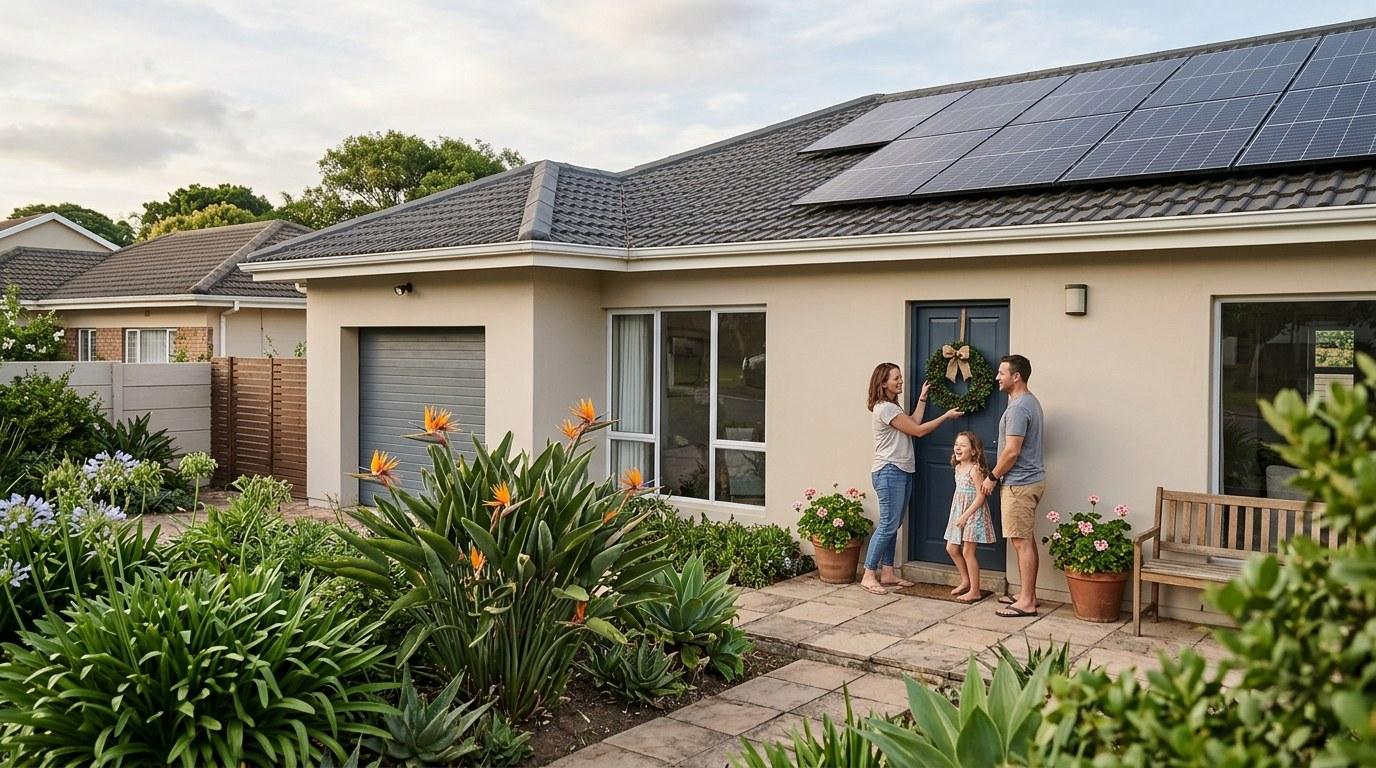
A South African family relaxing at home on a bright summer afternoon while the air conditioning and pool pump run off rooftop solar

And summer is the moment it shows. The hottest, brightest months are exactly when a roof generates the most power and when a home burns the most - aircon, pool pump, fridge all working hardest. In owner forums the same point comes up again and again: once the panels are on, running the house through a summer afternoon costs almost nothing.

See if solar makes sense for your home

Get free, no-obligation quotes. We then introduce you to the installer who will fit it.

How much does solar actually save against Eskom?

Over five years a home on a R2,000 bill hands Eskom more than R140,000 and owns nothing at the end. The same money put into a solar kit cuts most of that bill and keeps paying back for two decades. What you need is a system matched to your bill, not the biggest one on the shelf.

KitInstalled priceSuits a bill ofWhat it runs
Family Essential 5kWR74,500-R90,500R1,000 - R2,000Essentials and daytime load, 10kWh battery
Family Plus 8kWR94,500-R110,500R2,000 - R3,500Larger home, pool pump, more panels
Family Max 12kWR150,500-R177,000R3,500+Whole-home backup, geyser included
Prices are installed, battery included, and verified October 2026. Our full solar panel and system prices → and the solar payback period for a South African home → break the numbers down further.

When is solar not worth it?

Solar is not for everyone, and it is worth saying so. Hold off, for now, if:

  • Your bill is under about R800 a month. The upfront cost takes too long to earn back at that level of use.
  • You rent, or plan to move within a year or two. You may not stay long enough to recover the install.
  • Your roof is heavily shaded or structurally weak. Poor orientation or shade limits how much the panels can make.
  • You live in a flat or apartment. Rooftop solar is not an option there - a small inverter and battery for backup is the realistic route instead.
For most freestanding homes paying R1,000 a month or more, though, the maths now works without a single blackout to justify it. If you are not sure which side of the line you fall on, the honest first step is a number for your own bill, not a generic one. See our guide on whether solar is worth it for your home →, or compare the per-unit cost in is solar cheaper than Eskom →.
Frequently Asked Questions

Is solar still worth it now that load shedding has stopped?

Yes, for most homes. Load shedding is no longer the reason to go solar - the electricity price is. Eskom has run more than 500 days without national load shedding, yet the tariff has climbed every year and another increase is approved for 2027. Solar lets you lock in most of your power cost once, instead of paying a bill that only rises. It is not worth it for everyone - see the exceptions below.

How much does solar save against Eskom in South Africa?

Every unit you generate on your roof is a unit you never buy at the rising tariff, so the saving grows each time the price goes up. A home on a R2,000 monthly bill hands a supplier more than R140,000 over five years and owns nothing at the end. A right-sized solar kit cuts most of that and keeps paying back across its 20-plus-year life. The exact saving depends on your bill and how much of your use is during daylight.

Can you use solar and Eskom electricity together?

Yes. A hybrid system runs your home off solar and the battery first, then draws from Eskom or your municipality only when it needs to - typically late at night or in bad weather. You stay connected to the grid as a backup, so you are never left short, but you buy far fewer units from it. This is the setup most South African homes install.

Does solar add value to my house?

Generally, yes. A home with a properly installed, compliant solar system tends to sell faster and attract a higher price, because the buyer inherits a lower electricity bill and protection from future increases. Keep your Certificate of Compliance and SSEG registration papers - they prove the install was done legally and make the sale smoother.

Will there be load shedding this summer in South Africa?

Eskom reports more than 500 consecutive days without national load shedding and expects the grid to hold through summer, though it still uses targeted load reduction in some areas (verified October 2026). Even so, the case for solar no longer rests on blackouts - it rests on a tariff that keeps climbing regardless of whether the lights stay on.

Key Takeaways

  • Load shedding has stopped for more than 500 days and Eskom expects another load-shedding-free summer - but the tariff has risen every year and climbs again in 2027.
  • Increases of 8.76% and 9.01% in 2026 are already banked, with a further 8.83% approved - solar is the only way to opt out of a price you cannot negotiate.
  • Summer is peak sun: your aircon, pool pump and fridge can run off the roof for next to nothing from the hottest, brightest months.
  • A family solar kit from R74,500-R90,500 installed (battery included) fixes most of the bill once - though a bill under R800, renting, or living in a flat can change the maths.
Free - see your savings in seconds

See what you'd save - based on your actual bill

Tell us what you pay Eskom now. We'll show you what solar would cost you a month instead, and what's left over.

What's your average monthly electricity bill?
Where are you in your solar journey?

No cost, no obligation, no salesperson unless you ask for one.

Share WhatsApp Facebook

Written by Neil Berrow. EnergyBee earns from connecting homeowners with installers and finance partners. Editorial policy and corrections.