Walk into almost any South African garage with solar and there's a good chance you'll find a Sunsynk on the wall. It's the default inverter installers reach for, the brand your neighbour swears by, the safe pick. But 'everyone has one' and 'it's the smart buy for you' aren't the same thing. So after the April and July 2026 tariff hikes, is a Sunsynk still worth it, or are you paying extra for the name? Here's the honest answer.
Open the garage of almost any South African home that's gone solar in the last few years and you'll probably spot the same badge on the wall: Sunsynk. It's the inverter installers reach for by default, the one your neighbour recommends, the "you can't go wrong with it" pick. In a market full of unfamiliar brands, that familiarity is worth a lot.
But popularity and value aren't the same thing. Sunsynk usually costs more than units from Deye, Luxpower or Growatt - and those cheaper inverters run plenty of happy South African homes too. So the real question, especially now that the April and July 2026 tariff hikes have landed, is simple: is a Sunsynk actually worth it in 2026 - or are you paying for the badge?
Let's be honest about it.
What Sunsynk actually is
Sunsynk's bread and butter is the hybrid solar inverter - the brain of a modern home solar system. It's the box that ties your solar panels, your battery and the grid together, decides where every watt goes, and switches you onto stored power when the grid drops. The popular ECCO range covers the single-phase 5kW and 8kW units most homes use, with larger three-phase options for bigger properties.
The pitch has never been "cheapest." It's "the safe, proven default":
A well-built hybrid inverter with a clear front display and a solid app
A matching range of wall-mounted lithium batteries you can add to over time
By far the biggest installed base of any inverter brand in South African homes
A deep bench of installers, spares and local warranty support
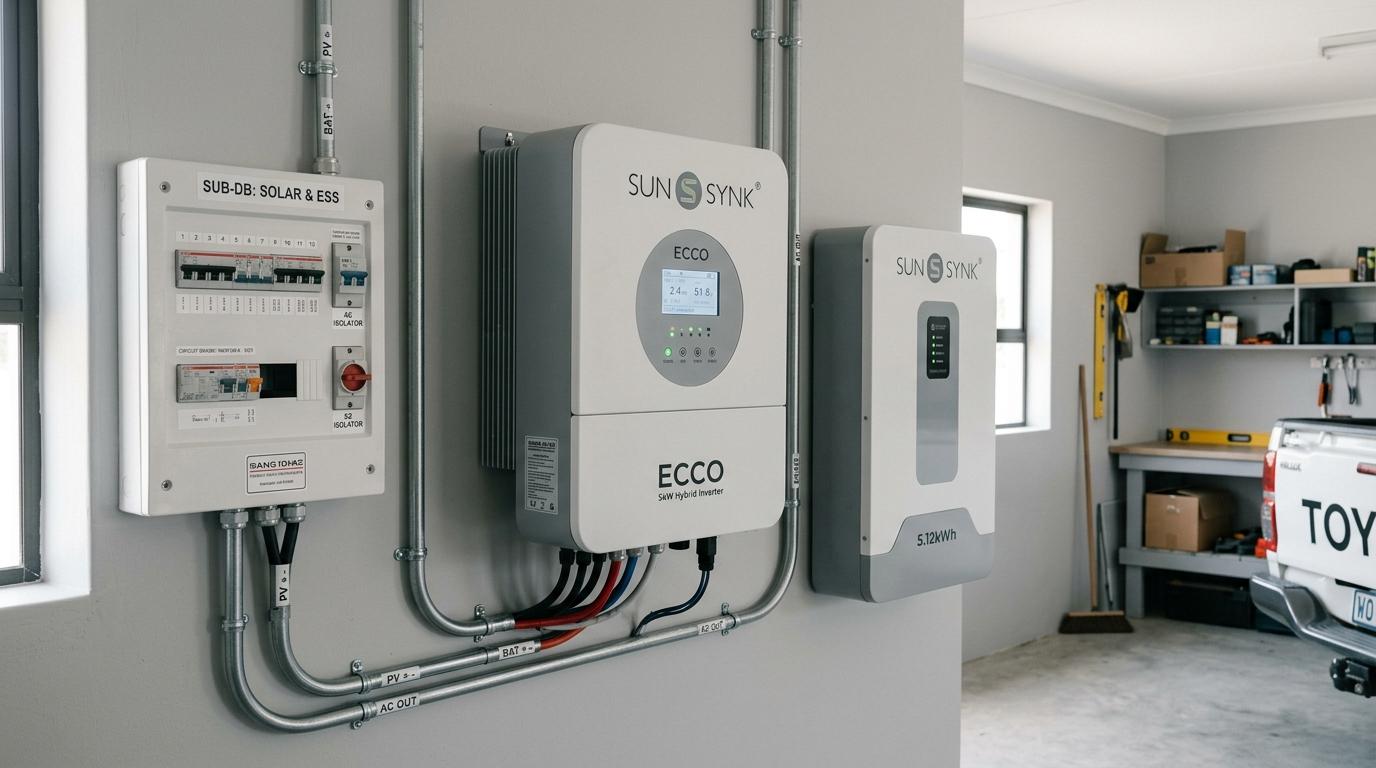
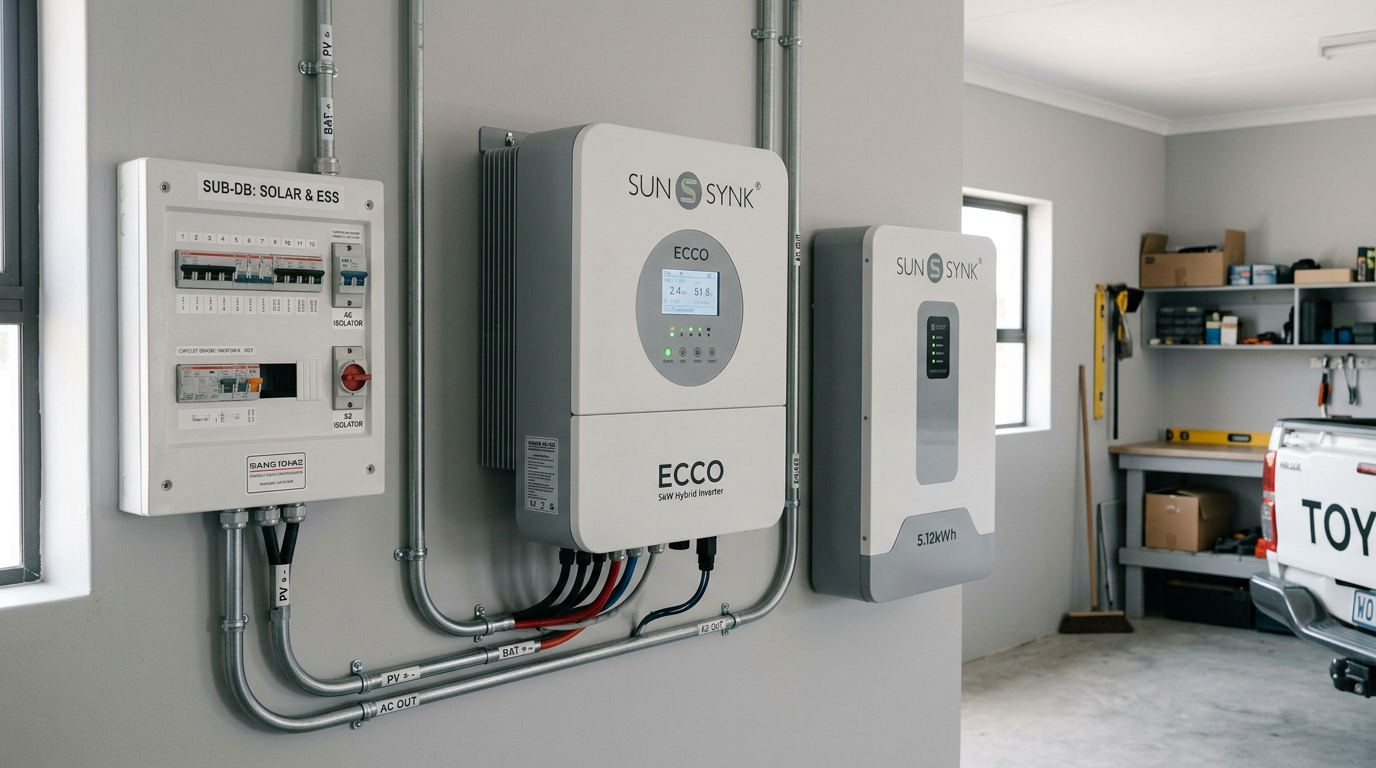
A Sunsynk ECCO hybrid inverter and matching wall-mounted Sunsynk lithium battery neatly installed in the utility corner of a tidy South African suburban garage, with a labelled distribution board, galvanised conduit and professionally dressed cabling
Why it's on so many walls
Three things made Sunsynk the default:
Everyone knows how to install and fix it. More South African installers have wired more Sunsynk units than anything else. That means faster quotes, fewer head-scratching faults, spares on the shelf, and someone nearby who's seen your exact problem before. Over a 10-year system, that familiarity quietly de-risks the whole thing.
It has a real local track record. Sunsynk has been through our grid, our surges and years of load-shedding abuse. It's a known quantity - you're not the beta tester.
It holds its value. Because buyers trust it, a Sunsynk system is easier to sell a house with and easier to move second-hand. The badge that costs you a bit more upfront gives some of that back later.
For a lot of homeowners spending six figures on something they'll live with for a decade, "the one everybody trusts" is a genuinely rational choice - not just herd behaviour.
The catch: you pay a premium
Here's where you have to be straight with yourself. Sunsynk is rarely the cheapest way to get the job done.
Going by South African installer listings in 2026:
A Sunsynk hybrid inverter runs roughly R18,000 to R43,000 - for the inverter alone.
A Deye inverter is about R15,000 to R38,000.
Budget-friendly Luxpower and Growatt units can come in lower still.
Add a battery (around R20,000 to R45,000 for a usable 5kWh-class module) plus panels, mounting and labour, and a real installed Sunsynk system usually lands in the R70,000 to R140,000 range. A Deye or Luxpower build can shave a meaningful chunk off that - sometimes enough to buy an extra battery module.
So the premium is real. The question is whether what it buys you - the support network, the track record, the resale confidence - is worth it for your situation.
See if solar makes sense for your home
Get free, no-obligation quotes. We then introduce you to the installer who will fit it.
Where the cheaper brands win
For pure value, the challengers make a strong case - and plenty of excellent South African installs run on them:
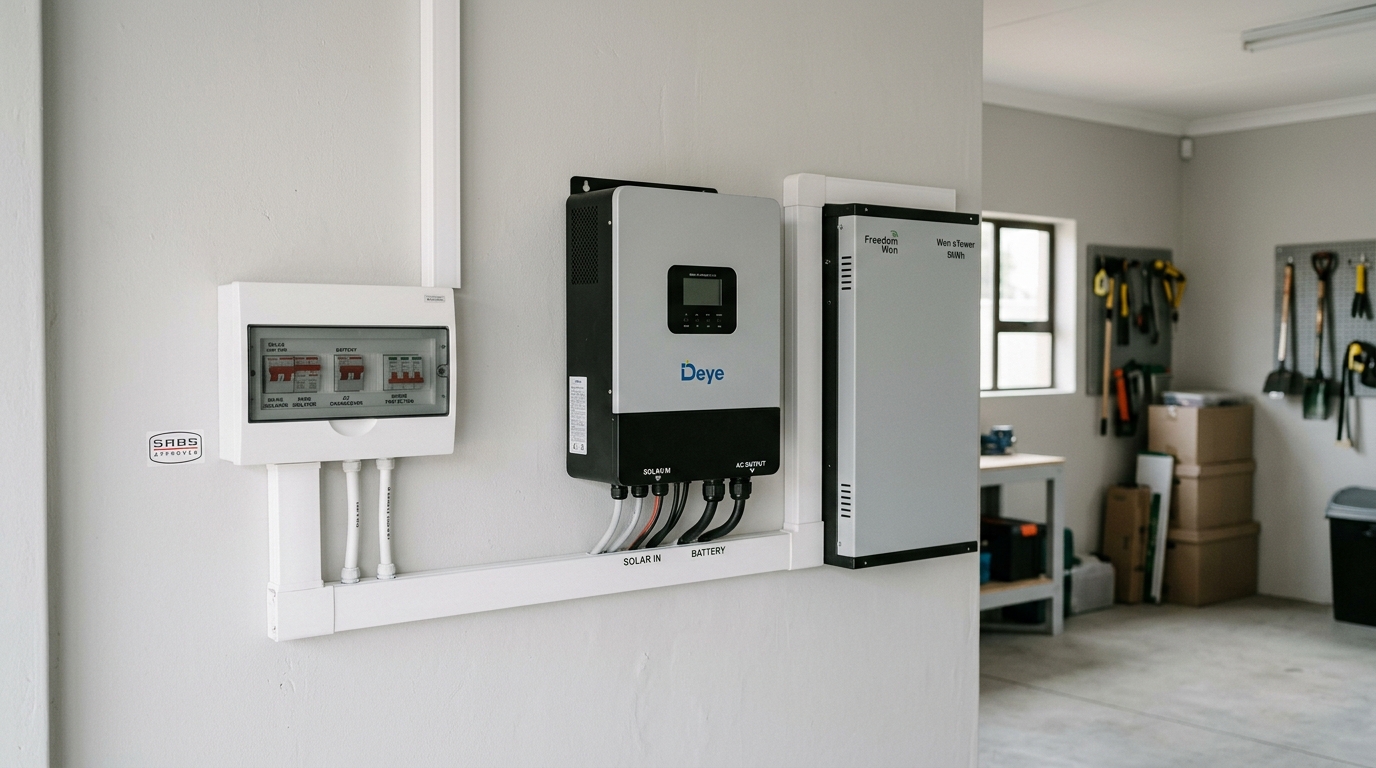
A compact Deye hybrid inverter and a separate wall-mounted lithium battery cleanly installed on a plastered wall in a tidy South African suburban garage, with a labelled distribution board and neat cable trunking - the budget-friendly value alternative
Luxpower is a long-standing South African staple - compact, capable and easy on the wallet, and a regular feature in our best inverters under R20,000 roundup →.
Growatt rounds out the value end for smaller or budget-first systems.
If rand-per-kilowatt-hour is the only number you care about, the cheaper brands win the maths.
Where Sunsynk is genuinely worth it
For all the value case, there are homes where paying the premium is the smart move:
You want the lowest-risk system. If you'd rather never think about spares, unfamiliar faults or "can my installer even service this?", the biggest installed base in the country is exactly what you're buying.
You're planning to sell. A recognised, trusted brand on the wall is easier to explain to a buyer and adds more to a listing than a name they've never heard of.
You value support over savings. When something goes wrong in year four, the depth of Sunsynk's local network is worth more than the few thousand rand you'd have saved on a lesser-known unit.
One important caveat: because Sunsynk is so popular, it's a frequent target for counterfeit and grey-import units. Buy from a certified supplier through a registered installer - that's what keeps the warranty real and the premium worth paying.
The 2026 angle: why the maths just improved
Here's what's changed this year. With the grid stable and load shedding largely behind us, the old reason to buy a hybrid inverter - keeping the lights on - has faded. But a new one has taken its place: tariffs are climbing hard.
After the roughly 8.76% Eskom increase in April 2026 and the municipal increases that landed from July, every kilowatt-hour you generate and store yourself is worth more than it was twelve months ago. A hybrid inverter - Sunsynk or otherwise - lets you run your home on stored solar through the pricey evening peak instead of buying expensive grid power. That's the same logic behind why a home battery still pays for itself now that load shedding has stopped →. The blackout dividend is gone; the tariff dividend is only growing.
So - is Sunsynk worth it in 2026?
Here's the honest verdict.
Buy Sunsynk if you want the safest, best-supported, most resale-friendly inverter in South Africa and you're happy to pay a modest premium for that peace of mind. For the majority of homeowners who want to buy once and forget about it, that premium is money well spent - it's the default for good reasons.
Go with Deye, Luxpower or Growatt if you're optimising for the lowest upfront cost, you have a solid installer you trust, and you'd rather put the saved rands toward more panels or an extra battery.
There's no wrong answer - only the right one for your home, your budget and your plans. Sunsynk earned its place at the top of the market; whether it deserves a place on your wall comes down to how much you value support and resale versus raw savings.
The bottom line
Sunsynk is the default for a reason: it's a good inverter with the best support network and track record in the country, and after 2026's tariff hikes the case for a hybrid system is stronger than ever. But "the most popular" and "the best value for you" aren't automatically the same thing. If low risk and easy support matter most, the premium is worth it.
The smartest move isn't picking a brand off a headline - it's sizing the right system for your roof, your usage and your budget first, then choosing the badge.
Frequently Asked Questions
Is Sunsynk worth it in South Africa in 2026?
For most South African homes, yes - but not because it's the cheapest. Sunsynk is worth it because it pairs a genuinely good hybrid inverter with the biggest installed base and the deepest network of trained installers and spares in the country, which lowers your risk over a 10-year system. The honest rule: buy Sunsynk for the support and resale confidence, buy a cheaper brand if rand-per-kilowatt-hour is all that matters and you have a good installer.
How much does a Sunsynk inverter cost in South Africa?
Going by South African installer listings in 2026, a Sunsynk hybrid inverter runs roughly R18,000 to R43,000 for the inverter alone, depending on size (5kW single-phase up to 8kW and larger three-phase units). That's before you add a battery - a matching lithium battery typically adds around R20,000 to R45,000 for a usable 5kWh-class module. So a real, installed Sunsynk system with one battery usually lands somewhere in the R70,000 to R140,000 range once panels, mounting and labour are included.
Is Sunsynk or Deye better?
Deye is usually a little cheaper, which is its main draw. Sunsynk's edge is in South Africa specifically: a larger installed base, more installers who know it intimately, easier spares, a strong local warranty presence and better resale recognition. For value hunters Deye wins on price; for buyers who want the safest, best-supported option, Sunsynk is worth the small premium.
What is the downside of a Sunsynk?
The main downside is price - you pay a brand premium over budget units like Deye, Luxpower or Growatt. Because Sunsynk is so popular, it has also been a frequent target for counterfeit and grey-import units, so buying from a certified supplier through a registered installer matters more than usual to keep your warranty valid. And like any hybrid inverter, it's only as good as the install: a Sunsynk wired by an uncertified installer is a worse buy than a cheaper inverter fitted properly.
Does a Sunsynk still make sense now that load shedding has stopped?
Yes, but the reason has shifted. With the grid stable, the case for a Sunsynk (or any hybrid inverter) is now driven by rising tariffs rather than blackouts. After the roughly 8.76% Eskom increase in April 2026 and the municipal increases from July, every unit you generate and store yourself is worth more than it was a year ago. A hybrid inverter lets you run on stored solar through the expensive evening peak instead of buying grid power - so the payback maths has improved even though the lights are staying on.
Free - see your savings in seconds
See what you'd save - based on your actual bill
Tell us what you pay Eskom now. We'll show you what solar would cost you a month instead, and what's left over.
No cost, no obligation, no salesperson unless you ask for one.