On 9 October 2026 Eskom opened a tender for up to 6GW of renewables and storage, with at least 2GW of solar and 1GW of batteries from its own sites. It is doing that because new solar makes a unit for R0.42 to R0.49, cheaper than its coal fleet at R0.55 and a fraction of diesel at about R6.01. None of it reaches your bill, which rises 8.83% again in April 2027. Here is why, and what the same deal costs on your roof.
Yes - solar is the cheapest electricity South Africa can build. New solar plants bid R0.42 to R0.49 a unit in the last national round, against R0.55 for Eskom's coal fleet and about R6.01 for diesel. Eskom opened a 6GW solar and battery tender on 9 October 2026 because of it. You still pay up to R4.94 a unit.
The short version:
1. New solar is the cheapest power in the country. REIPPPP Bid Window 7 solar bids: R0.42 to R0.49 a unit, average R0.46. 2. Eskom's own coal costs more. R0.55 a unit in its 2025 financial year, and diesel peaking plants about R6.01. 3. Eskom is acting on it. A tender for up to 6GW of renewables opened on 9 October 2026, with at least 2GW of solar and 1GW/4GWh of batteries from Eskom's own sites. 4. Your bill will not feel it. NERSA has already approved an 8.83% increase from 1 April 2027. 5. Only your own roof changes your bill. A family kit starts from R74,500-R90,500 installed, battery included.
Is solar cheaper than coal in South Africa?
Yes, by a wide margin for new power. The cheapest coal unit Eskom can make comes from a station that was paid off decades ago, and even that costs more than a brand-new solar plant.
Source of power
Cost per unit (kWh)
Who pays it
New solar (REIPPPP Bid Window 7 bids)
R0.42 - R0.49
Eskom, fixed for 20 years
Eskom coal fleet (2025 financial year)
R0.55
Eskom
Diesel peaking plants (early 2026)
~R6.01
Eskom, passed on to you
Grid power to a major-metro home (2026/27)
R3.34 - R5.12
You, rising every year
Bid Window 7 prices from the December 2024 award; coal from Eskom's 2025 integrated report and diesel from IPP peaking-plant costs for 26 February to 5 March 2026, both via MyBroadband. Verified 12 October 2026.
The gap between the first two rows is why nobody is building new coal. What you pay for grid power is in the last row.
Why is Eskom building solar if it has spare power?
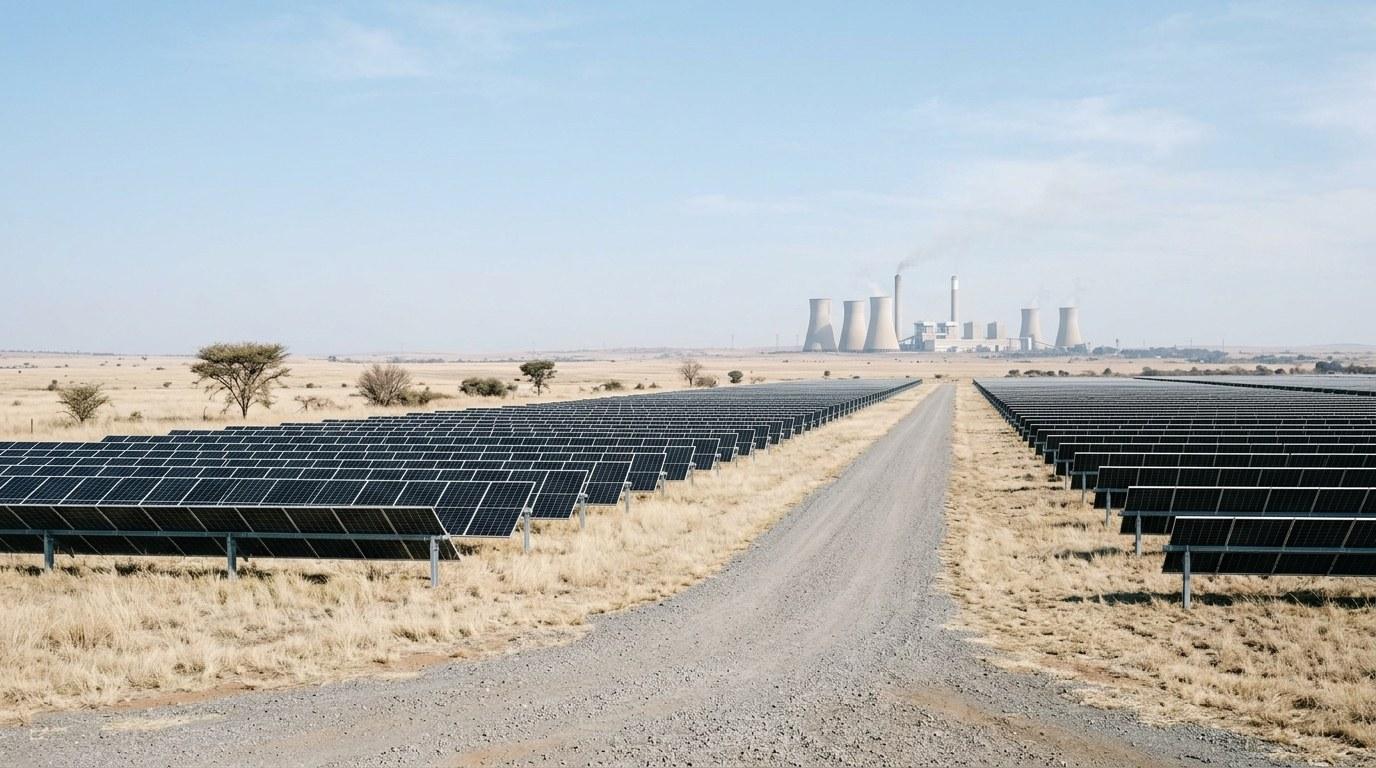
Because solar is the cheapest unit it can add, and the land, the grid connection and the sun are already sitting at its coal stations.
On 9 October 2026 Eskom opened tender 96470, a request for qualification for partners on up to 6GW of renewables and storage. Eskom's own pipeline puts in at least 2GW of solar and 1GW/4GWh of batteries on sites it has already secured, with a target of 6GW by 2030 and 32GW by 2040.
The first plant is already out of the ground. Lethabo's 75MW solar farm costs R1.2 billion and should make about 147GWh a year: around 33c a unit over 25 years on the build cost alone. Set that against the R4.82 billion Eskom spent on diesel in its 2026 financial year.
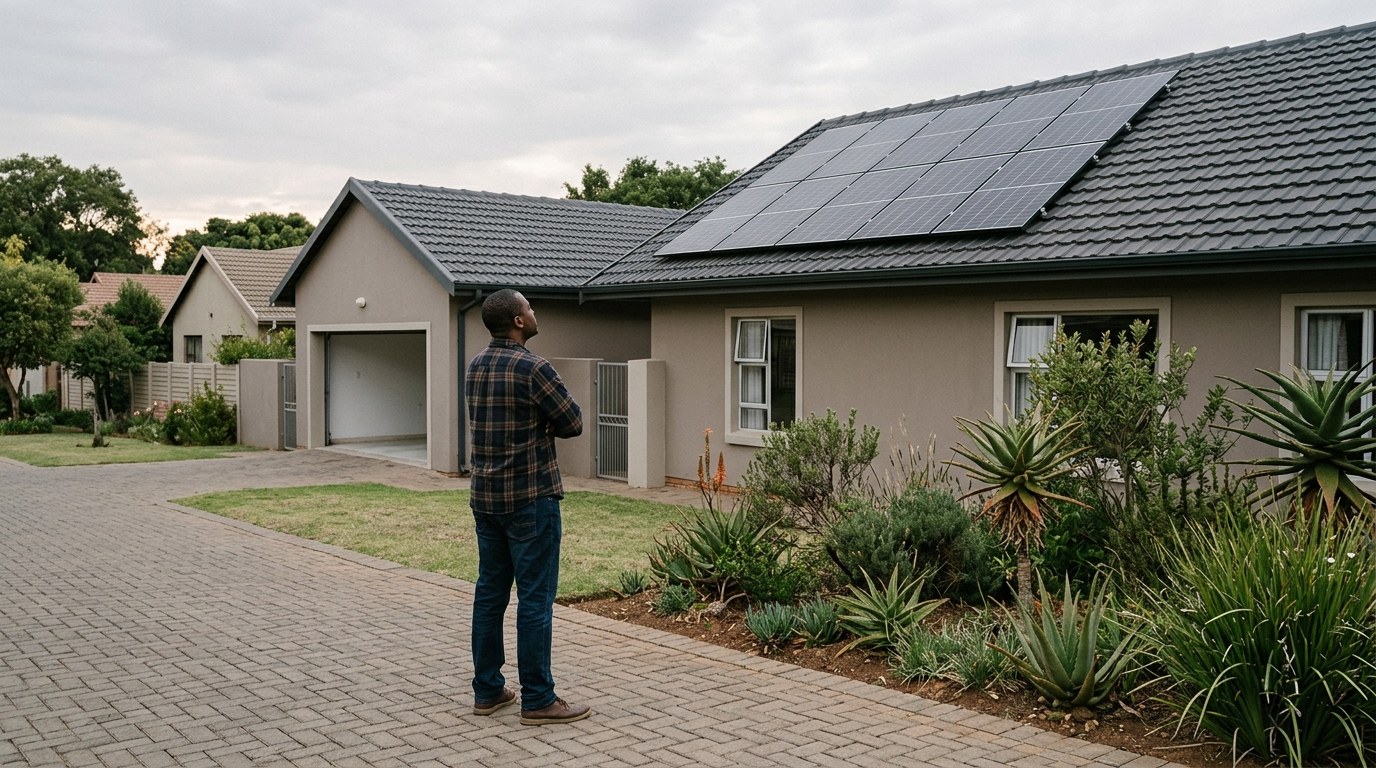
A middle-class South African homeowner on their driveway looking up at a neat new rooftop solar array on a tiled roof
See if solar makes sense for your home
Get free, no-obligation quotes. We then introduce you to the installer who will fit it.
If Eskom's solar is so cheap, why won't your bill drop?
Because the tariff is set by the revenue NERSA allows Eskom to collect, not by what its cheapest plant costs. The 2027/28 figure is already approved at R419.4 billion, which lands as an 8.83% increase from 1 April 2027 and 8.84% for municipalities from 1 July 2027.
Every cheap solar unit Eskom builds sits on Eskom's side of the meter. It lowers Eskom's costs and services Eskom's debt. It does not come off your bill, and it will not for years. Cape Town's 20-year solar deals → came in 19% to 21% below Eskom and household bills did not fall. Our will electricity prices go down → piece has the 2027 bill-band numbers.
What does the same deal cost on your roof?
The units your own system makes get no NERSA increase. Prices are installed, battery included, verified October 2026.
Kit
Installed price
Suits a bill of
What it covers
Family Essential 5kW
R74,500-R90,500
R1,000 - R2,000
Daytime load plus evening essentials off the battery
Family Plus 8kW
R94,500-R110,500
R2,000 - R3,500
Larger home, pool pump, more panels
Family Max 12kW
R150,500-R177,000
R3,500+
Whole-home cover, geyser included
Eskom signs 20-year solar contracts because it knows the per-unit price will not move. A paid-for roof does the same for one house. Our solar panel price guide → and is solar worth it → show the payback on your bill.
When is solar not the answer?
Your bill is under about R800 a month. The kit takes too long to pay back.
You rent or plan to move soon. You may not stay long enough to recover the install.
You live in a flat. No roof, no panels. A small inverter and battery for backup is the realistic route.
Fixed charges stay. Solar cuts the units you buy, not the monthly connection charge, and Eskom wants more of the 2027 rise in that charge.
Exporting pays little. An exported unit earns about R1.53 while a bought-back unit costs up to R4.94. Size the kit to use your own power, not to sell it.
For a freestanding home paying R1,000 a month or more, the maths that sent Eskom to solar works on your roof too. Start with your bill: our system size guide by bill amount → shows which kit fits, and how long solar panels last → covers the 25-year question.
Frequently Asked Questions
Is solar cheaper than coal in South Africa?
Yes, for new power. The eight solar projects awarded in REIPPPP Bid Window 7 bid R0.42 to R0.49 a unit, average R0.46, while Eskom's existing coal fleet generated at R0.55 a unit in its 2025 financial year and diesel peaking plants cost about R6.01 a unit in early 2026. That is why Eskom's own renewables unit is building solar at its coal stations. For a household the comparison is different: what your own roof saves depends on the installed price and the units you use from it, against R3.34 to R5.12 a unit on major-metro residential tariffs in 2026/27. Verified 12 October 2026.
Is Eskom building solar power plants?
Yes. Eskom broke ground on a R1.2 billion, 75MW solar plant at Lethabo Power Station in the Free State in May 2026, expected to produce about 147GWh a year. On 9 October 2026 it opened a request for qualification (tender 96470) for partners on up to 6GW of renewables and storage, to which Eskom will contribute at least 2GW of solar and 1GW/4GWh of batteries from its own sites. Its renewables business, Eskom Green, is targeting 6GW by 2030 and more than 32GW by 2040.
Why does South Africa still use coal for its power generation?
Because the coal fleet is already built and largely paid for. Running an existing station at R0.55 a unit is still cheaper than building anything new, so Eskom keeps running it. The problem is that the fleet is old, unreliable and expensive to keep alive, which is why Eskom burned billions on diesel in the bad years. New solar is now cheaper than new coal by a wide margin, so every new megawatt Eskom plans is solar, wind or batteries, not coal.
Do you have to pay Eskom if you have solar panels?
Yes, unless you go fully off-grid, which rarely pays. A grid-tied solar home still pays the fixed monthly charges for its connection and buys units at night or on dull days. What solar changes is the size of that bill: a right-sized system replaces most of the daytime units at R0 once the kit is paid for, so each tariff increase lands on a much smaller number. Eskom's registration for home systems is currently free.
What happens after 25 years of solar?
The panels keep working. Most quality panels are warranted to deliver at least about 85% of their rated output at 25 years and typically keep producing at 80% or more into their thirties. The inverter is usually replaced once, around year 10 to 15, and a lithium battery lasts roughly 10 to 15 years depending on how hard it is cycled.
Key Takeaways
Yes - new solar is the cheapest power South Africa can build. REIPPPP Bid Window 7 solar bids came in at R0.42 to R0.49 a unit, against R0.55 for Eskom's own coal fleet and about R6.01 for diesel peaking plants.
Eskom knows it. On 9 October 2026 it opened a tender for up to 6GW of renewables and storage, with at least 2GW of solar and 1GW/4GWh of batteries from its own sites, on top of the R1.2 billion 75MW Lethabo plant already under construction.
Cheap solar on Eskom's side of the meter does not lower your price. NERSA has already approved an 8.83% increase from 1 April 2027, and major-metro homes pay R3.34 to R5.12 a unit in 2026/27.
The solar that changes a household's bill is its own: a family kit starts from R74,500-R90,500 installed, battery included.
Free - see your savings in seconds
See what you'd save - based on your actual bill
Tell us what you pay Eskom now. We'll show you what solar would cost you a month instead, and what's left over.
No cost, no obligation, no salesperson unless you ask for one.