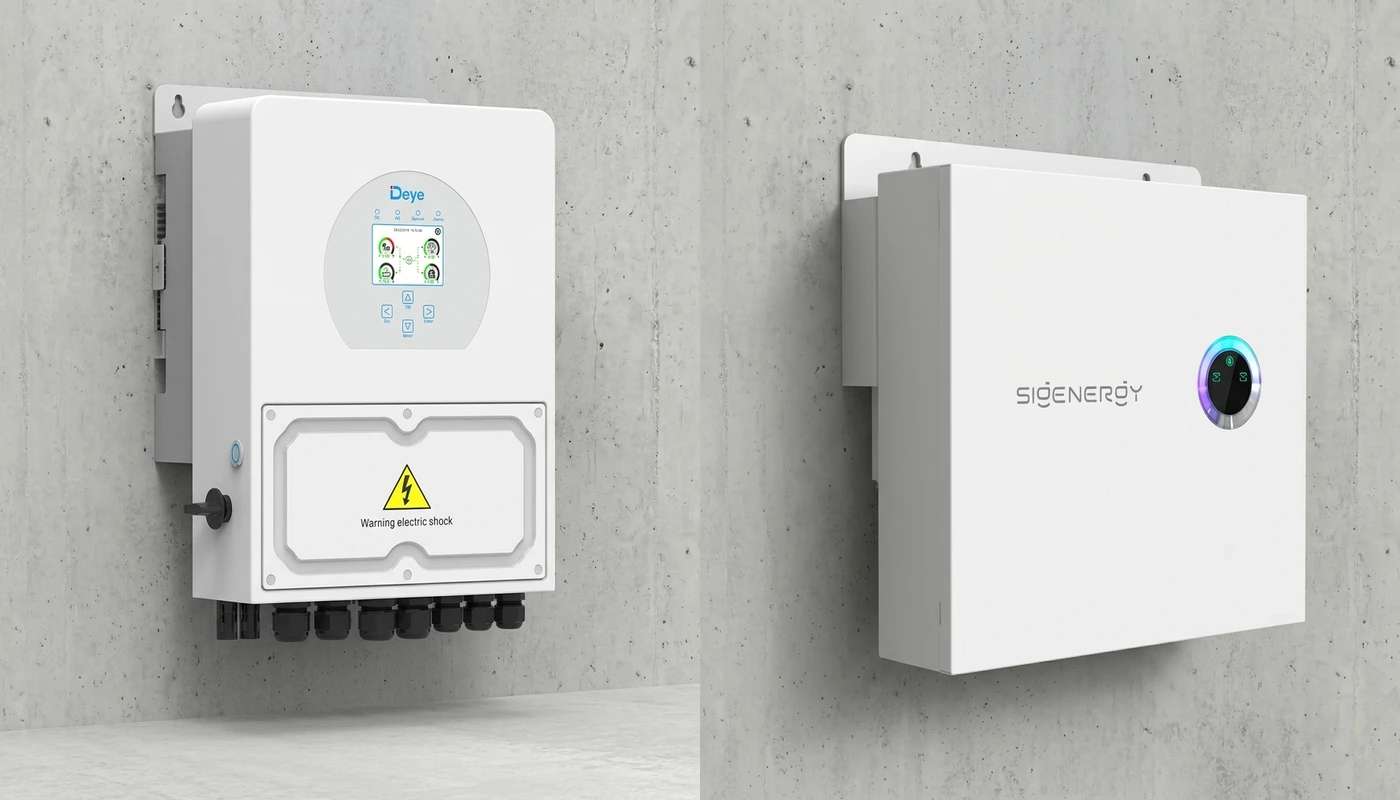
Quick Answer: Sigenergy vs Deye
Deye is the value pick for most South African homes - a hybrid inverter at R15,000-R38,000 that pairs with any battery and has the widest installer network in the country. Sigenergy is the premium all-in-one: the SigenStor bundles inverter, battery, AI energy management and optional EV charging from R95,000+. For load-shedding backup on a budget, choose Deye. For a premium, future-proofed all-in-one with EV integration, choose Sigenergy.
Sigenergy and Deye sit at opposite ends of the South African solar market, which is exactly why buyers keep pitting them against each other. Deye is the high-volume value workhorse behind a huge share of SA installations. Sigenergy is the premium newcomer - an all-in-one SigenStor stack with German-designed engineering, AI optimisation and integrated EV charging.
This 2026 head-to-head compares both across every factor that matters to a South African homeowner: real local pricing, technical specs, battery approach, warranty, EV and smart features, and installer availability. Whether you searched Sigenergy vs Deye or Deye vs Sigenergy, the decision comes down to one question: do you want maximum value and flexibility, or a premium integrated system that does everything in one box?
Unlike the forum threads that dominate this search, we give you a clear, dated verdict at the end - not a shrug.
At a Glance
Deye
Best Value- R15,000 - R38,000 (inverter only)
- 3kW - 12kW range
- 5-year (extendable to 10)
- 2 MPPT trackers
- Open battery compatibility
- Good app (SOLARMAN)
Sigenergy
Premium AI- R95,000 - R220,000+ (all-in-one)
- 5kW - 8kW+ range
- 10-year system / up to 15-year battery
- Modular battery 5-20kWh
- Integrated SigenStor battery
- AI-powered + EV charging
Technical Specifications Compared
| Specification | Deye 5kW Hybrid | Sigenergy SigenStor 5kW |
|---|---|---|
| System Price (2026) | R18,500 - R24,000 (inverter only) | R95,000 - R110,000 (all-in-one, 5kWh) |
| Inverter Type | Hybrid (separate battery) | All-in-One (integrated battery) |
| Rated Power | 5,000W | 5,000W |
| Max PV Input | 6,500W | 8,000W |
| MPPT Trackers | 2 | 2 |
| Max Efficiency | 97.6% | 98.2% |
| Battery Approach | Open (Pylontech, Hubble, Freedom Won, Dyness) | Proprietary SigenStor, modular 5-20kWh |
| Battery Chemistry | Depends on battery (usually LFP) | LFP, 8,000+ cycles |
| Inverter Warranty | 5 years (extendable to 10) | 10 years |
| Battery Warranty | Depends on brand (5-10 years) | Up to 15 years |
| EV Charger | Via separate AC charger (not managed) | Integrated, solar-aware (optional) |
| AI Optimisation | No | Yes (weather-based, TOU) |
| Phase | Single (5kW) / Three (8-12kW) | Single / Three phase |
| Grid Changeover | <10ms | <10ms |
| SA Installer Network | Very wide (largest in SA) | Limited (premium, growing) |
Real-World Pricing: Deye vs Sigenergy
The fair way to compare is complete-system cost, because Deye sells the inverter separately while Sigenergy sells an integrated all-in-one. Here are like-for-like installed-hardware estimates at typical SA market prices (not EnergyBee prices, excluding solar panels and labour):
| System Config (market estimate) | Deye + Battery | Sigenergy SigenStor | Difference |
|---|---|---|---|
| 5kW + 5kWh battery | R42,000 - R52,000 | R95,000 - R110,000 | Deye saves R50,000+ |
| 5kW + 10kWh battery | R60,000 - R75,000 | R120,000 - R150,000 | Deye saves R55,000+ |
| 8kW + 15kWh battery | R100,000 - R125,000 | R180,000 - R220,000 | Deye saves R70,000+ |
EnergyBee kit prices, battery included: Family Essential 5kW with a 10kWh battery R74,500-R90,500; Family Plus 8kW with a 10kWh battery R94,500-R110,500. Our kit prices include panels and installation, which the market hardware estimates above exclude.
Fair Comparison Note
Sigenergy's price already includes the battery, integrated management and an optional EV charger in one unit, plus a longer warranty. Deye needs a separate battery, but you get to choose any brand - a real advantage for value and for future battery upgrades. The gap narrows once you factor in Sigenergy's 15-year battery warranty and all-in-one install simplicity, but Deye remains dramatically cheaper upfront. For dated shelf prices across every size, see hybrid inverter prices and sizes.
Deye Model Range & Prices
| Model | Output | Phase | Price (2026) | Best For |
|---|---|---|---|---|
| Deye 3kW | 3kW | Single | R12,500 - R16,000 | Small homes, essentials backup |
| Deye 5kW | 5kW | Single | R18,500 - R24,000 | Medium homes, most popular |
| Deye 8kW | 8kW | Three | R28,000 - R35,000 | Large homes |
| Deye 12kW | 12kW | Three | R45,000 - R55,000 | Very large homes, small commercial |
Read the full Deye 5kW review or browse the full inverter range for live pricing. For dated retailer shelf prices on every current Deye model, see Deye inverter prices by model.
Detailed Strengths & Considerations
Deye Strengths
- 40-55% cheaper than Sigenergy for a complete system
- Open battery compatibility - Pylontech, Hubble, Freedom Won, Dyness
- Largest installer network in SA - easy to service
- Proven off-grid capability and hot-climate reliability
- Built-in WiFi monitoring via SOLARMAN
- Wide model range including 3-phase up to 12kW
Considerations
- No AI energy optimisation or managed EV charging
- Separate battery purchase and multi-box install
- 5-year standard warranty (extension costs extra)
Sigenergy Strengths
- All-in-one design - inverter, battery and EV charger in one unit
- AI-powered energy management - learns and optimises usage
- Modular battery - start at 5kWh, expand to 20kWh
- Up to 15-year battery warranty - industry leading
- Highest efficiency at 98.2%, ultra-quiet operation
- Premium build and integrated solar-aware EV charging
Considerations
- Very expensive (R95,000+ starting)
- Proprietary batteries only - locked ecosystem
- Limited SA installer network
- Newer brand - shorter SA track record than Deye
Deye vs Sigenergy: Which Should You Choose?
Choose Deye If:
- You want the best value and load-shedding backup
- You want the freedom to choose your battery brand
- Your budget is under R125,000 for the complete system at market prices
- You want easy access to installers and spares
- You're going off-grid or expanding in stages
Choose Sigenergy If:
- You want a single, all-in-one unit with a clean install
- You want smart, solar-aware EV charging
- You want AI energy optimisation and top efficiency
- You have a budget of R95,000+ (market price)
- You value a 15-year battery warranty from one vendor
The budgets above are typical SA market prices, not EnergyBee prices. Our own complete systems start at R74,500-R90,500 installed for our Family Essential 5kW with a 10kWh battery.
Our Expert Verdict (July 2026)
As of July 2026, for the vast majority of South African homeowners buying primarily for load-shedding backup and lower bills, Deye is the smarter choice - you get proven reliability, open battery compatibility, the country's widest installer network, and you save R50,000-R70,000+ at market prices versus an equivalent Sigenergy. Choose Sigenergy only if you specifically want a premium all-in-one system, integrated EV charging, AI optimisation and a 15-year battery warranty - and have the budget to match. In short: Deye for value and flexibility; Sigenergy for premium, integrated, future-proofed convenience.
Frequently Asked Questions
Is Sigenergy or Deye better for South African homes?
For most SA homes, Deye is the better buy at R15,000-R38,000 with open battery choice and the widest installer network. Sigenergy (SigenStor from R95,000+ at market prices) suits premium buyers who want an all-in-one with AI management and EV charging. Choose Deye for value; Sigenergy for a premium integrated system.
How much does Sigenergy cost compared to Deye?
A Deye 5kW is R18,500-R24,000 (inverter only); a Sigenergy SigenStor 5kW/5kWh all-in-one is R95,000-R110,000 at market prices. Comparing complete systems, a Deye plus a separate battery typically comes in 40-55% cheaper - though Sigenergy's price already includes the battery and a longer warranty. EnergyBee kit prices, battery included: Family Essential 5kW with a 10kWh battery R74,500-R90,500; Family Plus 8kW with a 10kWh battery R94,500-R110,500. Those kit prices include panels and installation.
What is the difference between the SigenStor and a Deye inverter?
The Deye is a standalone hybrid inverter you pair with a separate lithium battery of your choice. The Sigenergy SigenStor is an all-in-one that integrates the inverter, a modular 5-20kWh battery, AI management and an optional EV charger in one unit. Deye means flexibility and lower cost; Sigenergy means integration and higher efficiency.
Can a Deye inverter charge an EV like Sigenergy?
A Deye can power a standard AC EV charger from solar and battery, but it does not natively manage EV charging. Sigenergy offers integrated, solar-aware EV charging that coordinates with production, battery state and tariffs. For smart EV charging, Sigenergy wins; for reliable backup at lower cost, Deye is plenty.
How do Deye and Sigenergy compare to Sunsynk and the rest?
Deye and Sunsynk share hardware DNA (sister companies); Sunsynk costs a little more for a better app and support, while Sigenergy sits in the premium all-in-one tier above both. See our complete ranking of the 10 best solar inverters in South Africa for the full picture.
Ready to Get Quotes?
Compare quotes for Deye or Sigenergy and expert advice on which system suits your home and budget.
Compare All Solar Inverters
See every solar inverter available in South Africa with prices, specs, and EnergyBee expert ratings - all in one place.
Compare solar inverters →